
Commercial Flat Roof Inspection in Westfield, MA (EPDM, TPO & PVC)
It checks the membrane, its seams, its drainage, and every place something passes through it. A commercial flat roof inspection in Westfield, MA is not a quick look from the ground: the inspector walks the roof, identifies whether the membrane is EPDM, TPO, or PVC, tests seams and flashings, maps ponding water, and documents penetrations for HVAC, vents, and drains. That is where flat roofs fail — rarely in the middle of an open sheet, almost always at a joint, an edge, or a drain that no longer clears. The report should name the membrane, photograph each problem area, and separate urgent leaks from wear to watch.
EPDM, TPO and PVC: Three Membranes, Three Failure Modes
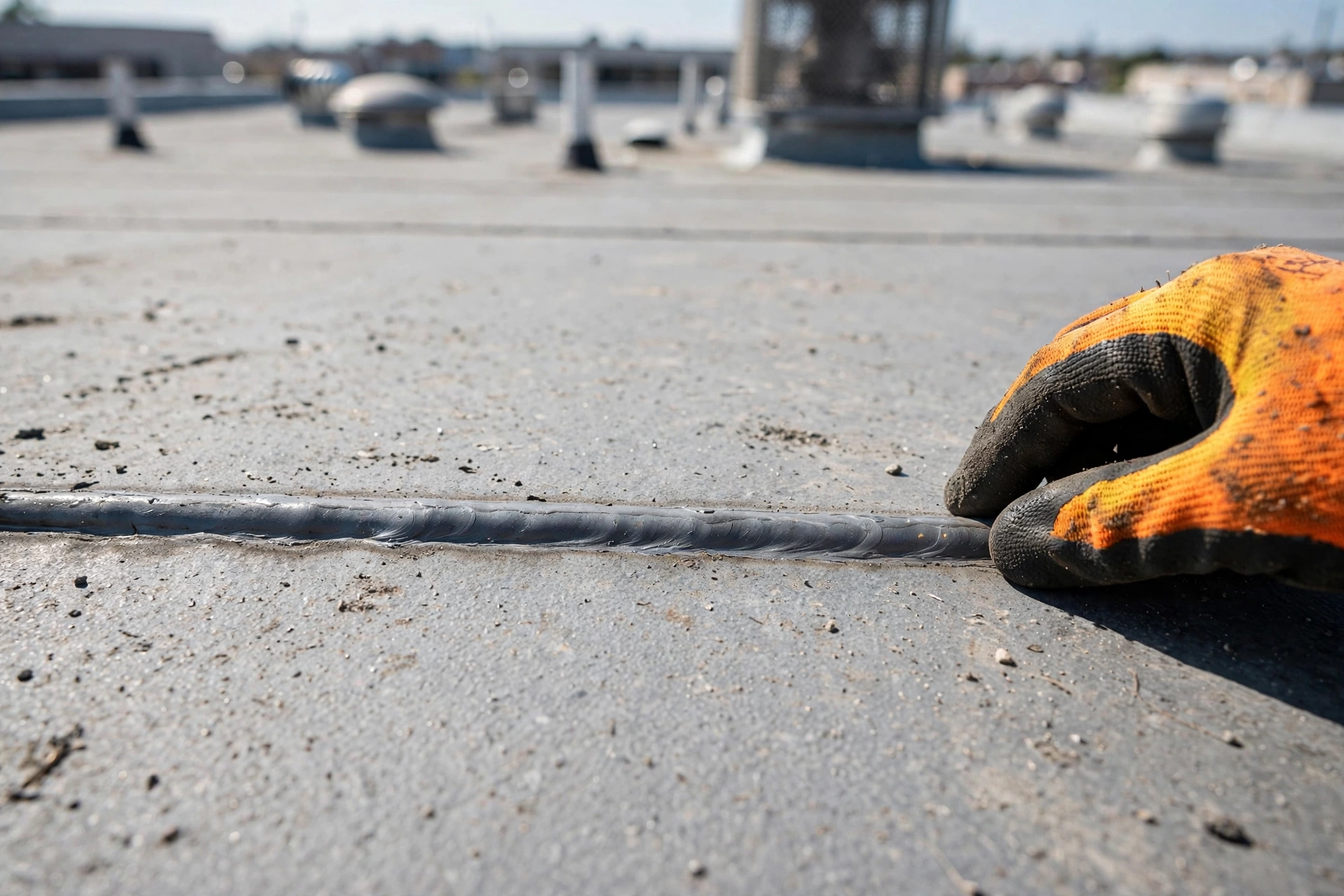
Most commercial flat roofs in Westfield use one of three single-ply membranes, and knowing which one is on your building changes what the inspector looks for. EPDM is a dark rubber membrane, typically installed in large sheets with taped or adhered seams. Its weak points are seam adhesion, shrinkage at edges and curbs over time, and punctures from foot traffic or dropped tools. TPO is a lighter, heat-welded membrane; its seams are welded rather than glued, so the inspector checks weld quality, seam probing, and signs of weld failure at corners and transitions. PVC is also heat-welded, but it behaves differently around chemicals and rooftop equipment, and its detailing at penetrations deserves close attention.
An inspector should identify the membrane before judging it, because a detail that is normal on one system can be a defect on another. For example, surface appearance alone says little: a dark EPDM roof and a light TPO roof age differently, reflect heat differently, and show ponding and dirt differently. The report should record the membrane type, the seam method, and the condition of the field of the roof separately from the condition of its edges and details. If the membrane cannot be identified with confidence, an honest report says so and explains what follow-up would confirm it, rather than guessing.
Age alone is not a verdict: a well-detailed, well-drained membrane can outlast a younger roof with poor seams and chronic ponding. The inspection therefore weighs the whole system, not a single glance at the surface.
Ponding Water: The Slow Problem on a Flat Roof
No flat roof is perfectly flat; every low-slope roof is built with a slight fall toward drains, scuppers, or gutters. Ponding is what happens when that fall fails, a drain blocks, insulation settles, or the structure deflects under load. Water collects in low areas and stays there long after rain has ended. The surface may look unremarkable from the roof hatch, which is exactly why ponding is mapped on foot rather than assumed away.
Standing water adds continuous weight, keeps the membrane wet and accelerates seam wear, and invites debris that further blocks drainage. In colder months it can freeze in small cracks and widen defects that were minor in summer, and it hides other problems: a seam under standing water cannot be properly inspected until the area is dry.
A good inspection report maps ponding rather than just mentioning it. It should show where water collects, how widespread each area is, whether drains and scuppers near it are clear or blocked, and whether the membrane beneath shows staining, softening, or seam stress. That map is what lets an owner decide between clearing and re-grading drainage, targeted repair, or a broader scope of work — and it is the evidence that matters if ponding becomes part of an insurance or warranty conversation. Where the cause of ponding is structural rather than a blocked drain, the report should say that plainly and recommend the right specialist follow-up.
Seams, Flashings and Penetrations: Where Flat Roofs Actually Leak
Open membrane rarely leaks on its own. Leaks overwhelmingly start where the membrane stops, turns, or is pierced: seams between sheets, flashing at walls and parapets, curbs for HVAC units and skylights, pipe boots, and drains. Each of these details is checked by hand and by eye. Seams are probed for open edges, blisters, and failed welds or adhesion. Flashing is checked for pulling away from walls, cracking, and gaps at corners, which are the most stressed points on any flat roof. Penetrations are checked for cracked boots, failed sealant, and movement where equipment vibrates or expands with temperature change.
Rooftop equipment deserves special attention on commercial buildings because it changes over time. A new HVAC unit, a relocated vent, or a contractor's foot traffic can damage a membrane or leave a penetration poorly sealed, and the damage may not show inside the building until much later. The inspector should note every penetration, photograph its flashing, and flag any detail that looks patched, improvised, or inconsistent with the rest of the roof. Previous repairs are also informative: a cluster of patches in one area often points to a recurring problem that patching alone has not solved.
Parapets and edges complete the picture: coping, counterflashing, and edge metal protect the membrane termination, and when they fail, water finds its way behind the system. If interior staining is present below, note that the stain does not always sit directly beneath the entry point — water travels along decks and structure before it appears.
Westfield's Turnpike Industrial Stock: What Inspectors See There
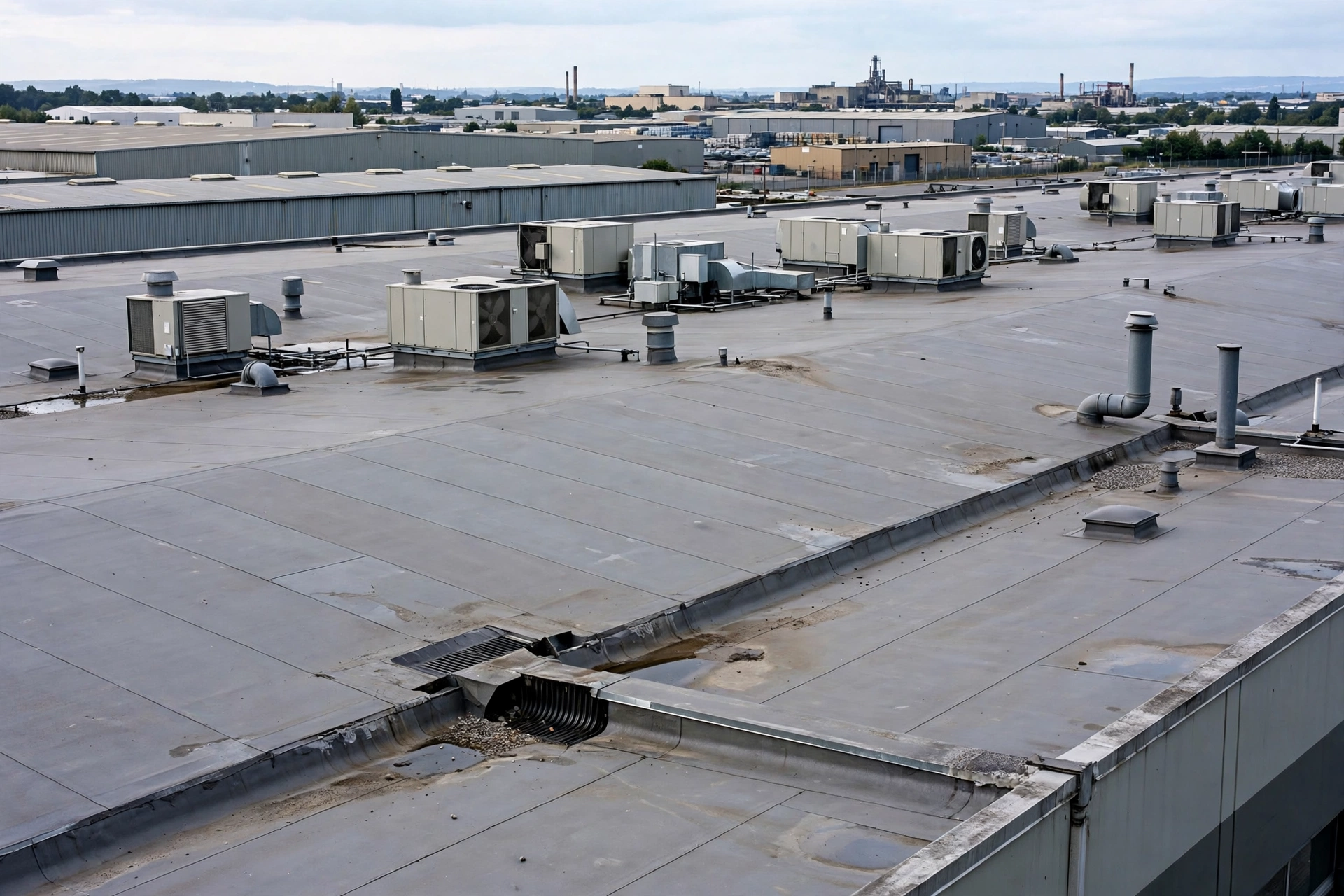
Westfield's industrial buildings, including the stock around Turnpike Industrial Road, share a pattern that shapes how inspections are planned: large, low-slope roofs, multiple HVAC units and vents, and long drainage runs. A roof of that scale cannot be judged from a single vantage point. The survey is done in sections, with photographs tied to locations, so that a defect found near one unit or drain is not confused with a similar-looking defect elsewhere on the same roof.
Older industrial roofs in this stock often carry layers of history: original membranes, overlays, patched penetrations from equipment changes, and altered drains. The inspector's job is to separate what still protects the building from details that have reached the end of their useful life, which drives the recommendation — targeted seam and flashing repair, drainage correction, moisture investigation, or a broader replacement conversation. When hidden moisture is suspected, a visual survey alone may not settle it; see our guide to infrared thermal roof inspection and moisture mapping.
Book with building facts ready: membrane type if known, leak history and where stains appear inside, recent rooftop work, and roof access arrangements. That keeps the report specific to your building rather than generic. If you manage several buildings, ask that each roof be reported separately, with its own photographs and ponding map.
Related reading: infrared thermal roof inspection and our commercial roof inspection service.
Book a Commercial Flat Roof Inspection
Tell us the membrane type if known, the leak history, and the roof access, and we will scope the survey for your building. Call (213) 646-7883.
Commercial Roof InspectionsFrequently Asked Questions
Often you do not need to guess: the inspector identifies the membrane on site from its appearance, seams, and detailing, and checks any available building records. If the membrane type is still unclear, the report will say so rather than assume it, because each membrane has different seam and repair characteristics.
Not every puddle is a failure, but water that remains long after rain has ended deserves attention. Standing water adds load, accelerates membrane wear, and often marks a drainage or slope problem. The report should show where ponding occurs, how widespread it is, and whether the membrane beneath it shows wear.
There is no single schedule that fits every building. Age, membrane type, foot traffic, rooftop equipment, and leak history all affect how often an inspection is worthwhile. A practical approach is regular scheduled checks plus an inspection after any known leak, major storm, or rooftop work. Call to confirm what schedule suits your building.
Usually, yes. Most flat roof inspections are carried out on the roof itself and do not require work inside occupied areas, beyond access to the roof and, where available, the space below a suspected leak. If interior access or equipment shutdowns are needed, that should be agreed when booking, not discovered on the day.