
Roof Inspection Cost in Massachusetts: What Drives the Price Up or Down
Scope, not geography alone. A roof inspection in Massachusetts costs more when the roof is bigger, steeper, harder to access, or made of a material that demands slower handling — and when the report must meet an insurance or legal standard rather than a standard written summary. Thermal imaging and drone imagery add further cost because they are specialist methods. There is no honest statewide flat rate: two houses on the same street can reasonably cost different amounts, and any quote that does not ask about your property is guessing. Call with your property details for exact pricing.
What Drives the Price Anywhere in Massachusetts
The same factors move inspection pricing across the state, from the Pioneer Valley to the coast:
- Roof size: more surface means more inspection time, more photos, and a longer report.
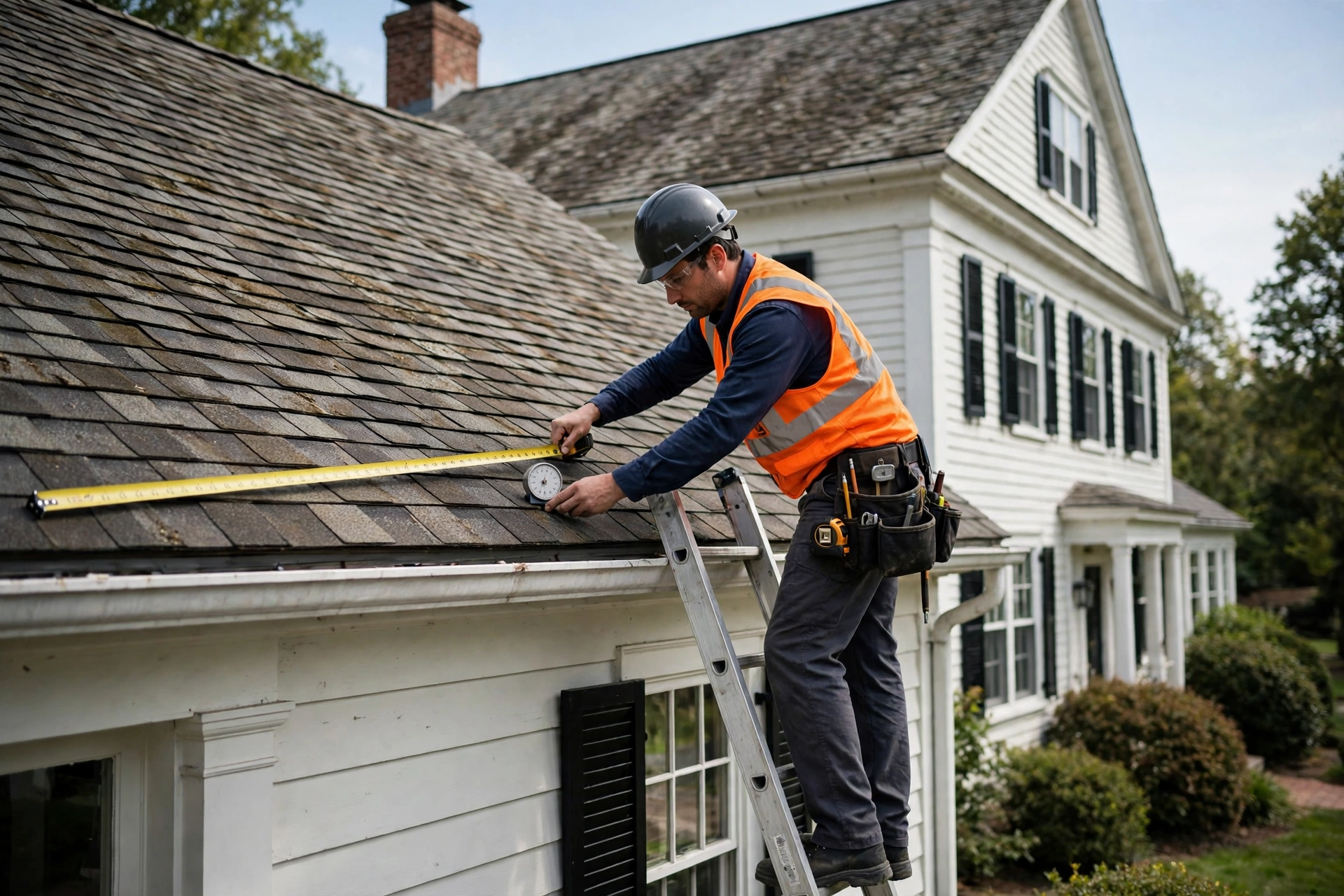
- Pitch and stories: steep pitches and multi-story homes need more safety setup and slower movement.
- Access: limited ladder access, dense landscaping, or a roof that cannot be walked all add time or require drone work.
- Material: asphalt shingles are straightforward; slate, cedar, and tile demand slower, more careful handling, and flat membranes need seam-by-seam review.
- Attic access: a full decking survey requires accessible attic space; sealed or unsafe attics limit what can be documented.
- Report depth: a standard written report vs. an insurance-grade report with itemized damage breakdowns and date-of-loss verification.
Local variation exists — travel distance, local labor conditions, and building stock differ across the state — but these six factors dominate the price far more than the town name does. Be skeptical of any statewide average quoted without a scope attached to it.
Residential vs Commercial: A Different Job
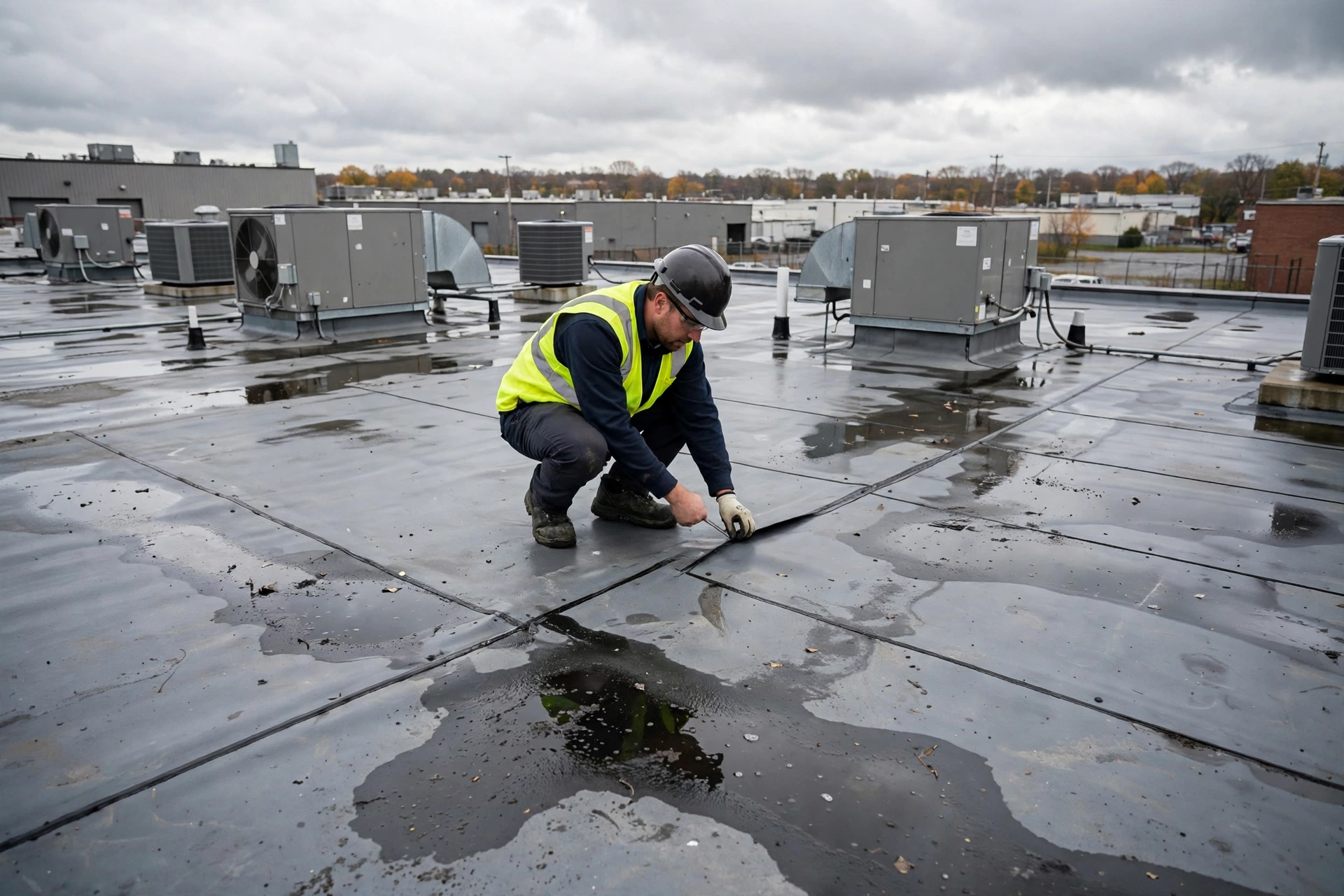
A single-family asphalt roof and a commercial flat roof are not the same inspection at a different size; they are different methods. Residential work centers on covering condition, flashing, valleys, and attic decking. Commercial flat work centers on membrane seams, ponding areas, drainage, penetrations for HVAC and vents, and the condition of the membrane itself — surveyed on foot across a large, low-slope surface, often with core or moisture-scan follow-up where ponding suggests trapped water.
Commercial inspections therefore take longer and are priced on area and complexity, while residential pricing turns more on pitch, stories, and access. Comparing a residential quote to a commercial quote is comparing different scopes.
Thermal and Drone Add-Ons
Two specialist methods cost extra wherever in Massachusetts they are used:
- Infrared thermal scanning maps hidden moisture under membranes and decking — the leak that has not stained anything yet. It is priced by roof size and is justified when hidden moisture is suspected, not as a default on every roof.
- Drone imagery documents steep, fragile, or otherwise unwalkable roofs — slate, high pitches, storm-damaged slopes — without putting weight on a compromised surface. It is priced by roof size and complexity.
A reputable inspector tells you when you do not need them. If a quote bundles both on a small, walkable asphalt roof with no leak history, ask what question each method is answering.
Insurance-Grade Reports vs Standard Reports
A standard report documents condition, lifespan, and repair recommendations. An insurance-grade report adds what a claim requires: dated, captioned photos slope by slope, test square counts where hail is claimed, a date-of-loss correlation, and an itemized repair scope. That documentation takes materially longer to produce, which is why it costs more — and why it is the report to order when a claim is involved or likely.
Ordering the standard report and then discovering you need the insurance-grade version means paying for a second visit and a second report. If a storm, a claim, or a dispute is anywhere in the picture, say so when booking.
How to Get an Exact Price
Give the dispatcher five facts and you will get a firm price before booking: property type (residential or commercial), approximate roof size or footprint, material if known, number of stories, and whether you need a standard report or an insurance-grade report — plus whether thermal or drone work is suspected. With those facts, pricing is a scope calculation, not a guess.
For the Westfield-specific version of this guide — including what a standard Westfield inspection includes — see our Roof Inspection Cost in Westfield, MA. For what drives commercial pricing in particular, see our commercial service page and the related services below.
Related reading: roof inspection cost in Westfield, MA and storm damage roof inspection.
Get an Exact Price for Your Property
Tell us the property type, roof size, and material, and we will give you a firm price before you book. Call (213) 646-7883.
Commercial Roof InspectionsFrequently Asked Questions
Mostly it does not — the dominant factors are roof size, pitch, stories, access, material, and report depth, which vary property by property. Local variation from travel distance and building stock exists, but a quote that differs mainly by town name without a scope difference deserves a question.
Almost always, because more surface means more inspection time, more photos, and a longer report. The exception is a large but simple, walkable, single-story roof, which can be faster than a small, steep, multi-story roof with difficult access.
When the question demands them, yes. Thermal is worth it for suspected hidden moisture; a drone is worth it for steep, fragile, or unwalkable roofs. On a small walkable roof with no leak history, neither is necessary, and a reputable inspector will say so.
Ask whether each includes a written photo-documented report or just a verbal opinion, whether the inspector also sells the repairs it recommends, whether thermal or drone methods are included or extra, and what happens if the roof cannot be walked. The cheapest quote is usually the one that answers the fewest of these.