
Roof Inspection in Granville, MA: Rural Roofs, Tree Cover, and Wind Exposure
A roof inspection in Granville, MA should focus on three things that define this rural western Hampden County town: heavy tree canopy that drops debris and shades slopes, open and elevated ground that leaves roofs exposed to wind, and larger, wooded lots where access takes more time to survey. A standard inspection still covers covering, flashing, valleys, gutters, and attic decking, but in Granville findings most often trace back to trees, shade, and wind. Book with your property details; the inspector will confirm rural-lot access when scheduling.
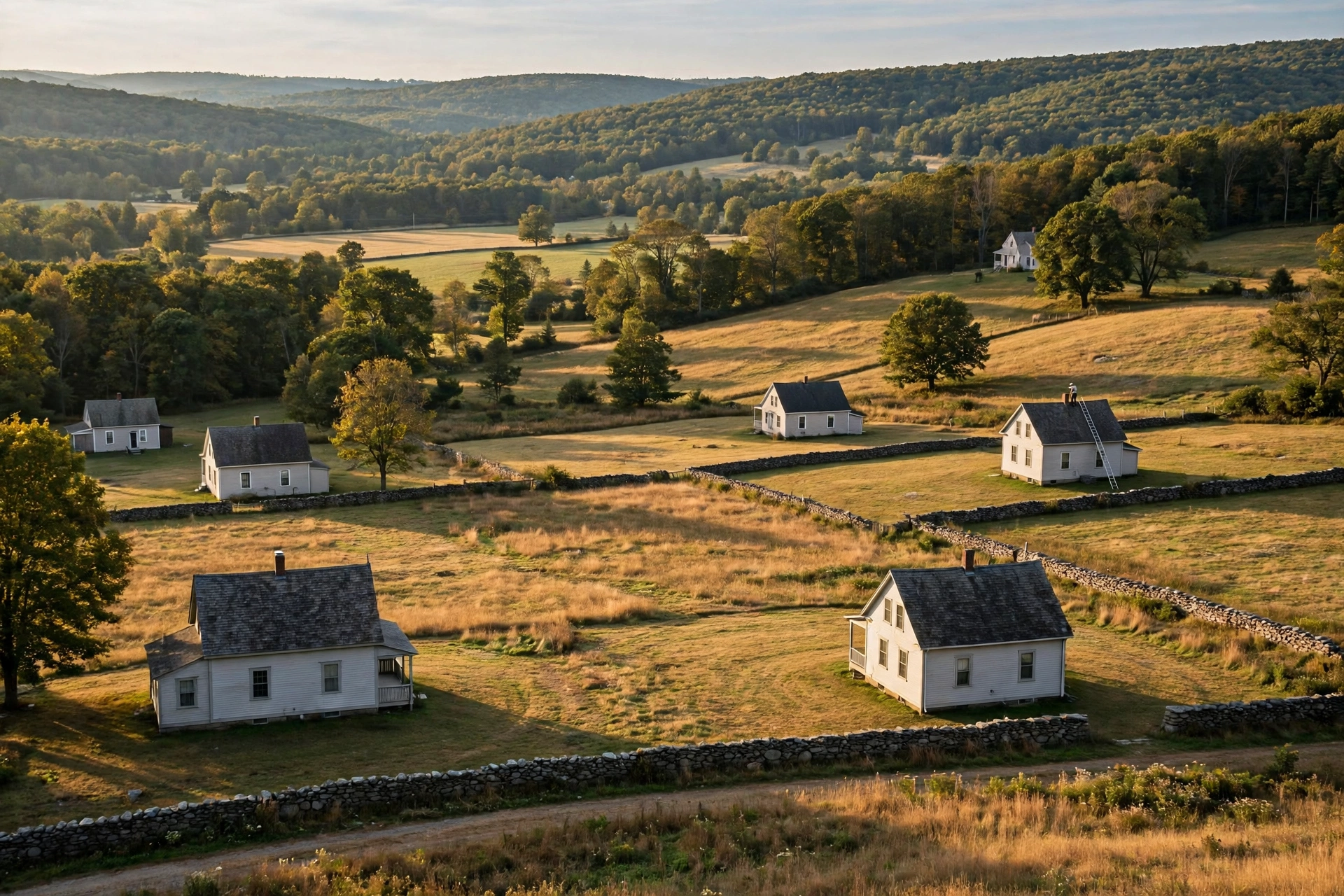
Granville's Rural West: What Makes Its Roofs Different
Granville sits in the rural west of Hampden County, where homes are spread across larger, often wooded lots, and the building stock is mostly residential: single-family homes, older farmhouses, and outbuildings. That setting changes an inspection in practical ways. Driveways can be long, ladder placement may need a walk around a wooded lot, and outbuildings may share a roofline worth its own look. Mentioning lot and access details when booking helps the visit run smoothly.
Age matters too. Older rural homes often carry layers of past work: an addition tied into an original roof, a porch roof meeting a main slope, or flashing patched at different times. Each junction is a place where water can find a way in, and each gets a closer look. That does not mean an older Granville roof is in poor condition — many are well kept — but the inspection should spend its time at junctions, valleys, and transitions.
Tree Canopy: Shade, Debris, and Hidden Moisture
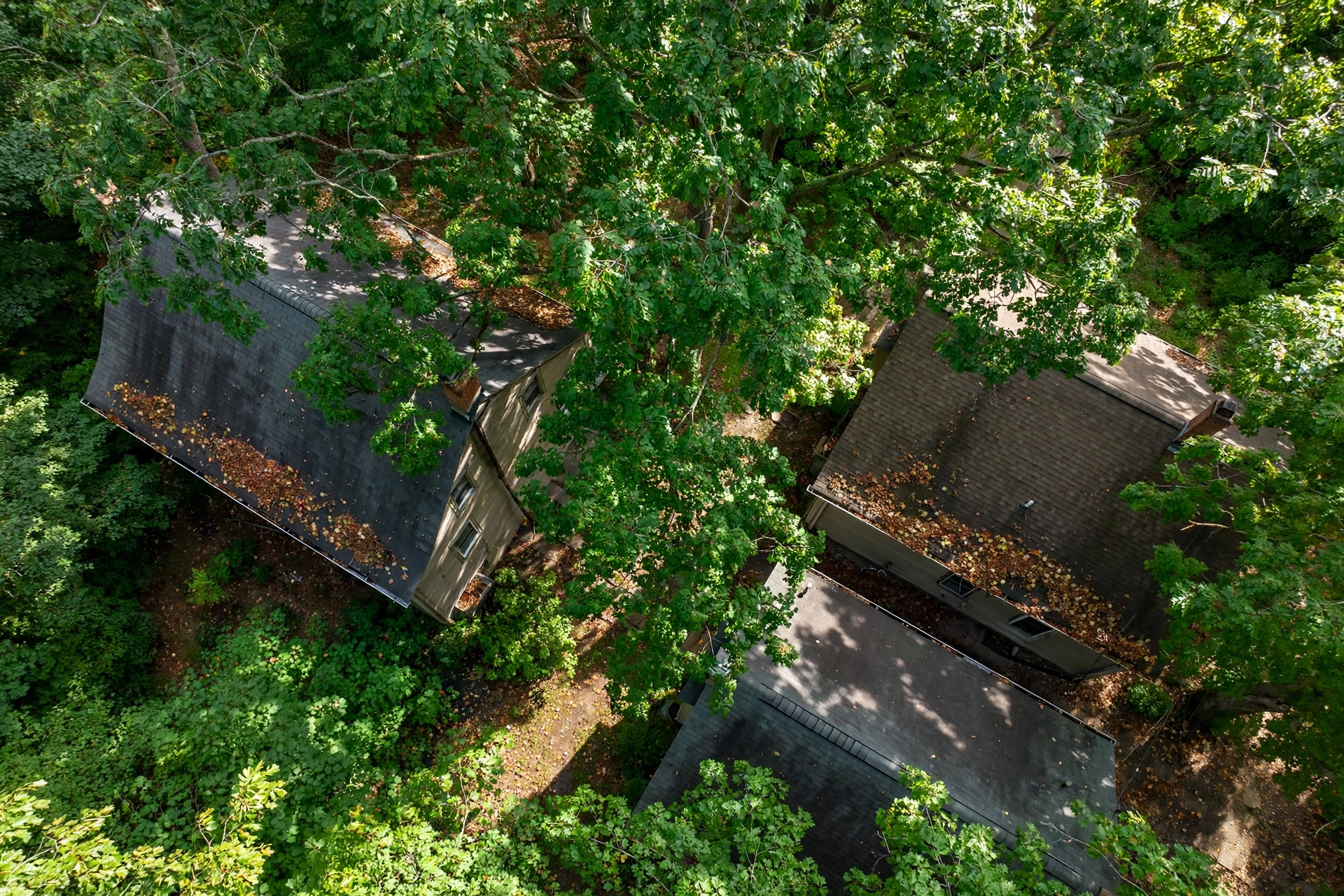
Tree canopy is Granville's defining roof factor. Mature trees shade slopes for much of the day, and shade keeps a roof damp longer after rain. Damp, shaded shingles invite moss and algae growth, which holds moisture against the surface and can shorten covering life on shaded slopes. An inspector will compare slopes against each other: a shaded slope often tells a different story from a sun-exposed one on the same house.
Debris is the more visible half of the problem. Leaves and needles collect in valleys, behind chimneys, and in gutters, where they trap water against flashing and shingles. Over time, trapped debris can rot fascia boards, clog downspouts, and hide flashing failures. The inspector documents debris patterns — where it collects and whether it is already causing staining or soft spots — because the pattern points to the fix: trimming, gutter guards, or a matching cleaning schedule.
Wind Exposure on Open and Elevated Ground
Granville's open fields and elevated ground leave roofs more exposed to wind than homes in a dense neighborhood, where neighboring houses break the wind. On an exposed slope, the inspector pays particular attention to the points where wind first works a roof loose: lifted or creased shingle tabs, ridge cap condition, and flashing at roof edges, chimneys, and vents. A single lifted tab can admit water that travels far from the entry point before it shows inside.
Wind damage is also easy to miss from the ground. A roof can look intact from the driveway while carrying creased tabs or a loosened ridge that only a slope-by-slope walk — or drone imagery on a steep or fragile roof — reveals. After a period of strong winds, a Granville inspection should be a full-surface check, not a glance at the most visible slope. If you suspect wind damage, say so when booking: it changes inspector priorities and whether the report should be insurance-grade.
Roof Inspection Services Offered in Granville
Granville homeowners can book the same county-wide services, adapted to a rural property:
- Residential roof inspection: a full condition survey — covering, flashing, valleys, gutters, and attic decking — with a written photo-documented report.
- Roof damage inspection: a focused check after storms or suspected wind or tree damage, documenting each affected slope.
- Infrared leak detection: thermal scanning for hidden moisture, useful where shade and debris have kept a slope damp.
- Pre-purchase roof inspection: an independent condition and lifespan assessment for buyers of a rural property.
When you call, share the property type, roof material if known, number of stories, and whether you need a standard or insurance-grade report, plus access notes for a wooded or long-driveway lot. With those facts, the inspector arrives prepared for Granville conditions.
Related reading: see our Hampden County roof inspection guide for how Granville fits the wider county picture, and our service areas page for the full list of towns served. The adjacent Mundale area shares much of Granville's rural, wooded character.
Book a Granville Roof Inspection
Tell us the property type, roof material, and lot access notes, and we will confirm the scope before you book. Call (213) 646-7883.
Residential Roof InspectionsFrequently Asked Questions
The core inspection is the same — covering, flashing, valleys, gutters, and attic decking — but the emphasis shifts. In Granville, tree debris, shade-driven moss and moisture, overhanging limbs, and wind-exposed slopes deserve extra attention, and access can take longer on wooded lots.
Clearing limbs that touch or overhang the roof helps the inspector see the full surface and keeps debris out of valleys and gutters. You need not clear everything first, though — an inspector can document overhang and debris as findings, useful if you plan tree work afterward.
Yes. On open or elevated ground, inspectors pay closer attention to lifted or creased shingle tabs, ridge cap condition, and flashing at edges and penetrations, where wind first works a roof loose. A calm-looking roof can still carry wind damage that only a slope-by-slope check reveals.
Call (213) 646-7883 with the property type, roof material if known, number of stories, and whether you need a standard or insurance-grade report. You will get a firm scope before booking, and the inspector will confirm access details for a rural or wooded lot when scheduling.