
Roof Inspection in Holyoke, MA: Mill Housing, Flat Roofs, and Canal-District Stock
A roof inspection in Holyoke, MA documents the condition of your roof in a written, photo-documented report — covering, flashing, drainage, and attic or decking condition where access allows — so you know what needs attention now and what can wait. Holyoke's stock mixes older mill-era homes, multi-family buildings, and large flat-roofed mill and commercial properties, and each type is inspected differently. Call (213) 646-7883 with your property type and roof material, and we will confirm the right scope before booking.
Holyoke is a Hampden County mill city, and its roofs show it. Brick mill buildings, converted mill properties, older multi-family homes, and single-family houses sit close together, often with different roof types on the same block. An inspection that treats them all the same will miss the details that matter on each one. This guide explains what varies, what an inspector looks at on each building type, and which service to ask for.
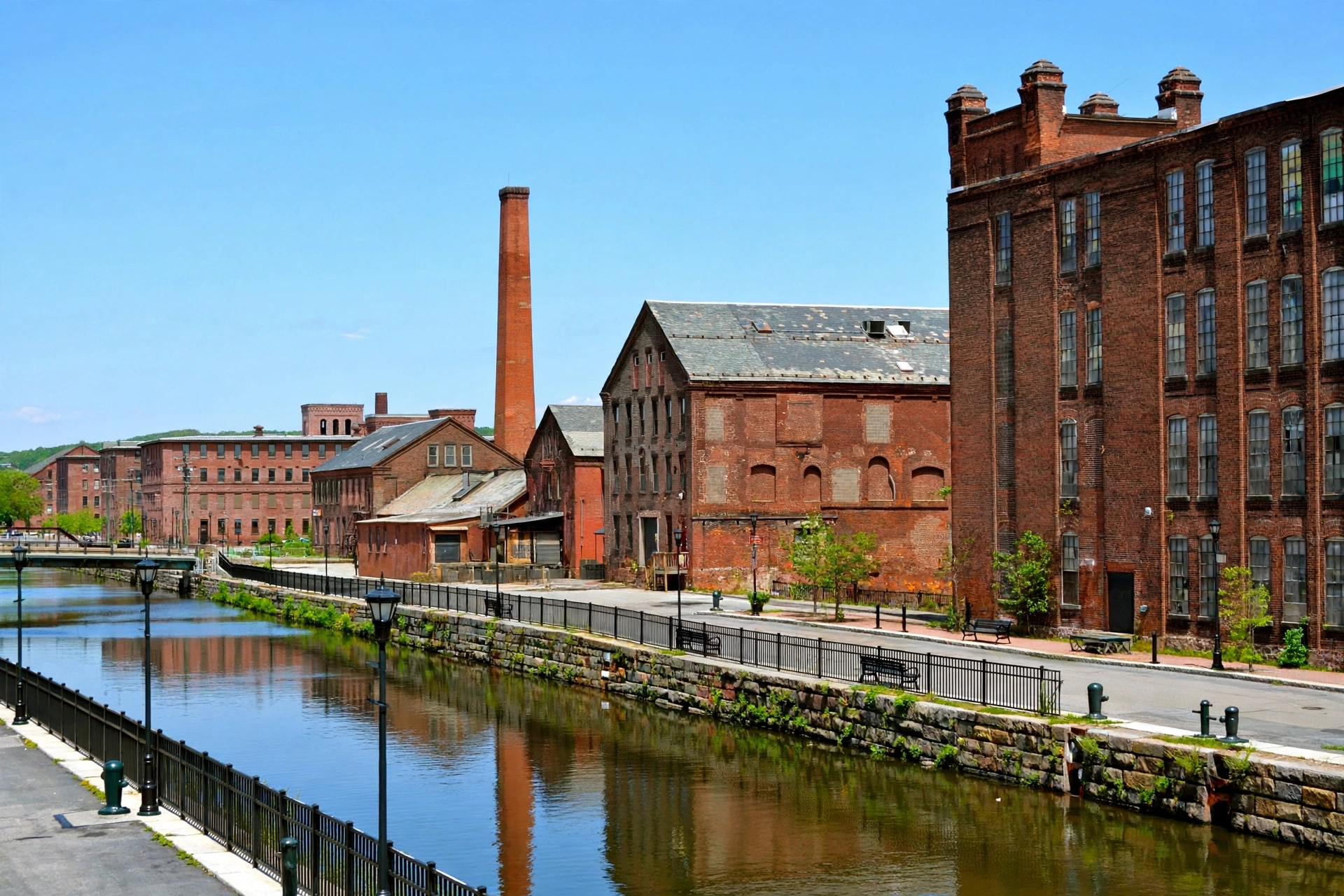
Holyoke's Mill Housing: Older Homes, Mixed Roof Types
Much of Holyoke's housing dates to the mill era, and that age shows up on roofs in predictable ways: layered or patched coverings from past repairs, flashing that has been worked on more than once, and attic spaces that may have been altered as buildings were divided into units. An inspector on an older Holyoke home spends extra time on flashing at chimneys, valleys, and wall junctions, and on signs of past leaks — staining, softened decking, and mismatched shingle patches — because those are the places where older roofs most often fail first.
Multi-family buildings add a further wrinkle: a single roof may shelter several units, so a leak over one unit can originate some distance away, and access to the attic or roof hatch may run through common areas. When booking, mention the number of units and whether roof access is shared, so the inspector arrives prepared and the report covers the whole roof system rather than one slope.
Flat Roofs and Low-Slope Roofs: The Inspection Difference
Flat and low-slope roofs, common on Holyoke's mill and commercial buildings, do not shed water the way a pitched roof does. Water sits, finds seams, and tests every penetration — vents, drains, HVAC curbs, and skylights. A flat-roof inspection therefore walks the membrane seam by seam, checks ponding areas and drainage paths, and documents the condition of each penetration's flashing, rather than scanning shingle courses from a ladder.
Where ponding suggests trapped water, the report may recommend a moisture scan or core follow-up to confirm what is happening under the membrane. That follow-up matters because a flat roof can look sound from above while holding moisture below — and because the cost of guessing wrong is a repair scoped to the wrong area. Ask whether your quote includes that follow-up step or treats it as a separate visit.
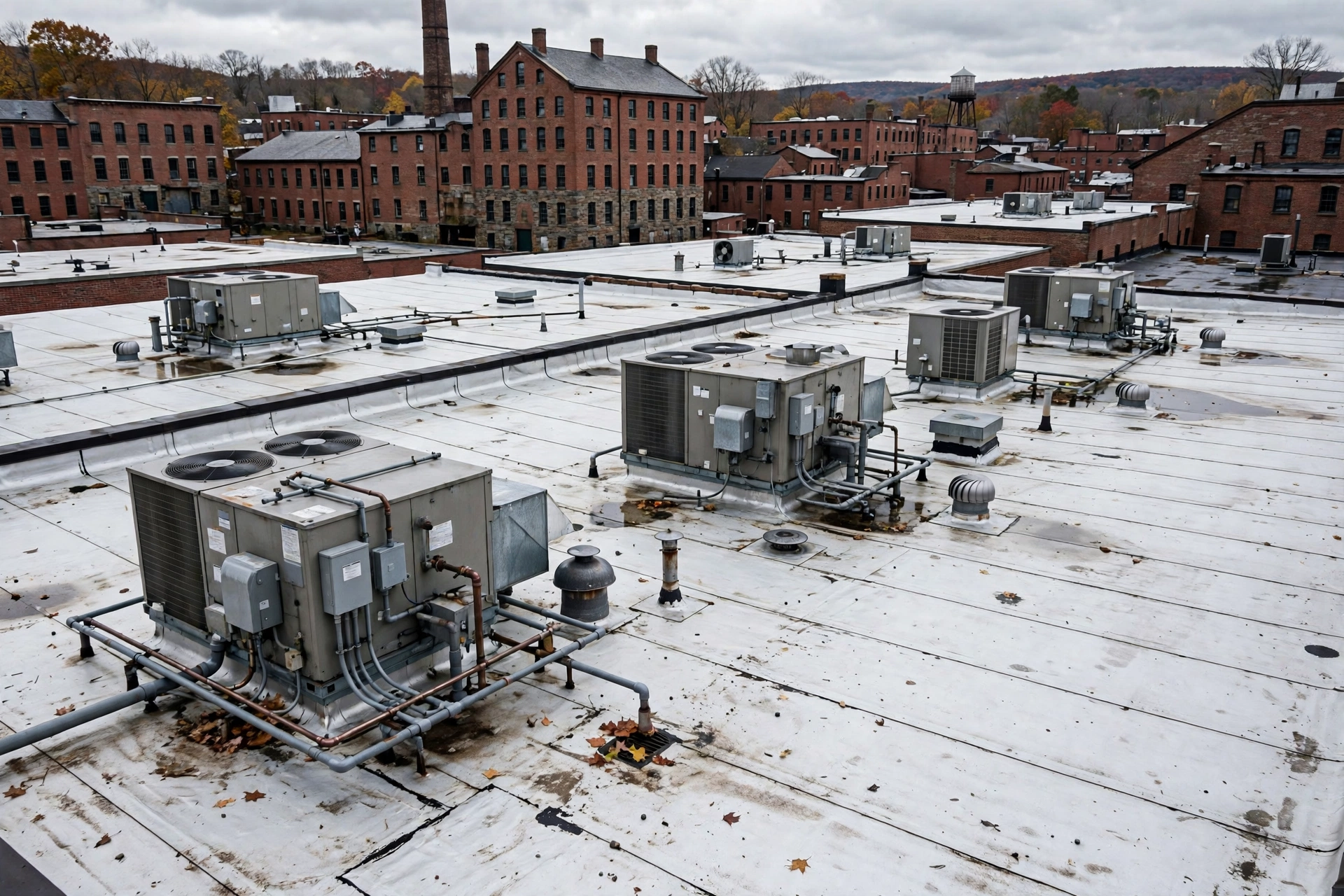
Canal-District Buildings: Age, Access, and Shared Walls
Buildings in Holyoke's canal district tend to be tall, brick, and tightly packed, with shared walls and roofs that meet neighboring structures. Shared walls mean flashing details at parapets and party walls deserve close attention, and tight lots can limit ladder access on one or more sides. A thorough inspection notes those access limits honestly instead of implying every slope was walked.
Converted mill properties bring their own questions: large roof areas, mixed materials where additions meet the original structure, and interior spaces where a roof leak may show up far from its source. If you are buying in the canal district, a pre-purchase inspection is the right tool — it gives you a documented condition baseline before closing, rather than a verbal opinion you cannot revisit later. For the full list of communities served, see our service areas page.
Services Offered in Holyoke
The same services offered in Westfield are available in Holyoke, scoped to the property:
- Residential roof inspection: pitched and low-slope homes, including multi-family buildings, with a written photo report.
- Commercial roof inspection: mill, warehouse, and commercial flat roofs, surveyed on foot across the full membrane.
- Pre-purchase inspection: a documented baseline for buyers, including canal-district and converted mill properties.
- Leak detection: tracing a known leak to its source, including thermal scanning where hidden moisture is suspected.
- Damage inspection: documented storm or impact damage for insurance or repair planning.
If you are unsure which service fits, describe the building and the question you need answered — buying, selling, leaking, or planning repairs — and the scope will follow from that. Nearby, our guide to a roof inspection in Chicopee, MA covers the neighboring city's housing stock and airport corridor.
Book a Roof Inspection in Holyoke
Tell us the property type, roof material, and number of stories, and we will confirm the right scope before you book. Call (213) 646-7883.
Residential Roof InspectionsFrequently Asked Questions
Yes. A house inspection centers on pitched covering, flashing, and attic decking, while a mill or commercial building inspection centers on membrane seams, ponding, drainage, and penetrations across a large low-slope surface. The method, the time on site, and the report all change with the building type.
The inspector documents what can be seen safely from the roof edge, from the ground, and from inside where access allows, and says plainly what could not be inspected and why. Drone imagery can document steep, fragile, or otherwise unwalkable sections without putting weight on a compromised surface — ask about it when booking if access may be limited.
Where safe attic access exists, yes — the inspector checks decking, staining, and ventilation from inside, which often shows leaks before they stain a ceiling. Sealed, unsafe, or inaccessible attics limit what can be documented, and the report should say so rather than imply the attic was checked.
Yes, inspections cover Holyoke and other Hampden County communities, including nearby Chicopee. See our service areas page for the full list, and call to confirm coverage for your property.