
Roof Inspection Near Me in Westfield: What “Near Me” Should Actually Mean
“Near me” should mean an inspector based in or near Westfield, working across Hampden County, who can reach your property without a long trip, knows the local housing and commercial building stock, and can come back for follow-up without a major journey. It should not mean a company that merely advertises in your town while dispatching from far away. Before you book, call to confirm availability and timing for your address — treat anything you read online about dispatch or arrival as general guidance only, not a promise about your visit.
Dispatch Radius: How Far “Local” Really Reaches
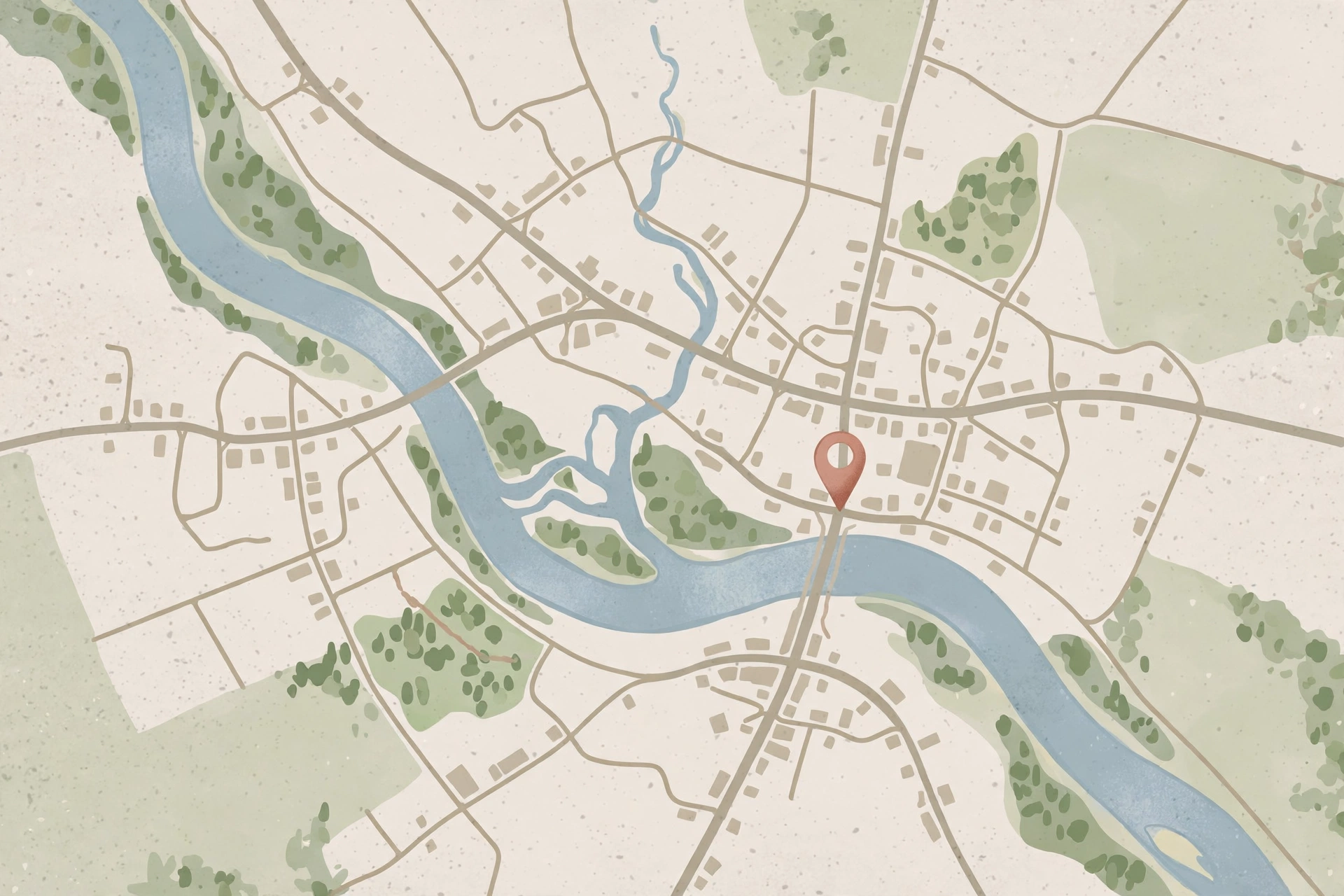
Every inspection company has a dispatch radius, whether it states one or not: the area it can serve practically, where a second visit for follow-up photos or a re-check is feasible, and where the inspector arrives with local knowledge rather than a map and a guess. For a Westfield-based inspector, that practical area is Westfield itself and the surrounding communities of Hampden County — a county-scale local service, not a statewide one dressed up in local advertising.
The test is simple. Ask where the inspector is based and where the visit will be dispatched from. A genuine local answer names a place you recognise. A vague answer — a region, a state, or a refusal to say — usually means the inspector is travelling a long way, or that your job will be passed to a subcontractor whose base you never learn.
You can see the shape of our own coverage on our service areas page, which lists the communities we serve across Hampden County. If your property sits near the edge of that area, or outside it, say so when you call: an honest company will tell you plainly whether the visit is practical, rather than booking it and discovering the distance on the day.
Arrival Times: General Guidance, Never a Guarantee
Arrival times are where “near me” advertising most often over-promises. A short distance on a map does not translate into a precise arrival time, because traffic, weather, access problems at a previous job, and the complexity of the roof being inspected all shift a schedule during the day. Any company that quotes you an exact arrival time before it knows your address, your roof type, and its own schedule for the day is guessing — and a guess dressed up as a promise is worse than an honest window.
The right way to handle timing is straightforward: call to confirm. On that call, confirm the appointment window, who is coming, what access the inspector will need, and what happens if the schedule changes. Treat anything published online about dispatch or arrival as general guidance only. A local base shortens the journey and makes rescheduling easier, but it does not remove traffic, weather, or the previous job running long. If timing matters to you — a buyer waiting on a report, a contractor waiting on findings — say so on the call, so the visit can be planned with that in mind rather than discovered as a problem afterwards.
Be especially cautious of urgency language that pairs a local claim with a speed claim. A company that is genuinely nearby does not need to promise an impossibly precise arrival to prove it; its base, its service area, and its willingness to confirm timing on the phone are the proof. If a booking page will not let you speak to a person about timing, that is itself information.
Why Local Matters: Knowledge You Cannot Buy From Far Away
Local knowledge is the real benefit of hiring nearby, and it has little to do with travel time. Westfield and Hampden County homes share patterns: similar eras of construction, similar materials used in similar decades, similar roof shapes, and the same weather exposure year after year. An inspector who works here regularly recognises the recurring failure points of that stock — the flashing details that age first on local colonials, the flat-roof drainage habits of local commercial buildings, the attic ventilation patterns common in homes of a certain era — and knows which details deserve a closer look on a given property type.
That familiarity also changes the report. A local inspector can place your roof in context: whether its condition is typical for its age and type in this area, or whether something stands out as unusual. A distant inspector starts from scratch on every property and is more likely to miss the local pattern. Context is not a substitute for inspection, but it turns a list of observations into useful advice.
Local presence matters after the inspection too. Questions about a report, a request for clarification photos, or a follow-up check after a repair are all simpler when the inspector is nearby and already knows the property. That continuity is part of what you are paying for with a local hire, and it is worth asking about directly: if you have a question about the report next week, who answers it, and how quickly can they return if a return visit is needed? Call to confirm the answers for your case rather than assuming them.
How to Vet an Inspector Before You Book
Vetting an inspector takes one phone call and four questions. First, will you receive a written, photo-documented report, or only a verbal opinion? A verbal opinion cannot be shown to a buyer, an insurer, or a contractor, and it cannot be checked later. Second, does the inspector also sell the repairs it recommends? An inspector with a financial interest in finding work has a conflict of interest; an independent inspector documents condition and leaves repair decisions to you. Third, what happens if the roof cannot be walked — steep pitch, fragile material, storm damage, or winter ice? The answer should describe ground observation, attic inspection, and drone imagery where appropriate, not a shrug. Fourth, is the inspector independent of any roofing contractor? Independence is the point of an inspection.
Beyond those four questions, check the basics that any legitimate local business should show plainly: a real business address, a phone number answered by a person, and a service area that matches where you live. Our office is at 10 Turnpike Industrial Rd, Westfield, MA 01085, and our phone line is (213) 646-7883 — both listed on the contact page, because a local inspector should be findable after the visit as well as before it. If a company hides its address, routes every enquiry through a form with no phone option, or cannot name the inspector who will visit, treat that as a warning sign.
Finally, be wary of the signals that look like vetting but are not. A long list of towns on a website is advertising, not coverage, and a claim to be the best or most trusted inspector in town is a slogan, not evidence. Evidence is a sample report, a clear description of method, a named base, and straight answers to the four questions above.
Looking for a Local Inspector?
Call (213) 646-7883 to confirm availability and timing for your property.
Contact UsFrequently Asked Questions
It should mean the inspector is based close enough to reach your property without a long trip, knows the local building stock, and can return for follow-up without a major journey. A search result that merely targets your town in its advertising, while dispatching from far away, is not local in any sense that helps you.
Call and ask directly: confirm the appointment window, who is coming, and what happens if the schedule changes. Treat any timing as general guidance only until it is confirmed on that call, and be cautious of any company that promises an exact arrival time before it knows your address, your roof type, or its own schedule for the day.
Because Westfield and Hampden County homes share patterns: similar eras of construction, similar materials, and similar weather exposure. An inspector who works here regularly recognises the recurring failure points of local housing stock and local commercial buildings, and knows which details are worth a closer look on a given property type.
Ask whether you receive a written, photo-documented report, whether the inspector also sells the repairs it recommends, what happens if the roof cannot be walked, and whether the inspector is independent of any roofing contractor. The answers to those four questions tell you more about quality than any advertising claim.