
Roof Inspection in Springfield, MA
Yes. Roof Inspection Westfield serves Springfield, MA as part of its Hampden County service area, covering single-family homes, multi-family buildings, and commercial properties. Springfield's housing is unusually mixed — older pitched roofs, newer asphalt roofs, and flat or low-slope multi-family roofs sit side by side — so a good inspection here documents each roof type on its own terms rather than applying one checklist to all of them. Call (213) 646-7883 to book.
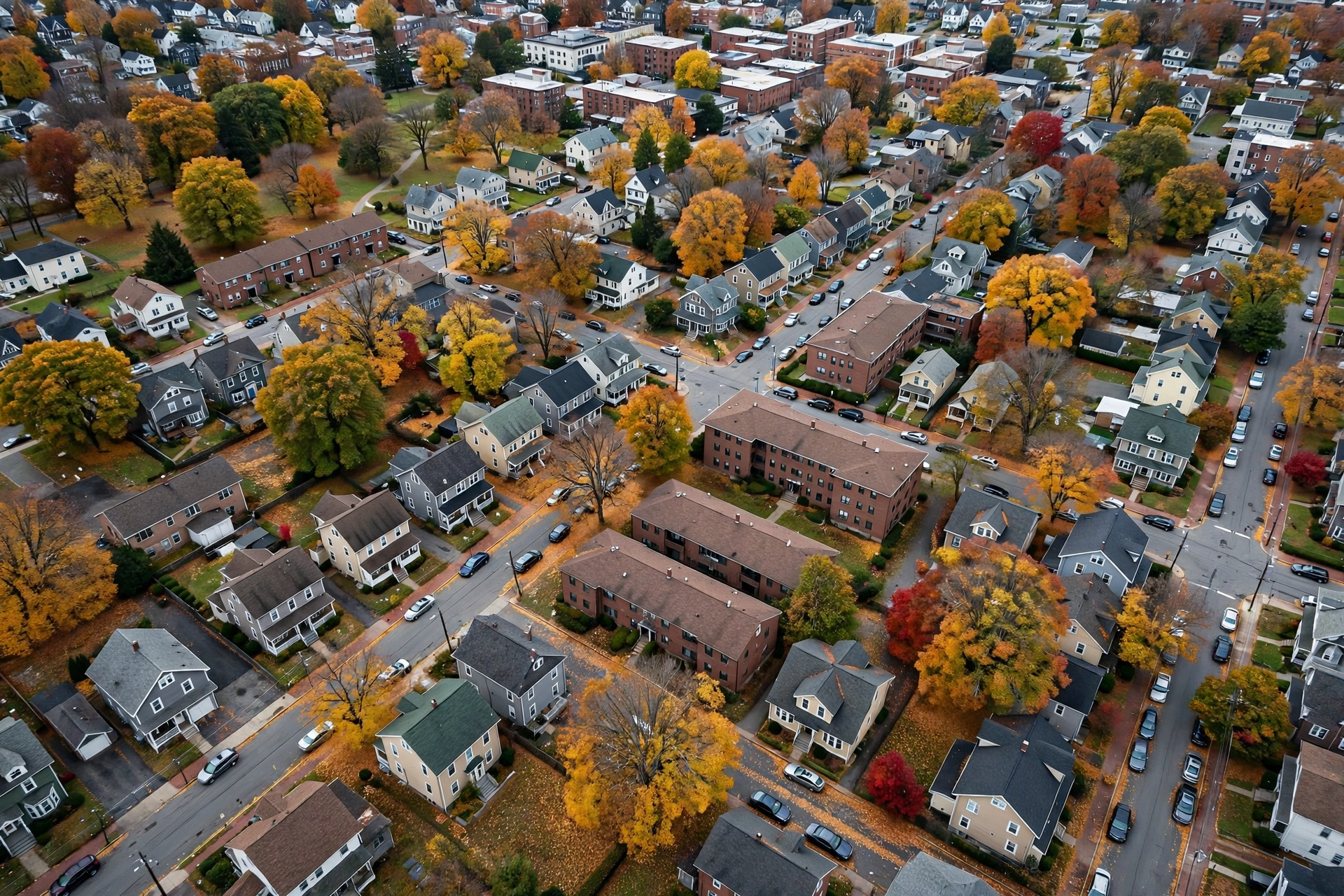
Springfield: The Largest City in Hampden County
Springfield is the largest city in Hampden County, and that scale shows up in its roofs. A single inspection route here can pass from dense urban blocks with brick multi-family buildings to quieter residential streets of single-family homes, and each setting brings different roof forms, ages, and access conditions. An inspector working in Springfield therefore needs to be comfortable on both a steep pitched roof and a flat membrane roof, sometimes on the same day.
Size also means variety in building age. Springfield has homes from many eras, and older roofs often carry layers of past work: patched flashing, added vents, replaced sections, and materials that are no longer common. A useful inspection separates what is original, what has been repaired, and what is now failing — rather than simply noting that a roof looks old. Age alone is not a verdict; condition, drainage, and detailing decide whether a roof has useful life left.
A Mixed Housing Stock, and What It Means for Roofs
Springfield's mixed housing stock means no single roof type dominates. Asphalt shingles are common on pitched residential roofs, but slate, cedar, and metal appear on older and higher-end homes, and flat or low-slope membranes cover many commercial and multi-family buildings. Each material ages differently: shingles lose granules and curl, slate cracks and slips, cedar splits, and membranes seam-fail and pond. An inspection that only looks for shingle wear will miss membrane problems, and vice versa.
Mixed stock also means mixed details. Valleys, chimneys, skylights, dormers, and wall junctions are where most leaks start, and older homes tend to have more of them, added over successive renovations. The inspection therefore spends as much time on flashing and transitions as on the field of the roof itself. Gutters and downspouts matter too: a roof that sheds water well but drains it against the foundation has still failed at part of its job.
Multi-Family Roofs: Shared Surfaces, Shared Stakes
Multi-family roofs deserve their own attention in Springfield because the stakes are shared. One roof often protects several households, and one failed seam or blocked drain can affect units that have no visible damage of their own. The inspection report therefore needs to be clear enough for an owner or manager to act on: which section is affected, how serious it is, and what should be addressed first.
The roofs themselves are often hybrids. A single multi-family building may combine a pitched asphalt section over living space with a flat membrane section over a porch, stairwell, or addition, each with its own drainage path. Parapets, shared gutters, and rooftop equipment add penetrations that must each be flashed and sealed. Documenting these sections separately — with captioned photos for each — keeps the report useful instead of vague.
Access is the other multi-family complication. Some roofs are reached only through shared interior spaces or by ladder from a parking area, and some sections cannot be walked at all. A reputable inspector says plainly which areas were walked, which were viewed from the edge or by drone imagery, and which could not be inspected, so the owner knows exactly what the report does and does not cover.
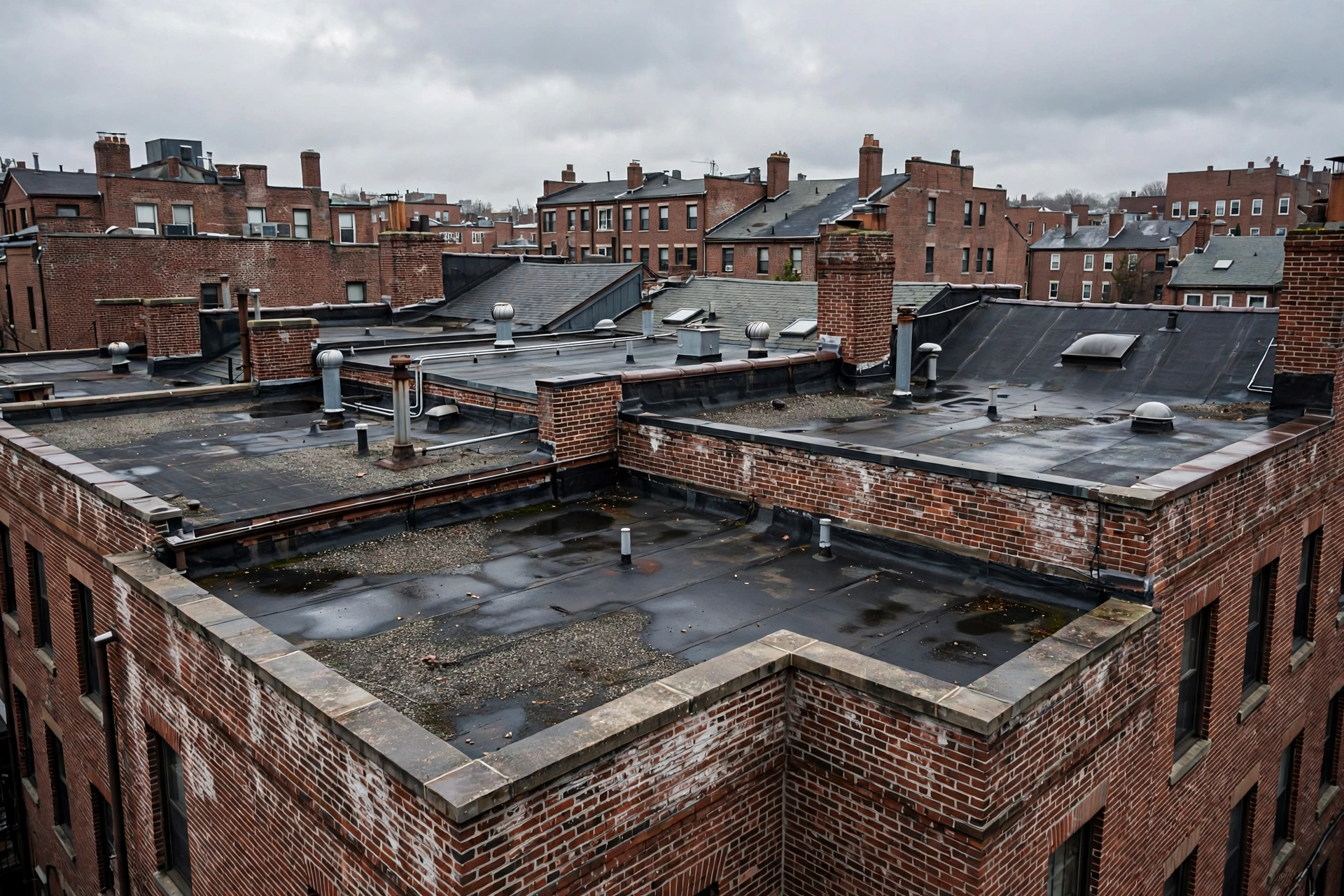
Roof Inspection Services Offered in Springfield
The services offered in Springfield match those offered across Hampden County. Residential roof inspections cover single-family homes and duplexes, documenting covering condition, flashing, valleys, gutters, and attic decking where accessible. Commercial roof inspections cover flat and low-slope roofs, membranes, seams, ponding, and drainage. Pre-purchase inspections give buyers a dedicated roof report before closing, and leak detection traces active leaks to their source rather than to the stain on the ceiling below.
Every inspection ends with a written, photo-documented report, not just a verbal opinion. That matters most when the report must be shared — with a buyer, a seller, a property manager, or a contractor pricing repairs — because a written record with captioned photos leaves far less room for disagreement about what was found.
Related reading: roof inspection in Chicopee, MA, and see all of our coverage on the service areas page. To book an inspection in Springfield, call (213) 646-7883 or use the contact page to request online booking.
Book a Roof Inspection in Springfield
Tell us the property type and roof material if known, and we will confirm what the inspection covers before you book. Call (213) 646-7883.
Residential Roof InspectionsFrequently Asked Questions
Yes. Springfield is served as part of our Hampden County service area, covering single-family homes, multi-family buildings, and commercial properties. Call to confirm coverage for your property type and to book.
Multi-family roofs often combine flat or low-slope sections with pitched sections, shared drainage, and many penetrations for vents and rooftop equipment. The inspection therefore documents each section separately and notes where shared surfaces and drainage affect more than one unit.
A dedicated roof inspection is worth it before a purchase, especially on older or mixed-material roofs. It gives you a written, photo-documented picture of covering condition, flashing, and remaining life, separate from a general home inspection.
You receive a written, photo-documented report covering the roof surface, flashing, valleys, gutters, and attic decking where accessible, with repair recommendations. If any area could not be walked or accessed, the report says so plainly.