
Roof Leak Inspection in Westfield, MA: How Hidden Leaks Get Traced
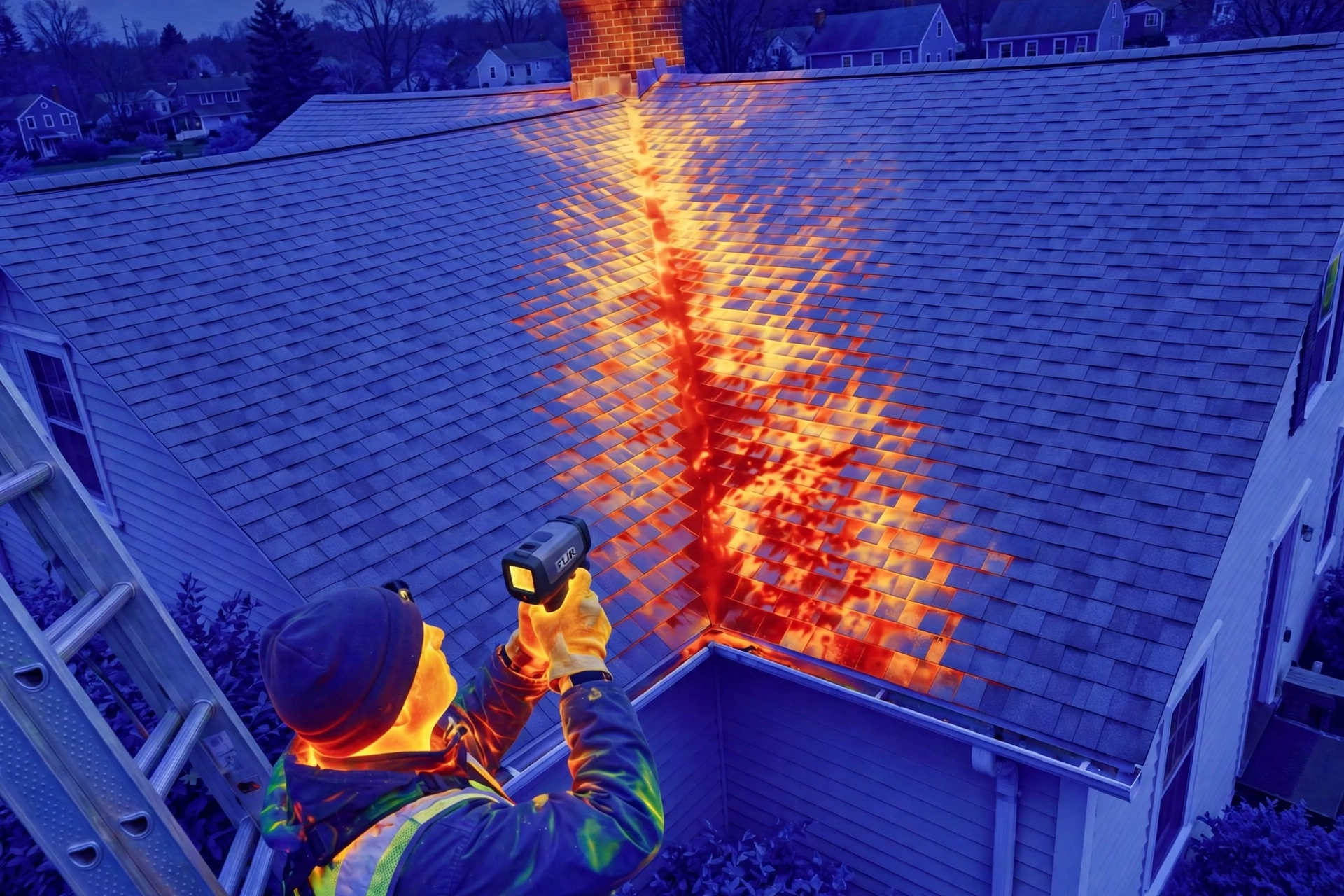
Almost never from directly above the stain. Water that gets under shingles or flashing runs downhill along decking, rafters, and vapor barriers, and it can surface several feet from where it entered — sometimes in a different room. A roof leak inspection in Westfield, MA therefore works backwards: from the stain, through the attic, to the entry point, using moisture meters and infrared thermal imaging to follow the wet path instead of guessing from the ceiling. If you only patch above the stain, the leak usually comes back with the next heavy rain.
The Stain Is Rarely the Source
The most common mistake in leak repair is treating the symptom. A brown ring on a bedroom ceiling usually marks where water finally pooled and soaked through — not where it got in. On a typical Westfield colonial, water entering at a chimney flashing or a valley can travel along the underside of the decking, follow a rafter downhill, and drip through drywall far from the breach. Patching the ceiling stain, or even re-shingling directly above it, leaves the real entry open.
That is why a leak inspection starts inside, not on the roof. The inspector maps every stain, checks the attic above it, and looks for the wettest wood — moisture readings, not appearances, decide where the path begins.
How Water Travels Through Roof Layers
A roof is a system of layers, and water exploits each one:
- Shingles: shed water downhill while intact, but lifted, cracked, or missing shingles let wind-driven rain underneath.
- Underlayment: the backup layer; once it is torn or aged, water reaches the decking.
- Decking: plywood or boards that wick water sideways along grain and seams, spreading the wet area.
- Flashing: the metal at chimneys, valleys, skylights, and walls — the most common entry point of all, because every penetration is a seam.
- Attic and framing: rafters and insulation channel water downhill until it finds a ceiling joint to drip through.
Westfield's freeze-thaw cycles make this worse: water trapped in a small flashing gap freezes, expands, and opens the gap further each winter, so a slow leak gets faster year by year.
Thermal Imaging and Moisture Meters
Eyes alone cannot see a wet path inside a roof assembly. Two tools change that:
- Infrared thermal scanning reads surface temperature differences — wet insulation and decking cool and warm differently from dry material, so the camera draws the hidden moisture map across a slope or a flat membrane.
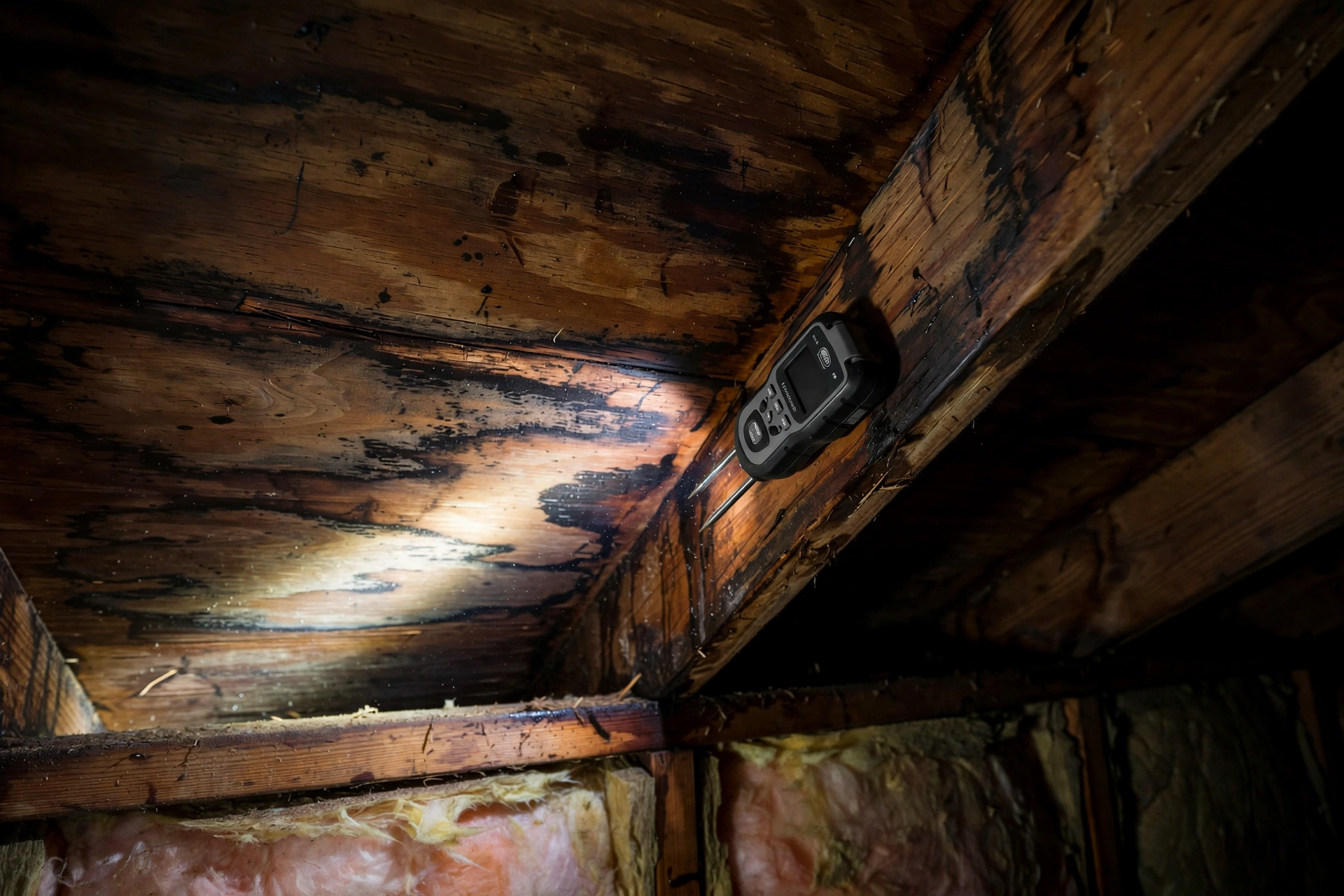
- Pin and pinless moisture meters confirm what the camera suggests, giving readings in the decking and rafters so the inspector can separate old, dried staining from active wetness.
Together they answer the question that decides the repair: is this an active leak, an old stain from a fixed problem, or condensation? Each has a different fix, and guessing wrong wastes money.
Tracing a Leak From the Attic
A proper trace follows a sequence. First, the inspector documents stains and moisture readings inside, then enters the attic (where accessible) and follows staining uphill toward the ridge, checking penetrations, valleys, and flashing boots along the way. Only then does the roof surface get examined at the suspected entry — lifted shingles, cracked boots, failed sealant, or ice-dam damage at the eaves.
If the attic is sealed or unsafe to enter, the inspection says so plainly and works from thermal scans and exterior evidence instead. A report that pretends to have checked an inaccessible attic is not a report you can trust.
What a Leak Inspection Report Gives You
You should receive a written, photo-documented report: the traced entry point, the full wet path, the materials affected, and the repair scope that actually fixes the cause — not just the stain. That report is what a roofer quotes from, what an insurer asks for, and what a buyer relies on. Without it, every repair is a guess.
If the stain is growing, the ceiling is sagging, or water is dripping during rain, treat it as urgent and call dispatch — active leaks damage decking and insulation every storm they run. Our storm damage inspection guide covers what happens when wind and hail open the entry in the first place, and our Westfield cost guide explains what determines the price of the inspection itself.
Related reading: storm damage roof inspection in Westfield and what a Westfield roof inspection costs.
Book a Leak Trace Before the Next Storm
Tell dispatch where the stain is and when it appeared, and an inspector will trace it from stain to source with moisture readings and a photo-documented report. Call (213) 646-7883.
Roof Leak InspectionFrequently Asked Questions
Because water runs downhill inside the roof assembly — along decking, rafters, and vapor barriers — before it finds a place to drip through the ceiling. The stain marks the exit, not the entry, which is why tracing works backwards from the stain through the attic.
In most cases, yes. Thermal imaging and moisture meters map the wet path from inside and from the surface, and the entry point is usually identifiable at flashing, valleys, or penetrations without lifting the roof covering. Targeted removal happens only when the evidence points to a specific hidden failure.
Wet insulation and decking change temperature differently from dry material, so an infrared camera reveals the full moisture pattern under membranes and shingles — including leaks that have not stained anything yet. It also separates active wetness from old, dried staining.
When water is actively dripping during rain, when a ceiling is sagging or bulging, or when the leak is near wiring or a chimney chase. In those cases call dispatch right away rather than waiting for a scheduled visit — every storm the leak runs, it damages more decking and insulation.