
What Does a Roof Inspector Actually Look For? Attic, Deck & Flashing Explained
A roof inspector looks at five things: the covering, the flashing, the penetrations, the attic, and the decking. The covering shows wear and damage; the flashing and penetrations show where water is most likely getting in; and the attic and decking show whether water already has. A good report covers all five, slope by slope, with photos — because a roof that looks fine from the street can be failing at a joint or underneath, where you cannot see it.
The Covering: What the Surface Shows
The covering — shingles, slate, tile, or membrane — is the roof's weather skin, and it is where an inspection starts. On an asphalt shingle roof, the inspector looks for missing, cracked, curled, or lifted shingles, for granule loss that leaves the surface bare and patchy, and for uneven wear that suggests one slope is aging faster than the rest. On slate or tile, the check is for cracked, slipped, or missing pieces and for repairs that do not match the surrounding material. On a flat membrane, it is seams, blisters, punctures, and areas where the surface has thinned or ponded water has left its mark.
Covering condition is also read in the gutters and at the base of downspouts, where granules and broken fragments collect. Heavy granule buildup is a sign the covering is shedding its protective surface. The inspector compares slopes: a roof that wears evenly is aging normally, while one slope in far worse shape than the others points to a local problem worth investigating.
Flashing: Where Most Leaks Start
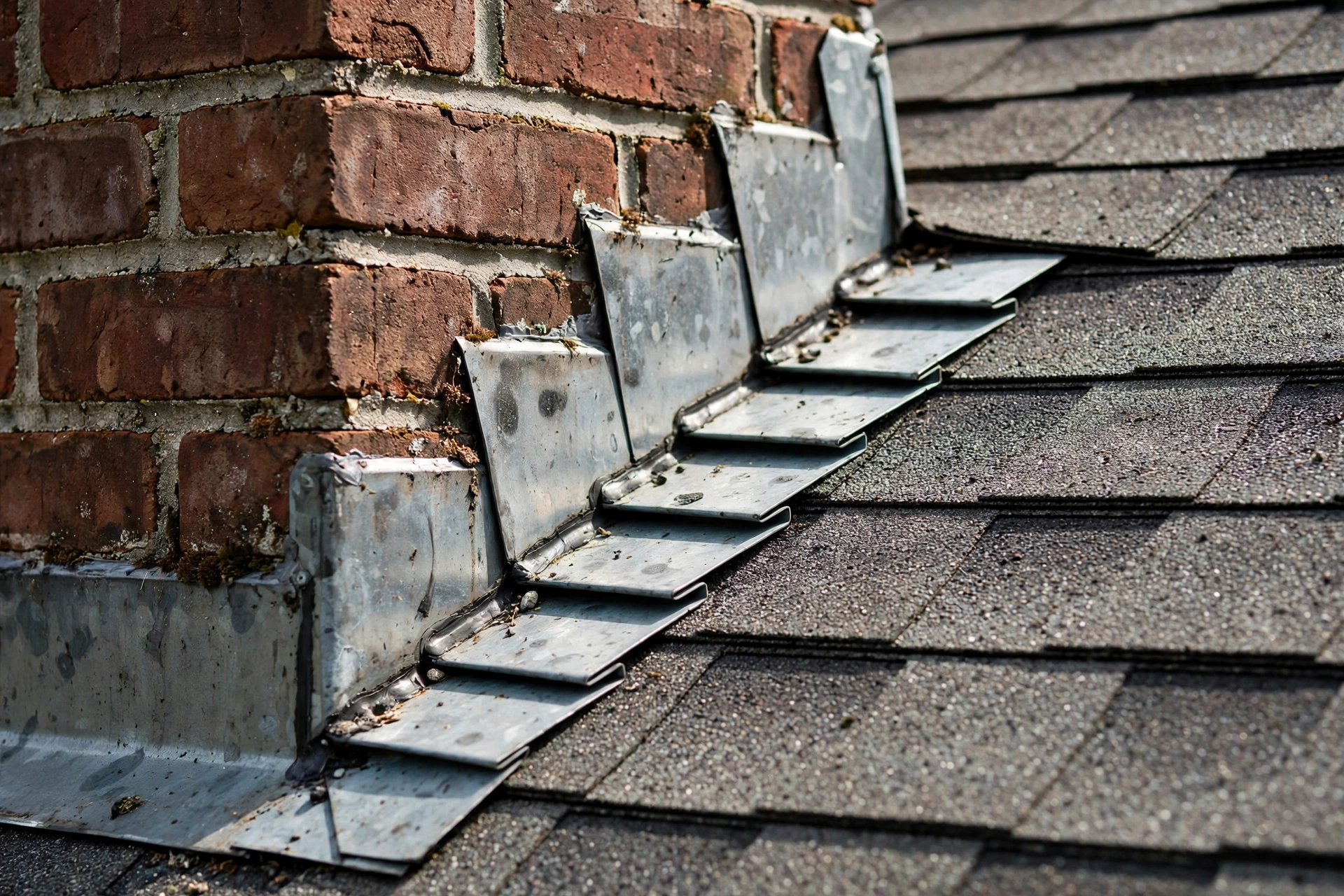
Flashing is the metal that seals every place the roof changes direction or meets something else: chimneys, walls, valleys, skylights, and eaves. It is the most leak-prone part of any roof, and it gets the closest attention. The inspector checks each flashing run for rust and corrosion, for pieces that have lifted, separated, or been bent out of shape, for sealant that has cracked, shrunk, or pulled away, and for counter-flashing that no longer overlaps the base flashing correctly.
Valleys deserve a special note. A valley carries water from two slopes at once, so a valley flashing failure leaks faster and further than a failure on an open slope. The inspector checks whether valley metal is intact, whether debris is damming water in the valley, and whether the covering alongside it is still sealed. Chimney flashing gets the same treatment: step flashing woven into the courses, counter-flashing set into the mortar, and sealant at every joint.
Penetrations: Every Hole Is a Joint
Every vent pipe, exhaust fan, skylight, and chimney is a hole cut through the weather skin, and every hole is sealed with flashing, a boot, or a curb that must stay watertight as the roof moves with temperature and age. The inspector checks each penetration in turn: vent boots for cracking and splitting where the rubber meets the pipe, skylight curbs and flashing for gaps and failed sealant, and exhaust vents for covers that have loosened or gone missing.
Penetrations are also checked from below, in the attic, where a leak at a vent or skylight often shows up first as a stain on the decking or insulation directly beneath it. A penetration that looks sealed from above but stains below is still a failed penetration — which is why the outside check and the attic check are done together, not as separate jobs. If your roof has many penetrations — a kitchen and bathroom vent, a skylight, a chimney — expect this part of the inspection to take the longest, because it should.
The Attic: Reading the Roof from Underneath
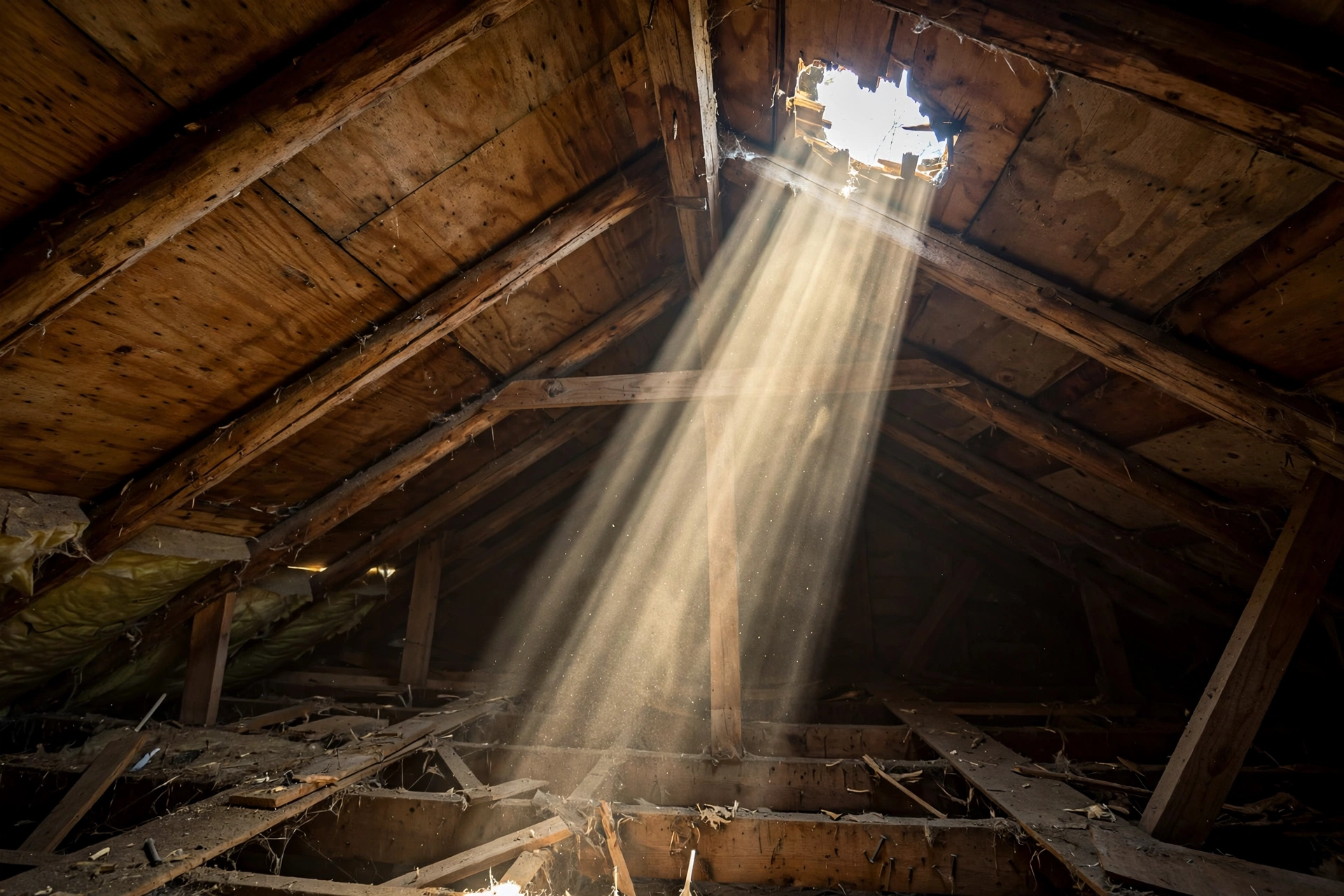
The attic is where an inspection earns its keep. From underneath, the inspector can see stains and watermarks on the decking that map exactly where water has entered, daylight showing through gaps around penetrations, damp or compressed insulation, and signs of condensation where warm indoor air meets a cold roof deck. Ventilation is checked here too: blocked soffit vents, missing ridge ventilation, or an attic that runs hot and damp all shorten a roof's life and encourage moisture problems that look, from outside, like covering failure.
Attic access matters. A sealed, unsafe, or inaccessible attic limits what can be documented, and a thorough report says so plainly rather than guessing. If your attic is accessible, clear a path to the hatch before the inspector arrives and note any areas you already know about — a stain you have seen, a spot that smells damp after rain. That history helps the inspector connect an attic stain to the flashing or penetration above it.
Decking: The Structure Under Everything
Decking — the boards or panels the covering is fastened to — is the roof's structure, and it is the last line before water reaches your living space. The inspector checks it from the attic for sagging between rafters, for soft or delaminated panels, for dark staining that indicates long-term moisture, and for past repairs such as sistered rafters or replaced sections. From above, soft spots felt underfoot while walking the roof are another sign of decking trouble, and they are noted by location so a repair can target the right area.
Decking problems change the scope of a job: replacing covering over sound decking is one kind of repair, and replacing it over rotted or sagging decking is a bigger one that cannot be priced honestly until the decking is seen. That is why a report that skips the attic and decking check can understate the work: it prices the surface while the structure underneath stays unknown. A complete inspection ends with all five checks together — covering, flashing, penetrations, attic, decking — so the report describes the roof as a system, not as a surface.
For a step-by-step look at what to check before you book, see our roof inspection checklist for Westfield. For the service behind this guide, see our residential roof inspection and commercial roof inspection pages.
Get All Five Checks on Your Roof
A thorough inspection covers all five checks — with photos. Call (213) 646-7883.
Residential Roof InspectionsFrequently Asked Questions
When the roof can be walked safely, yes — walking the surface is how covering condition, soft spots, and flashing details are checked up close. Steep, fragile, or damaged roofs are documented from ladders, the ground, or by drone instead, and the report notes which method was used.
Because the attic shows what the outside cannot: stains, daylight at penetrations, damp insulation, and sagging or stained decking. A roof can look sound from outside while the attic tells a different story, and a report without an attic check is an incomplete picture.
Failed or deteriorated flashing and sealant at chimneys, walls, valleys, and penetrations. The covering itself usually fails gradually and visibly; flashing fails quietly at joints, which is why it gets the closest attention during an inspection.
The report documents condition slope by slope and gives a general remaining-life assessment based on what was observed — covering wear, flashing condition, attic signs, and decking soundness. It distinguishes repairs that address a specific problem from the widespread wear that points toward replacement, so you can decide with evidence rather than a sales pitch.