
How Often Should You Inspect Your Roof in Massachusetts?
As general guidance, most Massachusetts homeowners do well with a routine professional inspection every year or two, plus an extra inspection after a severe storm, when warning signs appear, or around a real-estate event. Older roofs, roofs under heavy tree cover, and commercial flat roofs generally benefit from the more frequent end of that range. There is no single correct interval for every roof — age, material, and condition shift the right rhythm, so treat any schedule below as a starting point and call to confirm what fits your roof.
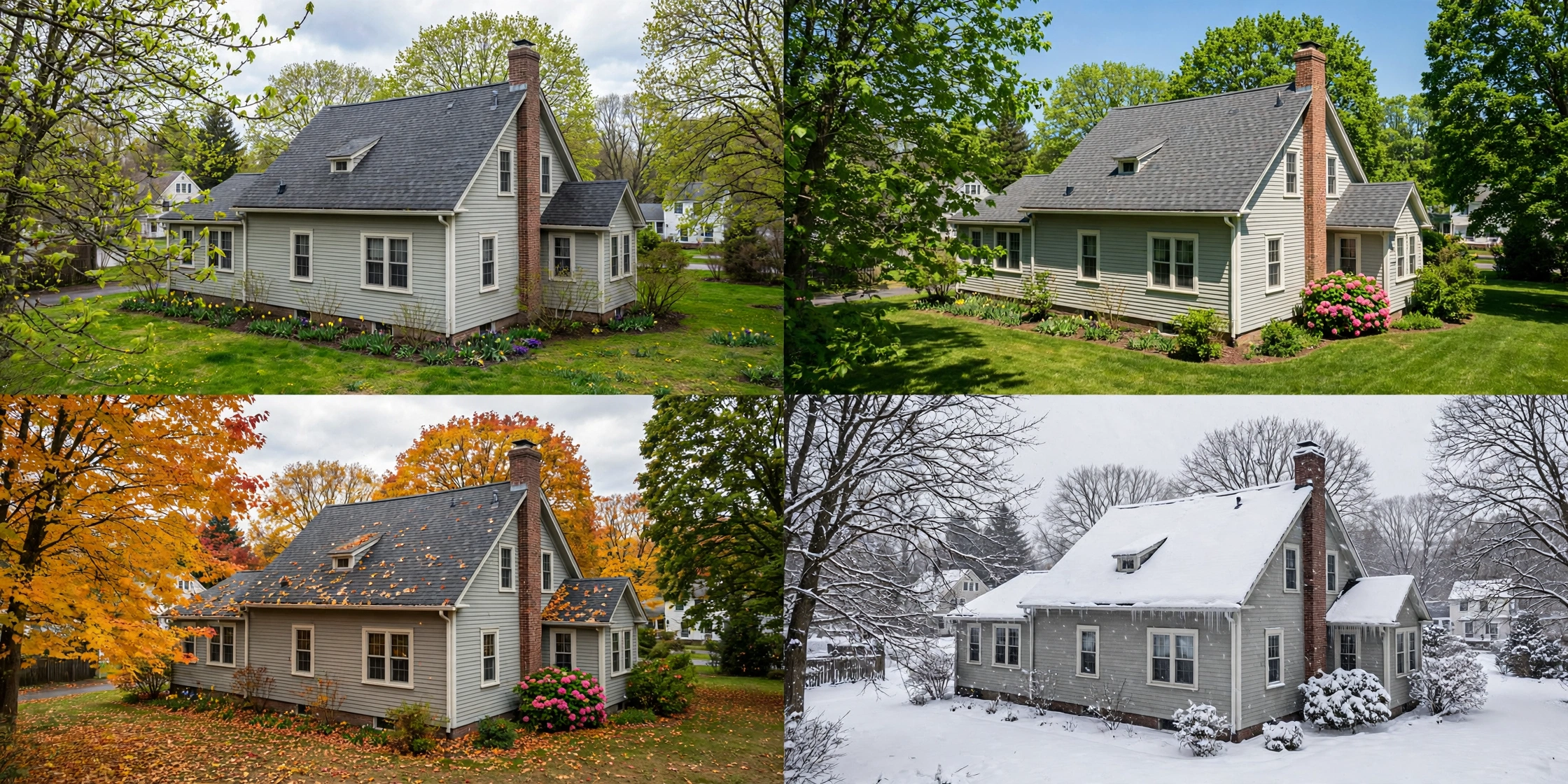
"How often?" is the most common scheduling question we hear, and it has no honest one-number answer. A newer roof on a sheltered, single-story home and an older roof under heavy tree cover in Westfield are not on the same clock, even though both sit in the same county. What this guide offers instead is a way to place your roof on the right rhythm: an age-based starting point, the triggers that should bring an inspection forward, the events that demand one regardless of schedule, and the different cadence commercial roofs follow.
Everything below is general guidance, not a warranty, a policy requirement, or a substitute for advice about your specific roof. If an insurer, lender, or buyer is involved, check the relevant policy or agreement and call to confirm what documentation is expected — requirements vary, and we do not state them here as rules.
An Age-Based Schedule: General Guidance, Not a Guarantee
Age is the simplest way to set a starting rhythm, because wear accumulates with time and weather cycles. The pattern below is a common general approach for a typical asphalt-shingle home in Massachusetts; slate, cedar, tile, and flat membranes age differently, so adjust with an inspector's input rather than applying it literally to every material.
- Newer roofs: a baseline inspection early on documents the roof in good condition and catches installation issues while they are easiest to address. After that, a routine check every couple of years is a reasonable general rhythm.
- Mid-life roofs: as the covering shows its first real wear — granule loss, minor curling, aging flashing — a yearly routine check becomes the sensible default, since small issues are cheaper to catch than to repair later.
- Older roofs: once a roof is well into its service life, more frequent checks are prudent. Condition matters more than the calendar here: a well-kept older roof may need only a yearly look, while one already showing wear may justify checks more often.
Two factors can pull any roof toward the more frequent end of its range: heavy tree cover, which drops debris, shades damp areas, and invites moss, and a history of leaks or repairs, which suggests the system has weak points worth watching. If either applies to your home, mention it when booking so the inspection can focus there. For what a thorough visit actually examines, see our 21-point roof inspection checklist for Westfield homeowners.
Post-Storm Triggers: When to Inspect Sooner
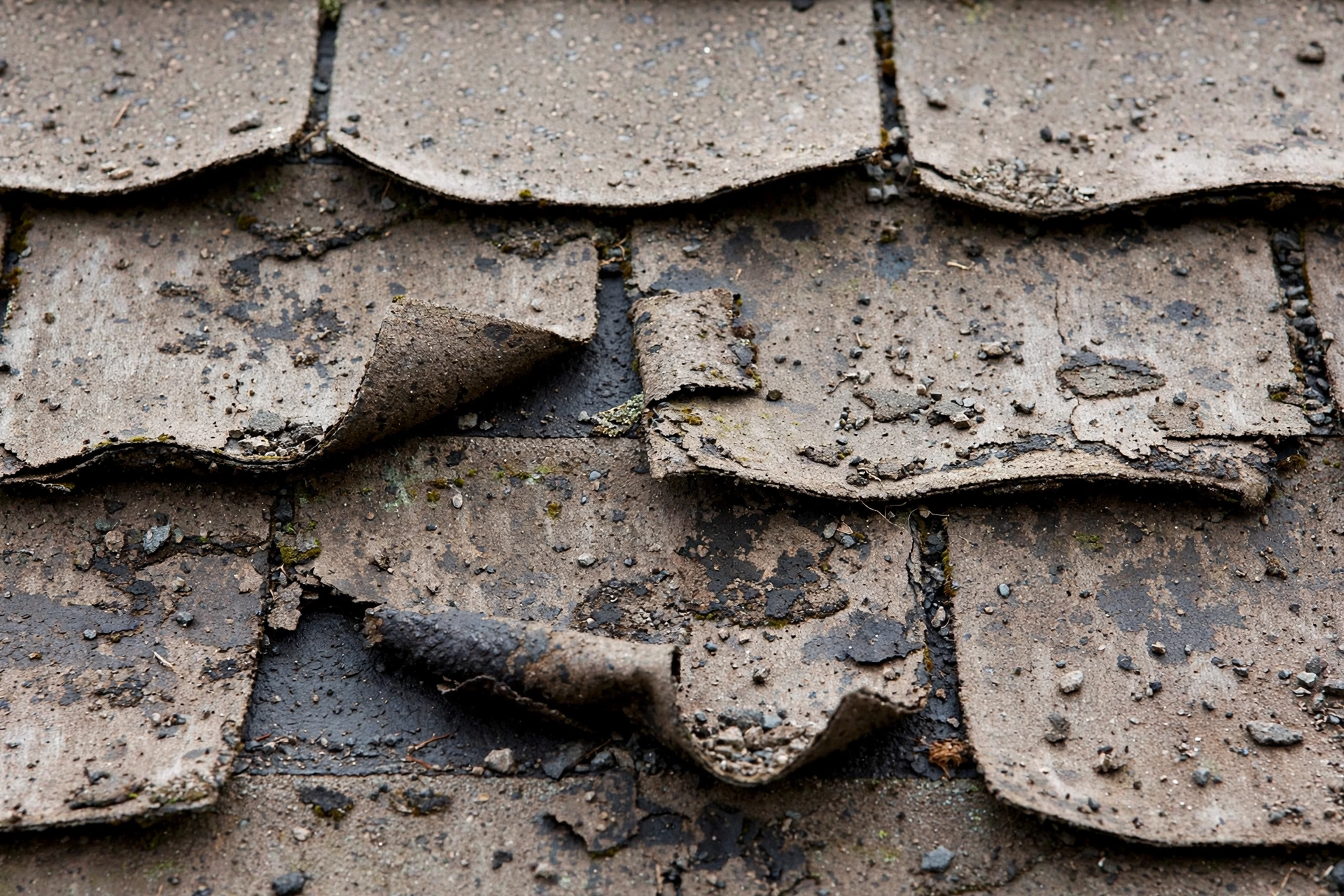
Storms override the calendar. A roof on a two-year rhythm still deserves a prompt look after a severe storm, because storm damage is often invisible from the ground: lifted tabs that reseal imperfectly, bruised shingles, flashing pulled at a joint, or debris damming a valley. Waiting until the next routine visit lets water work through those openings in the meantime.
The practical triggers are straightforward. Inspect sooner if a severe storm passed through your area, if you find shingles or debris in the yard, if gutters overflowed or discharged unusually, or if any new stain appears on a ceiling or wall. You do not need to climb up to decide — a ground-level walk around the house, a look in the attic for new stains, and a call to describe what you see are enough to judge whether a visit is warranted. If the storm also raised a question about a claim, document what you can with dated photos and check your policy; call to confirm what documentation it expects before assuming anything about coverage.
A post-storm check answers one question — did this storm cause new damage? — and does not replace the routine inspection that tracks gradual wear.
Real-Estate Events: Buying, Selling, and Refinancing
Certain events call for an inspection regardless of where you are in the routine cycle, because someone else is about to rely on the roof's condition. The most common is a home purchase: buyers order a dedicated roof inspection to learn what a general home inspection may only summarize, and sellers sometimes order one first to avoid surprises during a sale. Either way, the inspection should be a written, photo-documented report — the kind of document a buyer, seller, or agent can actually use — not a verbal opinion.
Refinancing and insurance renewals can also prompt a request for roof documentation, but the specifics vary by lender and policy. We deliberately do not state lender or insurer rules here, because they differ and change; if you are refinancing or renewing, ask the requesting party exactly what it needs and call to confirm that the inspection report will cover it. Our Massachusetts inspection cost guide explains why a standard report and an insurance-grade report are different scopes — a distinction that matters most exactly at these moments.
For Westfield-specific pricing context around any of these events, see our roof inspection cost guide for Westfield, MA.
Commercial Cadence: A Different Rhythm
Commercial roofs follow a steadier rhythm than most homes, and for a structural reason: flat and low-slope roofs hide their problems. Ponding water, seam wear, and drainage blockages develop gradually on a surface nobody sees from the street, and by the time a leak shows indoors, the membrane damage is often wider than the stain suggests.
A common general pattern for commercial buildings is a seasonal routine check — a look before winter weather sets in and another after it passes, with attention to seams, ponding areas, penetrations, and drainage at each visit — plus a check after severe weather and before a lease, sale, or refinancing event. Property managers often fold this into a maintenance calendar, since each report builds on the last, tracking seam condition and ponding over time. Call to confirm a cadence for your building, its membrane type, and its drainage layout.
Whatever your property type, the simplest rule is this: let condition, age, and events set the schedule, not habit alone. A roof that looks unchanged year after year still ages; a roof that just weathered a severe storm has a new question to answer. Book the routine visit, bring forward the post-storm one, and keep each report — together they are the record of your roof's life.
Related reading: the 21-point roof inspection checklist, roof inspection cost in Westfield, MA, and roof inspection cost in Massachusetts.
Due for an Inspection?
Tell us your roof's age and any recent storm or sale event, and we will confirm the right visit. Call (213) 646-7883.
Residential Roof InspectionsFrequently Asked Questions
No. Age, material, pitch, tree cover, and storm history all shift the right rhythm, so any single number presented as a rule is oversimplified. Use the general guidance in this post as a starting point and call to confirm what fits your roof, its age, and its condition.
Not after every storm — a routine check after a severe storm, or when you see warning signs such as missing shingles, debris, interior stains, or overflowing gutters, is the sensible trigger. If you are unsure whether a storm was severe enough to matter, a ground-level look and a call to discuss what you see will settle it.
Yes, less often, but it still benefits from a baseline inspection. A baseline documents the roof in good condition, catches installation issues early, and gives every later inspection something to compare against. It is also the record you will want if a storm claim ever arises — check your policy and call to confirm what documentation it expects.
Commercial flat roofs generally need a steadier routine rhythm than a typical home, because ponding, seam wear, and drainage problems develop gradually and are easy to miss from the ground. Seasonal checks, plus a check after severe weather and before a lease or sale event, are a common general pattern — call to confirm a cadence for your building.