
Repair or Replace? How to Read Your Roof Inspection Report
Read the report for two things: how much of the roof is affected, and how much life the material has left. Localised damage on a roof with sound decking and expected service ahead usually points to repair, while widespread wear across most slopes — especially late in its expected service range — usually points to replacement. The report's photos and itemized scope matter more than its summary verdict, so read those before deciding.
Lifespan Math: Reading Age Against Condition
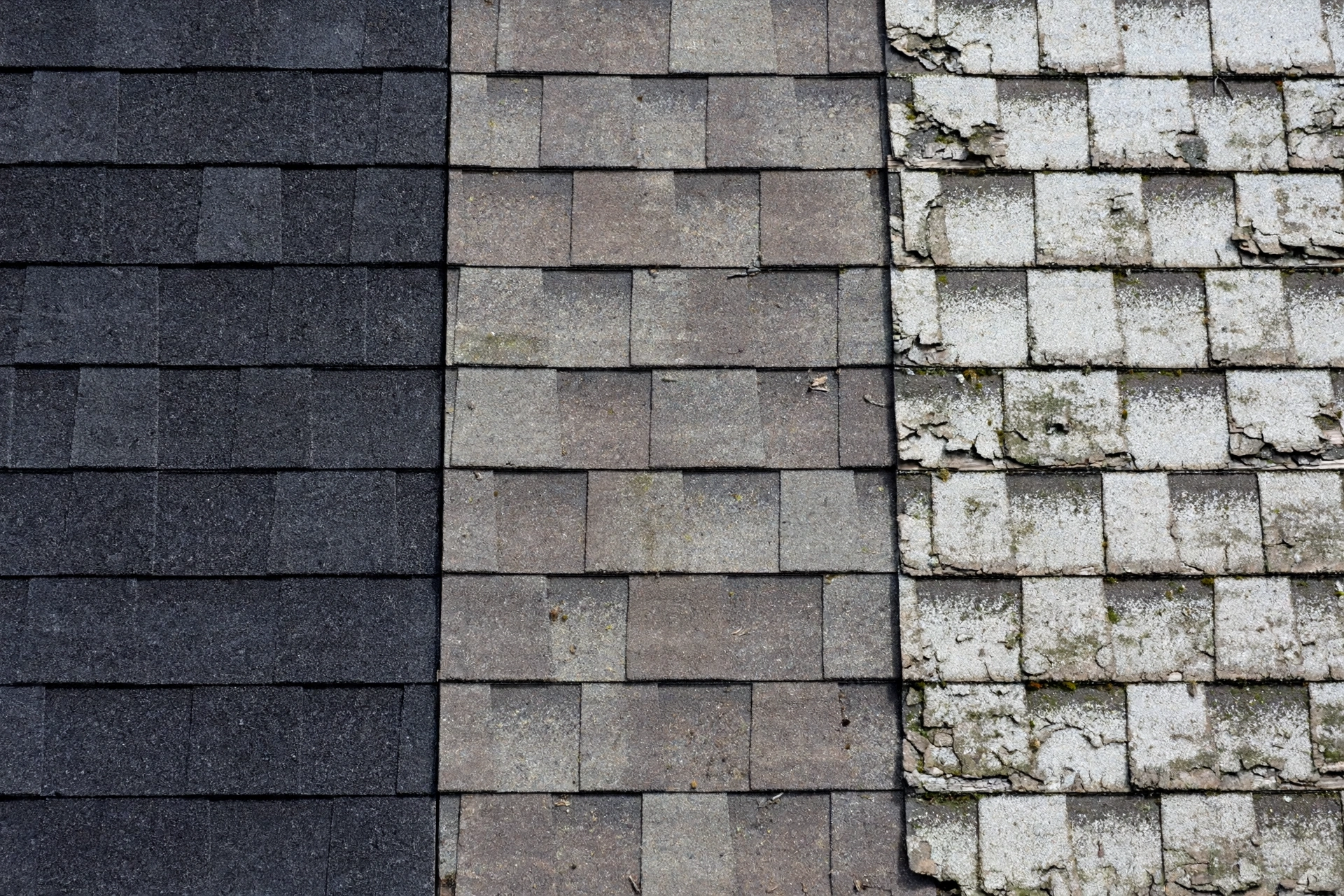
Every repair-or-replace decision starts with the same rough calculation: how old is the roof, what is the generally expected service range for its material, and what condition is it actually in? Age alone never settles the question. A well-built, well-ventilated asphalt roof can outlast its expected range, while a poorly ventilated one can fail well inside it. Lifespans are general guidance, never guarantees — they describe what roofs of a material typically deliver, not what your roof will deliver.
The useful version of the math compares remaining service against repair scope. If a roof is roughly two-thirds through its expected range but the decking is sound, the shingles are still flexible, and the damage is confined, targeted repairs can be a sensible way to use the remaining years. If the same roof shows granule loss across every slope, brittle shingles, and soft or stained decking, repairs are buying time on a system ageing together.
Watch for two traps in this section of a report. The first is an age stated without evidence: a report should say how the age was established — permit records, homeowner records, shingle style, or condition indicators — rather than asserting a year. The second is a remaining-life figure presented as a certainty: remaining life is an estimate built from visible condition, and a careful report names the conditions that would shorten it. If a report gives you a single confident number with no conditions attached, treat it as a sales line, not an assessment.
Localised vs Systemic Damage: The Deciding Distinction
The single most useful question to ask of any report is whether the damage is localised or systemic. Localised damage has a boundary: a failed flashing at one chimney, a valley worn by a dripping gutter above it, a patch of wind-lifted shingles on one windward slope. It can be repaired without disturbing sound roofing, and the repair addresses the cause, not just the symptom. Systemic damage has no boundary: granule loss, curling, cracking, or brittleness appearing on most slopes, in the same pattern, because the material itself is ageing out.
Reports reveal the distinction in how they describe locations. A localised report names slopes, counts affected areas, and photographs each one. A systemic report describes conditions "throughout" or "across all slopes" and pairs that language with photos from several directions showing the same wear. Read the photo captions, not just the summary: a summary claiming "widespread wear" with photos of a single slope deserves a question, as does one claiming "minor issues" while photos show the same failure on every slope.
The distinction also governs how repairs compound. Fixing a localised flashing failure is one job with one result. Patching systemic wear means returning repeatedly as the next-weakest area fails, and each patch disturbs shingles that are already brittle, sometimes creating new damage beside the repair. When a report shows systemic wear, replacement is usually the more durable answer — not because any single defect is unfixable, but because the defects share a cause that repairs cannot reverse.
Report Language Decoded: What the Phrases Actually Mean
Inspection reports use a small set of phrases that carry more meaning than they appear to. "Monitor" means the inspector found something worth watching but not yet worth fixing — a shingle starting to curl, a sealant joint beginning to shrink. It is not an urgent repair; ask what change would move it from monitoring to action. "Serviceable" means the roof is performing its job for now, even if it shows age. It is a statement about current function, not a promise about the future.
"Near end of life" or "at end of useful life" means the roof is in the later part of its generally expected service range. It does not mean the roof will fail tomorrow, and it does not by itself force an immediate replacement — it means replacement should be planned and budgeted, and that repair decisions should be weighed against a shortening horizon. "Failed" or "failure" is stronger: it means a component is no longer doing its job, such as flashing that no longer seals or decking that has lost strength. "Recommend replacement" in a summary should always trace back to specific findings in the body of the report; if you cannot find the findings behind the recommendation, ask the inspector to point to them.
Also read what the report does not say. A report that never mentions the attic, the decking, or the ventilation has not assessed the system, only the surface — and the most consequential findings, like soft decking or chronic attic moisture, live underneath. A report with no captioned photos is hard to verify and harder to price from. The strongest reports read like evidence files: every significant claim paired with a dated, captioned photo.
Second Opinions: When They Are Worth Getting
A second opinion is worth getting in three situations. First, when the recommendation is replacement and the report's evidence looks thin — a short summary, few photos, or a verdict that does not match the photos shown. Second, when two parties disagree: your inspector says repair, a contractor says replace, or the reverse. Third, when the stakes are high because a sale, a claim, or a large scope of work turns on the answer. In each case, give the second inspector the first report and ask them to address its specific findings.
Be wary of second opinions that arrive with a sales pitch attached. An independent inspection, where the inspector does not sell the repairs it recommends, is easier to trust because its author gains nothing from either answer. Ask any inspector, first or second, whether they also perform the repairs they recommend, and weigh their recommendation accordingly. When you have two reports, compare evidence against evidence, slope by slope, rather than conclusion against conclusion.
If cost is part of your decision, our factor-based guides to roof inspection cost in Westfield, MA and roof inspection cost across Massachusetts explain what drives inspection pricing, without quoting figures that would be meaningless before anyone has seen your property.
Confused by a Report You Already Have?
Bring it to your inspection and we will walk through its findings with you on site. Call (213) 646-7883.
Roof Damage InspectionsFrequently Asked Questions
No. It means the roof is in the later part of its generally expected service range and should be budgeted and planned for, not that failure is imminent. A roof described this way can often keep performing with targeted repairs while replacement is planned, provided the decking is sound and the damage is not spreading. Ask the inspector what specific conditions would change that advice.
Sometimes, but the logic changes. Repairs make sense when damage is confined to identifiable areas that can be fixed without disturbing sound roofing around them. When wear, granule loss, or brittleness affects most slopes, repairs tend to chase new failures as fast as old ones are fixed, and replacement becomes the more durable answer even if any single repair looks small.
Sharing the report is usually helpful, because it gives the other party the same documented facts you have: dated photos, slope-by-slope findings, and an itemized scope. Share the full report rather than a summary, and ask any contractor quoting from it to price the report's scope line by line, so you can compare quotes against the same findings instead of against different interpretations.
Compare the evidence, not the conclusions. Look at which report has dated, captioned photos for each claim, whether each inspector walked the roof and entered the attic, and whether each scope is itemized. Where reports genuinely conflict on a key question, a third independent inspection focused on that question — with the conflicting findings in hand — usually settles it faster than arguing from either conclusion alone.