
Roof Inspection for Insurance Claims in MA: Date-of-Loss & Documentation
A claim inspection is built around evidence, not just condition. It documents what was damaged, where on the roof it sits, and whether the pattern and freshness of that damage are consistent with a specific weather event — the date of loss. That means dated, captioned photos slope by slope, a written record tying damage type to event type, and a report an adjuster can check against their own findings. Claim windows and requirements depend on the individual policy, so always check your policy and call your insurer to confirm what they require.

Date-of-Loss Correlation: Tying Damage to One Event
Every roof claim turns, in part, on a single question: did this damage come from the event being claimed, or was it already there? Date-of-loss correlation is how an inspector addresses that question with evidence rather than assertion. It starts with the claimed event — a storm on a particular date — and then checks whether the damage found is consistent with that kind of event, whether it appears on the slopes that event would have affected, and whether its freshness matches the timing. Freshly broken shingles and clean fracture surfaces read differently from weathered, granule-worn damage, and an honest report says which is which.
Direction matters too. Wind damage tends to concentrate on windward slopes and at ridges, eaves, and rakes, while hail damage is more scattered but still follows the storm's direction. If damage is uniform on every slope regardless of exposure, or concentrated only on the oldest section, that pattern itself is information, and a good report notes it. The inspector is not deciding the claim — that is the insurer's role under your policy — but a report separating event-consistent damage from pre-existing wear gives the adjuster something concrete to work with. Our roof insurance inspection service is structured around this kind of documentation.
Photo Logs: What a Claim-Ready Record Contains
A useful photo log is organised, not just extensive. It should open with wide shots establishing the property and each roof slope, so any close-up can be located. Then, slope by slope, it should show close-ups of each damage type found, with captions naming the slope, the damage, and its location. Interior and attic photos belong in the same log when there is water entry: ceiling stains, damp insulation, and decking marks, each tied to the slope above. Dates matter throughout — the inspection date, and any dated photos you took yourself after the event — because a log without dates cannot support a timeline.
Equally important is what the log shows when damage is absent. Undamaged slopes, intact flashing, and unmarked soft metals are worth photographing too, because they establish the event's boundaries and prevent a later dispute about whether a slope was checked at all. Keep your own copies of everything: the report, the photo log, your notes, and correspondence with your insurer. If you took ground-level photos yourself, keep them dated and unedited, and do not climb onto a damaged roof for closer shots. For the storm context, see our guide to storm damage roof inspection in Westfield.
Wind vs Hail Evidence: Reading Two Different Signatures
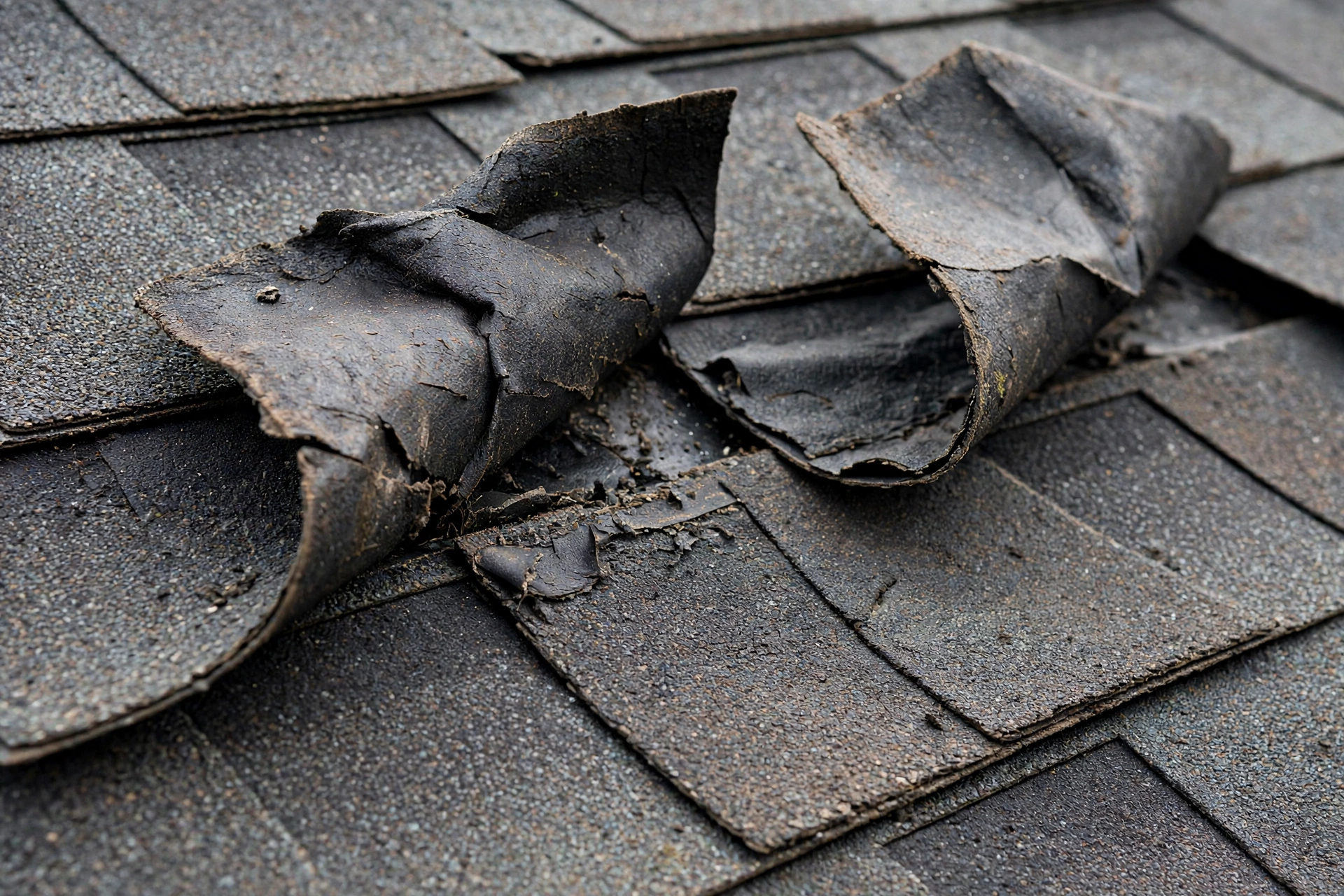
Wind and hail leave different marks, and confusing them weakens a claim. Wind lifts, creases, and tears: tabs fold back along a crease line, sealant bonds break, and shingles go missing, often in a directional pattern on windward slopes. The crease itself is the tell — a tab that has been folded and released loses strength at the fold and may flap in later wind even if it looks intact from the ground. Hail, by contrast, strikes downward: it leaves impact marks, granule loss in roughly circular spots, dents in soft metals such as vents and gutters, and, on closer inspection, fractures in the shingle mat beneath the granules.
An inspector documents each type separately and notes where each appears, because a claim for one event type should not lean on evidence of the other. Soft-metal dents can corroborate hail, since gutters and vents dent where shingles only scuff. For hail specifically, see our guide to hail damage roof signs in Westfield. What an inspector should not do is force a pattern: if the evidence is mixed, weathered, or inconclusive, the report should say so. A report that overstates certainty is less useful to you than one that separates what is clear from what is uncertain, because an adjuster will test the same evidence independently.
Adjuster Language: How to Talk About Your Roof in Claim Terms
Adjusters work from a shared vocabulary, and using it accurately helps your case. Talk in slopes, not in generalities: name the slope, the damage type, and the count or extent observed there. Refer to the date of loss as the event date you are claiming, and distinguish it from the inspection date. Use terms your report uses — creasing, granule loss, impact marks, sealant failure — and point to the photos that show each one, rather than describing damage only in words. If you disagree with a finding, name the specific slope and photo at issue and ask what evidence supports the different conclusion.
Keep the conversation focused on documented evidence and on your policy. Ask your insurer to confirm, in writing where possible, what documentation they still need and what the next steps are under your policy — claim windows and requirements depend on the individual policy, so do not rely on general advice, including this guide, as a substitute for checking your own policy. Bring your inspector's report and photo log to any joint inspection, and take your own notes during the visit. Both sides can agree on a slope and a photo even when they start apart on the conclusion.
Document Damage Before You File
An independent, dated photo log gives you a clear record to share with your insurer. Call (213) 646-7883.
Roof Insurance InspectionsFrequently Asked Questions
The date of loss is the date of the weather event that caused the damage. It matters because a claim is tied to a specific event: damage that matches that event in type, pattern, and freshness supports the claim, while older wear that predates it generally does not. Check your policy for how it defines and treats the date of loss.
In general, an independent inspection before filing gives you a documented record of what was found and when, which helps you describe the damage accurately. It does not replace the insurer's own inspection, and claim windows and requirements depend on the individual policy, so call your insurer to confirm what they require.
From the ground, photograph fallen shingles or debris, damaged gutters, and any interior leaks or stains, and keep the photos dated. Do not climb onto a damaged roof yourself. A professional inspection adds slope-by-slope, close-up, and attic photos that ground-level shots cannot provide.
Ask for the specific points of difference in writing — which slopes, which damage type, and which evidence each side relied on — and share your inspector's dated photo log and report for comparison. Keep the discussion focused on documented evidence and on what your policy says, and call your insurer to confirm the next steps they offer.