
Asphalt Shingle vs Slate vs Flat Roof Inspections: What's Different
Every roof inspection checks the same five things — covering, flashing, penetrations, attic, and decking — but what the inspector looks for inside each check changes with the material. Shingle inspections focus on granule loss and sealing; slate inspections focus on cracked and slipped tiles, usually without walking the roof; flat inspections focus on seams, drains, and ponding water. If your inspector uses the same routine for all three, you are getting a checklist, not an inspection.
Per-Material Failure Modes: What Breaks, and How
Each material fails in its own way. Asphalt shingles fail gradually and visibly: granules wash off, shingles curl at the edges, seal strips weaken so tabs lift in wind, and nails work loose. The inspection is a wear survey, slope by slope.
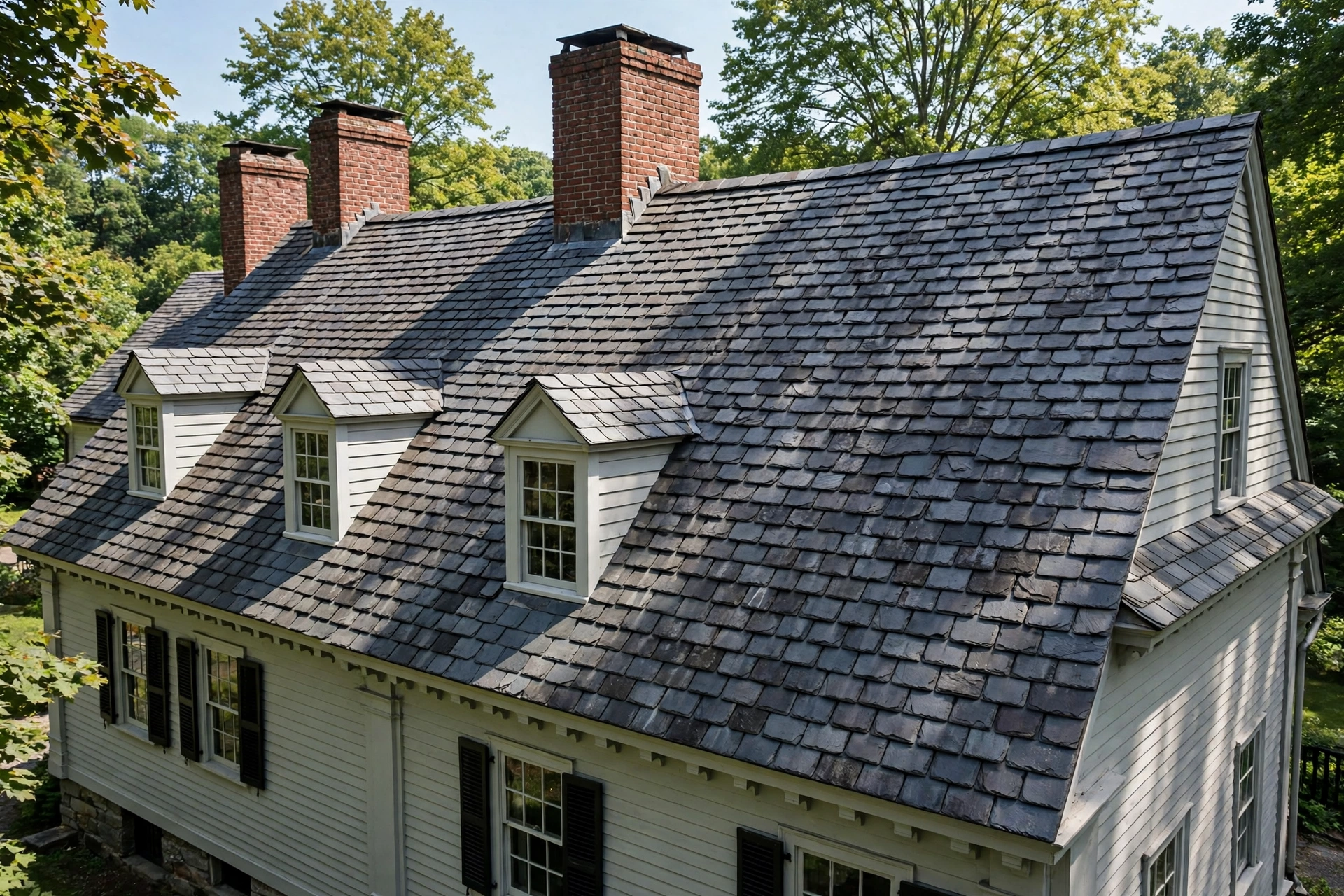
Slate fails discretely, one tile at a time. A slate roof can look magnificent overall while hiding cracked, slipped, or missing tiles and flashing that has aged out from under otherwise sound stone. The inspection is a tile-by-tile census of breaks and slips, plus a hard look at the flashing, which usually wears out long before the slate does.
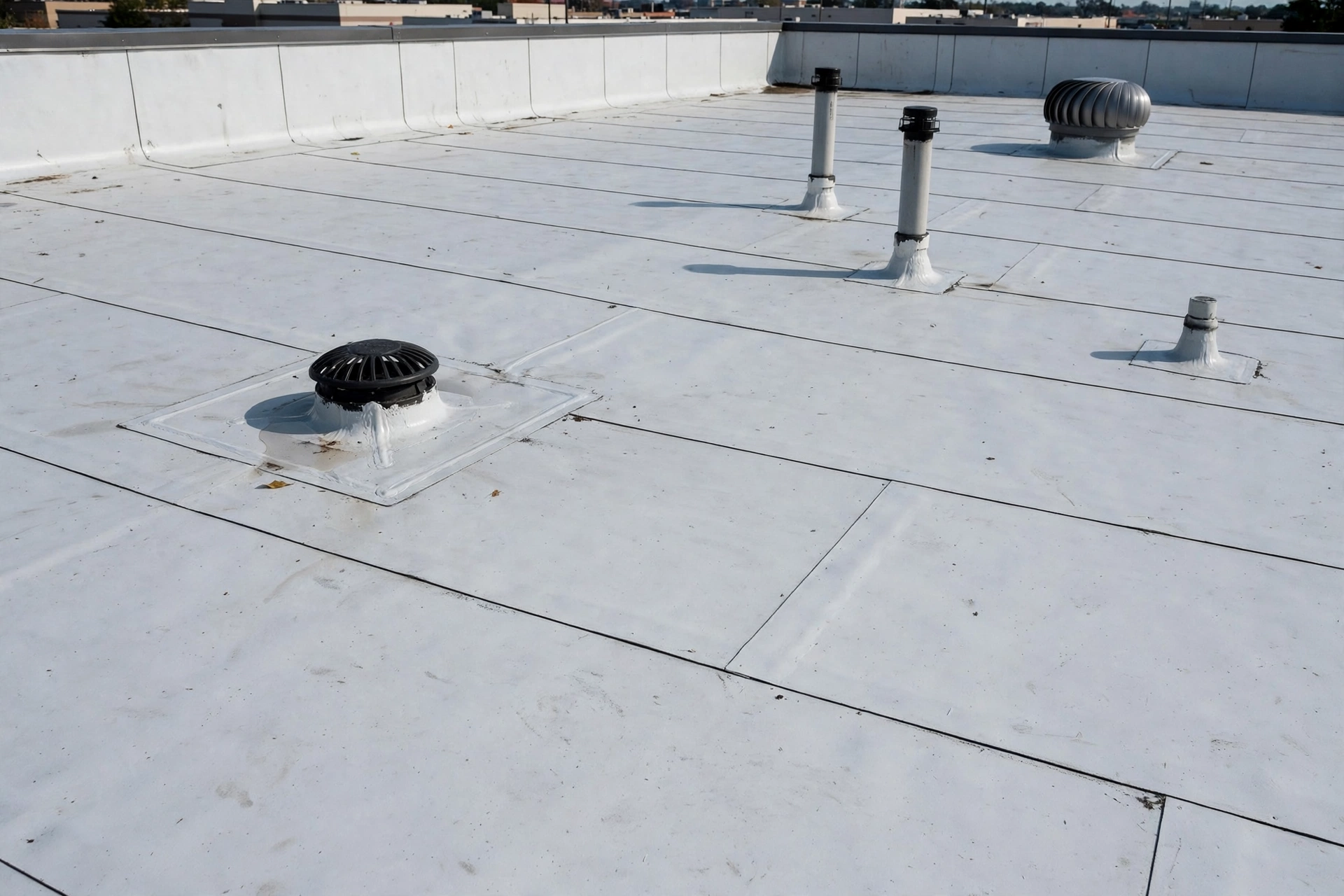
Flat membranes fail at joints and low spots. Seams split or lift, flashing pulls away at parapets and curbs, and ponding water stresses the membrane and hides developing leaks. The inspection is a seam-by-seam walk of the whole surface. Three materials, three different failure stories.
Asphalt Shingle Inspections: Granules, Sealing, and Flex
A shingle inspection is usually walked, when pitch and condition allow, because the evidence is in the hand: the inspector can lift a tab to test its seal, feel for brittle or soft shingles, and check nailing at exposed edges. Granule loss is read on the roof and in the gutters, where shed granules collect. Valleys and flashing are checked alongside, since shingle leaks most often start at a joint.
Attic evidence matters here too. Shingle roofs that run hot from poor ventilation age faster, and the attic shows it. A shingle report should therefore pair slope-by-slope wear notes with an attic note on ventilation and decking. Asphalt is generally the shortest-lived of the three materials covered here, which makes regular inspection the main tool for catching its gradual decline before it becomes a leak.
Slate Inspections: A Long-Lived Roof with Fragile Parts
Slate is the longest-lived of the three materials in general terms, and many Westfield slate roofs are older than their current owners. That longevity changes the inspection's purpose: less about judging overall age, more about finding individual failures — cracked tiles, slipped tiles, failed flashing — that let water past an otherwise sound roof.
Matching matters on slate in a way it does not on shingles: a repair tile that does not match in size, thickness, or color stands out and can fail early if poorly seated, so the inspector notes past repairs and whether they match. The decking and attic check is the same as for any roof, but the stakes are higher: a slate roof's covering can outlast its flashing and fasteners by a wide margin, and the report needs to say which part is actually aging.
Walking Rules for Slate: Why Inspectors Stay Off
The central rule of slate inspection is simple: do not walk on slate unless there is no other way to get the evidence, and then only with specialist precautions. Slate is stone, and stone is brittle under a concentrated footstep — an inspector walking a slate roof can crack tiles that were sound before the visit, turning an inspection into a repair bill. Experienced slate inspectors therefore work from ladders, the ground with optics, or a drone.
Method here is evidence of competence: if an inspector proposes to walk your slate roof casually, that is a reason to ask questions, not a sign of thoroughness. The report should note the method used and any areas not seen closely. Shingle and flat roofs, by contrast, are normally walked — which is why one routine cannot honestly serve all three materials.
Flat Roof Inspections: Seams, Drains, and Penetrations
A flat roof inspection is a walking survey of the entire surface. The inspector follows every seam, checking for splits, lifting, and patches that have themselves begun to fail; checks flashing at parapets, curbs, and walls for separation; and examines each penetration — vents, drains, and equipment curbs — where the membrane is cut and sealed. Service traffic around HVAC units is a common source of punctures and seam damage.
Drainage is the flat roof's lifeblood, so drains and scuppers are checked for blockages, and the slope toward them is observed in practice — where debris collects and where water stains mark the membrane. Many flat-roofed buildings have little or no accessible attic space, so the inspector looks for interior ceiling stains and, where available, uses moisture scanning for trapped water under the membrane.
Ponding on Flat Roofs: When Standing Water Matters
Ponding is water that remains on a flat roof after rain instead of draining away. Shallow water that clears as the roof dries is one thing; water that lingers, leaves silt rings and stains, and collects debris is another. Persistent ponding accelerates membrane wear, adds load to the structure, and hides what is happening underneath it — a leak under a pond is invisible until the water is gone, so ponding areas get the closest seam and flashing checks.
The inspection documents each ponding area by location, depth, and whether nearby drains or scuppers are blocked or undersized for the area they serve. It also notes whether ponding is new or long-standing, since a long-standing pond that has stained and softened the membrane is a different finding from a shallow puddle after heavy rain. Correcting ponding is a drainage question, and the report's job is to supply the evidence for it.
For homes, see our residential roof inspection service, and for flat-roofed buildings, our commercial roof inspection service. For what an inspector checks on any roof type, read what a roof inspector actually looks for.
An Inspection Matched to Your Roof Type
Shingle, slate, or flat — the method should fit the material. Call (213) 646-7883.
Commercial Roof InspectionsFrequently Asked Questions
Generally no, or only with great care: slate is brittle underfoot, and a walked slate roof can come away with more broken tiles than it started with. Slate inspections are usually done from ladders, the ground with binoculars, or by drone.
Not always on its own, but always worth documenting. Shallow water that drains away after rain differs from standing water that lingers, stains the membrane, and collects debris. The inspection notes where ponding sits and whether drains and scuppers are clear, because persistent ponding accelerates membrane wear and can hide leaks.
In general terms, slate is the longest-lived of the three, often outlasting the building components around it when maintained, while asphalt shingles are generally the shortest-lived and flat membranes sit in between. These are broad tendencies, not guarantees — installation quality, maintenance, and exposure matter as much as the material.
The structure is the same — condition, photos, and recommendations — but the findings differ: a shingle report emphasizes granule loss and sealing, a slate report emphasizes cracked, slipped, and mismatched tiles and flashing, and a flat report emphasizes seams, drains, and ponding.