
Roof Inspection for Homes With Solar Panels in Westfield
By checking what can be seen and stating honestly what cannot. A solar-panel roof inspection examines every accessible mount and penetration, the disturbed shingles around the array, and the attic decking beneath it — and it names the roof under the panels as indirectly assessed, not directly walked, unless panels are removed by the solar installer. The most valuable version happens before install, when it creates a dated baseline for everything that follows.
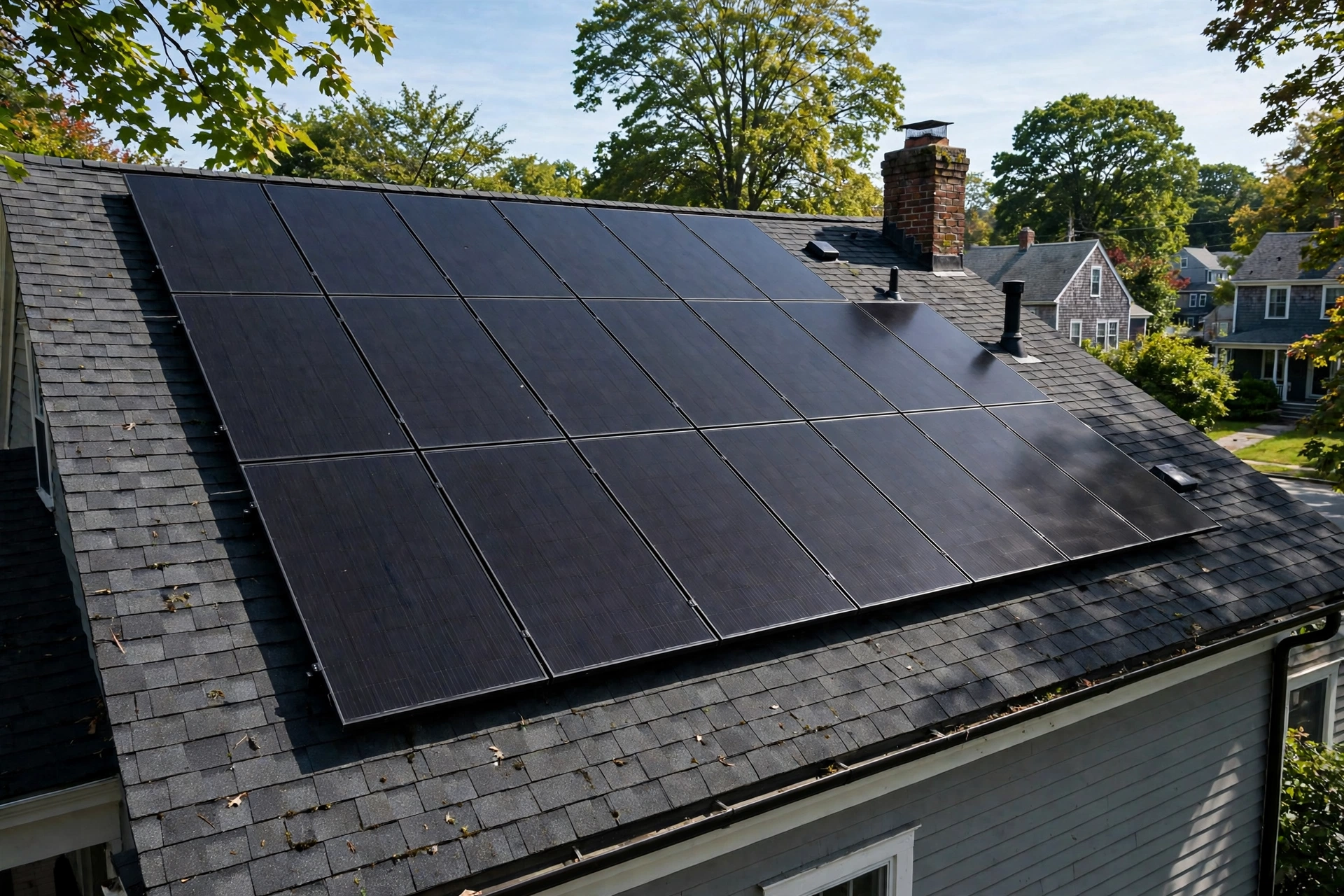
Mounts and Penetrations
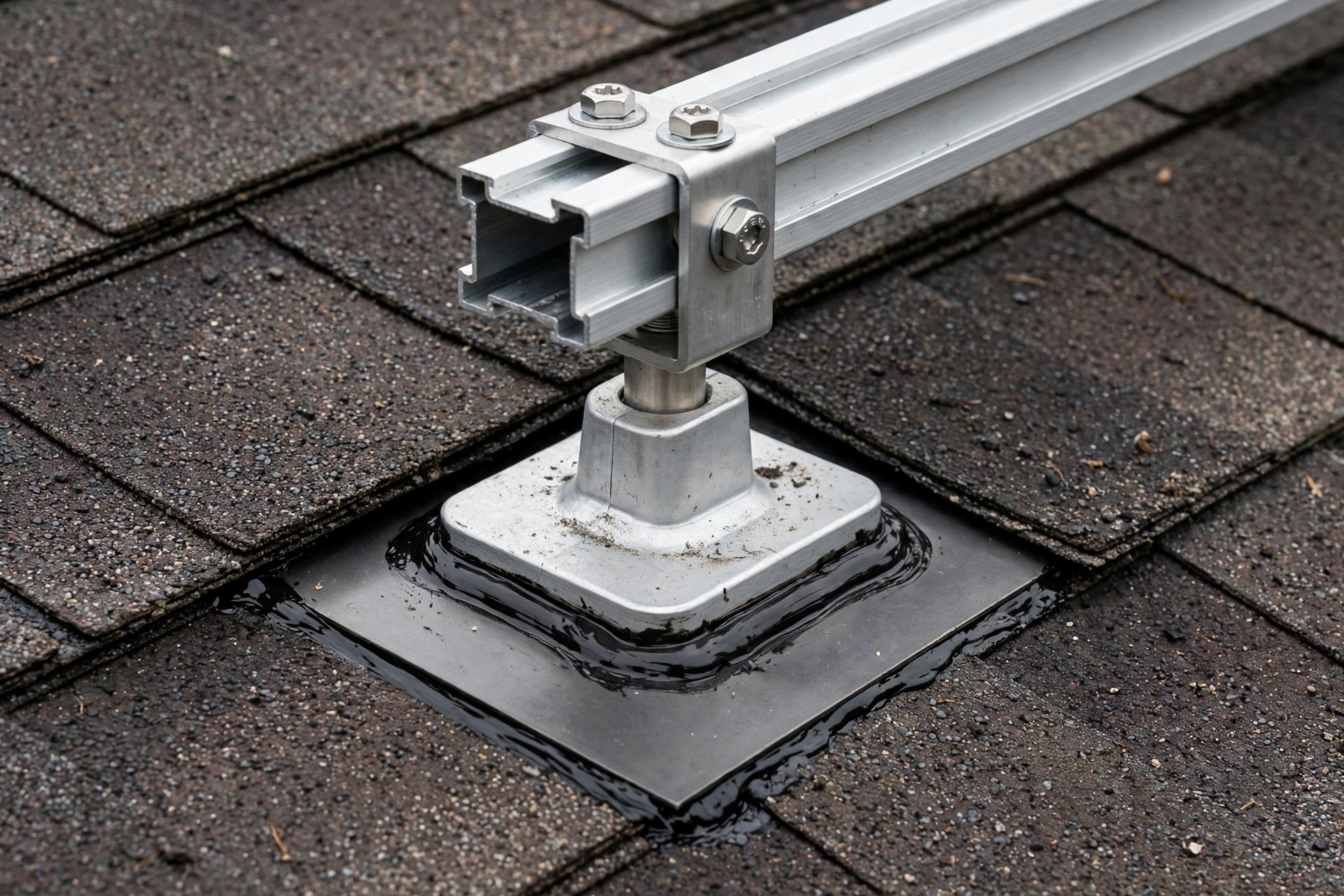
Every solar mount is a roof penetration, and penetrations are where most roof leaks begin. On a pitched asphalt roof, mounts are typically fastened through the shingles and decking into framing, with flashing and sealant intended to keep water out at each point. An inspection therefore looks at each accessible mount foot for cracked or lifted flashing, dried or displaced sealant, shingles disturbed around the foot, and any staining on the decking below that lines up with a mount row. Wiring penetrations, conduit entries, and junction boxes get the same treatment, because a neat array can hide a sloppy penetration at its edge.
What matters is pattern as much as any single foot. One mount with tired sealant is a maintenance item; several mounts in a row showing the same wear, or staining beneath a whole rail line, suggests a systematic issue with the installation detail or with movement over time. The inspector should also note the condition of the shingles around the array generally — whether they were cut, lifted, or re-laid during installation — since that disturbed zone, not just the mounts themselves, is where future leaks often start. Where mounts cannot be seen because panels cover them, the report should say so rather than imply they were checked.
Access and What Cannot Be Walked
Panels occupy the roof they sit on, and that changes access in two ways. First, the roof surface under an array cannot be walked or directly examined without removing panels, so its shingles, flashing, and decking can only be judged from the edges, from the attic below, and from drone or ground-level imagery where that is used. Second, walking on or around panels carries its own risks: panels are not designed as walkways, and stepping on them can damage cells or mountings, while the rails and wiring create trip and electrical hazards that a roof inspector is not equipped to work around casually.
A good inspection plan therefore states its limits up front. It lists which slopes were walked, which were viewed from the eaves or by drone, and which areas under the array were assessed only from the attic or from panel-edge views. That honesty protects everyone: a buyer who knows the under-array roof was not directly seen can ask for panel removal or a specialist check before purchase. If panels need to come off for a full view, that work belongs to the solar installer or a qualified solar contractor, not to the roof inspector on the day.
Inspection Before Install vs After Install
The most valuable solar-roof inspection happens before panels go on. A pre-install inspection documents the roof's age and condition, flags flashing or decking that should be repaired first, and gives the homeowner a dated baseline: this is what the roof looked like before any mount went through it. That baseline matters later, because it separates pre-existing wear from installation-related change and gives both the roofer and the solar company a shared record if a leak appears under the array.
After install, the inspection changes character. It becomes a check of the mounts and penetrations, the disturbed shingle zone around the array, the attic decking beneath the array, and the roof areas that remain exposed — plus a comparison against the pre-install baseline where one exists. Homeowners who skipped the pre-install check can still benefit from a post-install inspection, but they should expect its limits to be stated clearly: without a baseline, some questions about timing — whether a stain predates the array — can only be answered in general terms. For the broader picture of what any roof inspection covers, see our guide to what a roof inspector looks for.
Warranty Questions to Ask the Installer
Solar and roofing warranties often come from different parties, and the gap between them is where disputes live. Before install — or when reviewing an existing array — ask the installer, in writing, who covers the roof penetrations and for how long, who covers the panels and their electrical components, and what happens to each warranty if the other party works on the roof. Ask what roof work, such as a future re-roof or a repair under the array, means for the solar warranty, and who removes and reinstalls panels if roof work is needed, and who pays for that step.
Also ask what documentation you should keep: the installation record showing mount locations, the flashing and sealant details used, and any inspection or commissioning report from install day. Keep those documents with the roof inspection report, because a leak under an array is much easier to attribute — and to claim under the right warranty — when mount locations and the pre-install roof condition are on record. This post deliberately gives no specific warranty terms, because terms vary by installer, product, and contract; the questions above are the ones that reveal what your own documents actually say.
Thermal and Leak Checks Around Arrays
Thermal imaging earns its keep around solar arrays precisely because so much of the roof cannot be seen directly. A thermal scan from the attic side, or from the roof surface where access allows, can reveal damp decking or insulation beneath and around an array that shows no visible staining yet, and it can map whether dampness lines up with a mount row, a wiring penetration, or an unrelated roof detail. That mapping matters: dampness under a rail line points one way, dampness at a valley or chimney flashing near the array points another, and the repair follows the pattern.
A thermal anomaly is a prompt to look closer, not a diagnosis by itself, and it should be correlated with visible staining, attic observations, and the mount layout before it is written up as a leak. Where a suspected leak sits under panels, the next step is usually a specialist solar check or a planned panel removal by the installer. Our infrared thermal inspection guide explains what thermal can and cannot establish on any roof, and for homes with solar, pairing that method with a documented mount and attic check gives the fullest honest picture available without removing panels.
Related reading: what a roof inspector looks for, infrared thermal roof inspection, and our residential roof inspection service.
Inspect Before You Install — or Check an Existing Array
Whether panels are planned or already on the roof, book an inspection that documents mounts, attic decking, and access limits in writing. Call (213) 646-7883.
Residential Roof InspectionsFrequently Asked Questions
Only in part. The roof under an array cannot be walked or directly examined without removing panels, so it is judged from the edges, from the attic below, and from drone or ground-level imagery where used. A good report states which areas were directly seen and which were assessed indirectly, rather than implying full coverage.
Yes — it is the most valuable timing. A pre-install inspection documents the roof's condition and gives a dated baseline, so later changes under the array can be compared against what the roof looked like before any mount went through it.
That depends on your own documents, which is why it should be asked in writing: who covers the roof penetrations, who covers the panels and electrical components, and what happens if roof work requires panels to be removed and reinstalled. Keep the installation record and mount locations with your inspection report.
It can help. A thermal scan can reveal damp decking or insulation beneath and around an array before visible staining appears, and mapping the dampness against mount rows and penetrations helps point to the source. A thermal anomaly still needs correlation with visible and attic observations before it is written up as a leak.