
Winter Roof Inspection in Western MA: Snow Loads & Freeze-Thaw
Winter attacks a roof in three different ways at once. Snow adds weight that a roof must carry for weeks, meltwater finds every weak seam and drain, and repeated freezing and thawing pries small cracks a little wider each cycle. A winter roof inspection in Western MA documents all three: how the roof is carrying its snowpack, whether flat areas are draining or ponding, and where freeze-thaw movement has opened up flashing, shingles, or membrane seams. If water is coming in, a section looks bowed, or ice is falling near a walkway, that is urgent — call right away rather than waiting for spring.
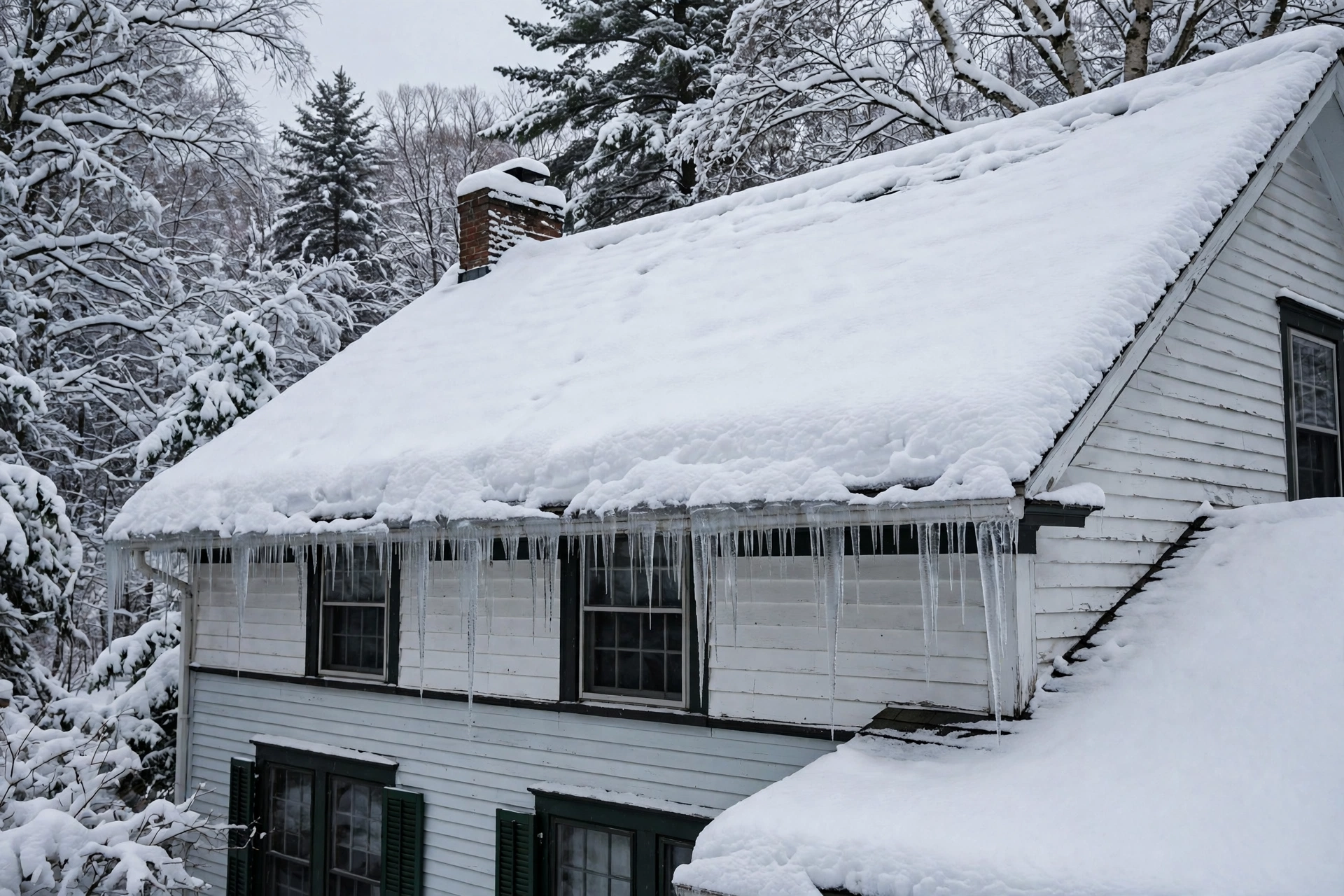
Snow-Load Risk: What a Heavy Snowpack Does to a Roof
Snow-load risk is not about a single storm. It is about accumulation: storm after storm adding weight that stays put, especially when cold weather prevents melting between falls. Wet snow weighs far more than the same depth of light, dry powder, and a snowpack that has melted and refrozen into ice is heavier still.
The warning signs are visible without climbing up. Look for snow that sits much deeper on one slope than the other, drifts piled high against a wall or in a valley, and a roofline that no longer looks straight. Inside, watch for doors that suddenly stick, new cracks in ceilings or walls near the roofline, and any sagging or bowing in a ceiling. Any of those signs deserves a professional look, because they can indicate that the structure is under strain. Do not try to judge the load yourself from the ground and do not climb onto a loaded roof to clear it.
A winter inspection records the snowpack pattern slope by slope, notes where drifts and ice have collected, and checks the attic for signs of strain that can be seen safely from inside. That record also guides later decisions about gutters, insulation, and ventilation. Clearing snow is sometimes part of the response, but it should follow an assessment, not replace one.
Ponding on Flat Roofs in Winter
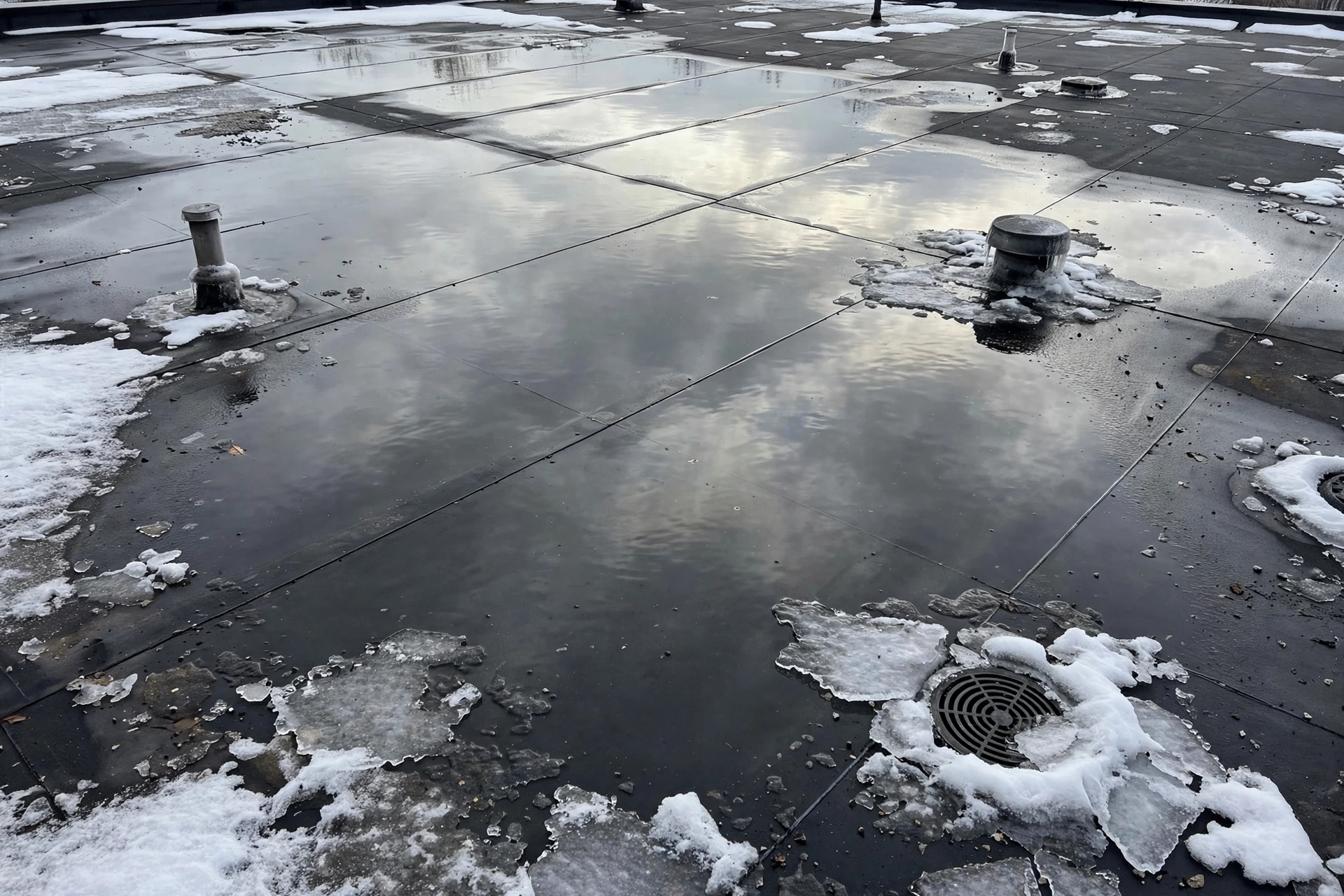
Flat roofs in Western Massachusetts face a particular winter problem. They are not truly flat — they are built with a slight slope toward drains — but when snow melts, the water has to travel to those drains, and anything in the way turns a drainage system into a pond. Ice can seal a drain shut. Debris can block a scupper. A sagging deck section can create a shallow bowl that holds water long after the rest of the roof has drained.
Ponding matters because standing water is patient. It sits against membrane seams and flashing, finds weak joints, and adds weight of its own. In winter the cycle repeats: water ponds, freezes, thaws, and ponds again, each time pressing on the same seams. Over a season, the spots that pond are the spots that leak first, often showing up inside far from the pond itself.
A winter inspection of a flat roof maps where water stands after a thaw, checks whether drains and scuppers are clear or iced over, and photographs membrane seams and penetrations in the ponding areas. For property owners, the practical habit is simple: after a thaw, note which areas still hold water and whether the same areas hold water every time. That pattern, reported to an inspector, turns a vague concern into a documented drainage question. If water is ponding near a drain that appears blocked, or if a ceiling below a flat roof shows new staining, arrange an inspection rather than waiting for the next storm to add to the load.
Freeze-Thaw Cycling: The Slow Damage Between Storms
The most destructive winter force on many Western Massachusetts roofs is not the cold itself but the swing between cold and mild. When temperatures rise above freezing during the day and drop below it at night, water trapped in small cracks, joints, and porous materials freezes, expands, and pushes the crack a fraction wider. The next thaw lets in a little more water, and the next freeze pushes a little harder. A crack that was harmless in autumn can become a leak path by late winter, without any single dramatic storm.
Freeze-thaw damage shows up in places that move or join: flashing where a roof meets a wall or chimney, sealant joints around vents and skylights, mortar on chimney shoulders, and the edges of ageing shingles. On flat membranes, the same cycling stresses seams and patches. An inspector looks for lifted flashing, cracked sealant, displaced shingles, and staining that suggests water has been working its way in during thaws. Attic inspection helps too: damp staining under decking can reveal a leak path invisible from outside while snow covers the roof.
Homeowners can watch for the same pattern. Icicles and ice build-up at the eaves often go hand in hand with freeze-thaw trouble, because they signal meltwater refreezing at the roof edge rather than draining clear — a related problem covered in our guide to ice dams on Westfield roofs. If you notice new staining on ceilings after a thaw, flashing that looks lifted, or sealant that has cracked and pulled away, note the location and the weather that preceded it. That timing — leak after thaw, dry during a cold snap — is useful evidence for an inspector, and it helps distinguish a freeze-thaw leak from a leak caused by wind-driven rain.
Emergency Signs: When to Call Right Away
Most winter roof problems can wait for a scheduled inspection. A few cannot. Active water entry is the clearest emergency: water dripping through a ceiling, running down a wall, or pooling on a floor means the roof system has already failed at that point, and every further thaw adds to the interior damage. Move belongings clear, catch drips, and call for help rather than tracing the leak during a storm.
Structural warning signs are equally urgent. A ceiling or roof section that appears to sag or bow, a roofline that looks newly uneven, cracking sounds from the roof structure, or a door or window frame that has suddenly shifted all suggest the structure is under unusual strain. Keep people out from under the affected area and keep clear of walkways below heavy eave ice. Do not send anyone onto the roof to investigate: a loaded or icy roof is not a safe place to diagnose a problem by standing on it.
If any of these signs appear, our emergency roof inspection service is the right call — describe what you see, where it is, and whether water is actively entering, so the visit can be planned around the most urgent problem first. An urgent visit also produces a documented record of the roof as it stood during the event, which is far more useful than a description reconstructed weeks later.
Worried About Your Roof This Winter?
Tell us what you are seeing and we will arrange an inspection. Call (213) 646-7883.
Emergency Roof InspectionsFrequently Asked Questions
In most cases, no. Working on a snow-covered, icy roof is dangerous, and shovels and rakes can damage shingles, flashing, and gutters. If snow looks heavy or uneven, or if you see sagging or new leaks, call an inspector and describe what you see from the ground instead of climbing up yourself.
Not always. A winter inspection can still document a great deal from the ground, from inside the attic, and with drone imagery where conditions allow. Walking a roof is only done when it is safe to do so; ice, deep snow, and fragile surfaces can all rule it out, and a good report says so plainly rather than guessing at what could not be seen.
Meltwater that drains away as temperatures rise and drains clear is normal winter behaviour on a flat roof. Ponding is water that stays put in the same low areas after a thaw, especially around drains and seams. Standing water that keeps returning to the same spots points to a drainage or slope problem worth documenting.
Treat it as urgent when water is actively entering the building, when a ceiling or roof section appears to sag, when you hear cracking sounds from the roof structure, or when falling ice or snow threatens a walkway or entrance. Call right away, keep people clear of the area, and do not climb onto the roof yourself.