
Ice Dams on Westfield Roofs: Causes, Prevention & Inspection
An ice dam forms when heat escaping from a home warms the upper roof enough to melt snow, and that meltwater runs down to the colder eave and refreezes into a ridge of ice. Water then pools behind the ridge and can work its way under shingles and into the eaves, walls, and ceilings below. The lasting fix is usually a combination of air sealing, insulation, and balanced ventilation that keeps the roof deck cold and even — not simply knocking the ice off after it appears.
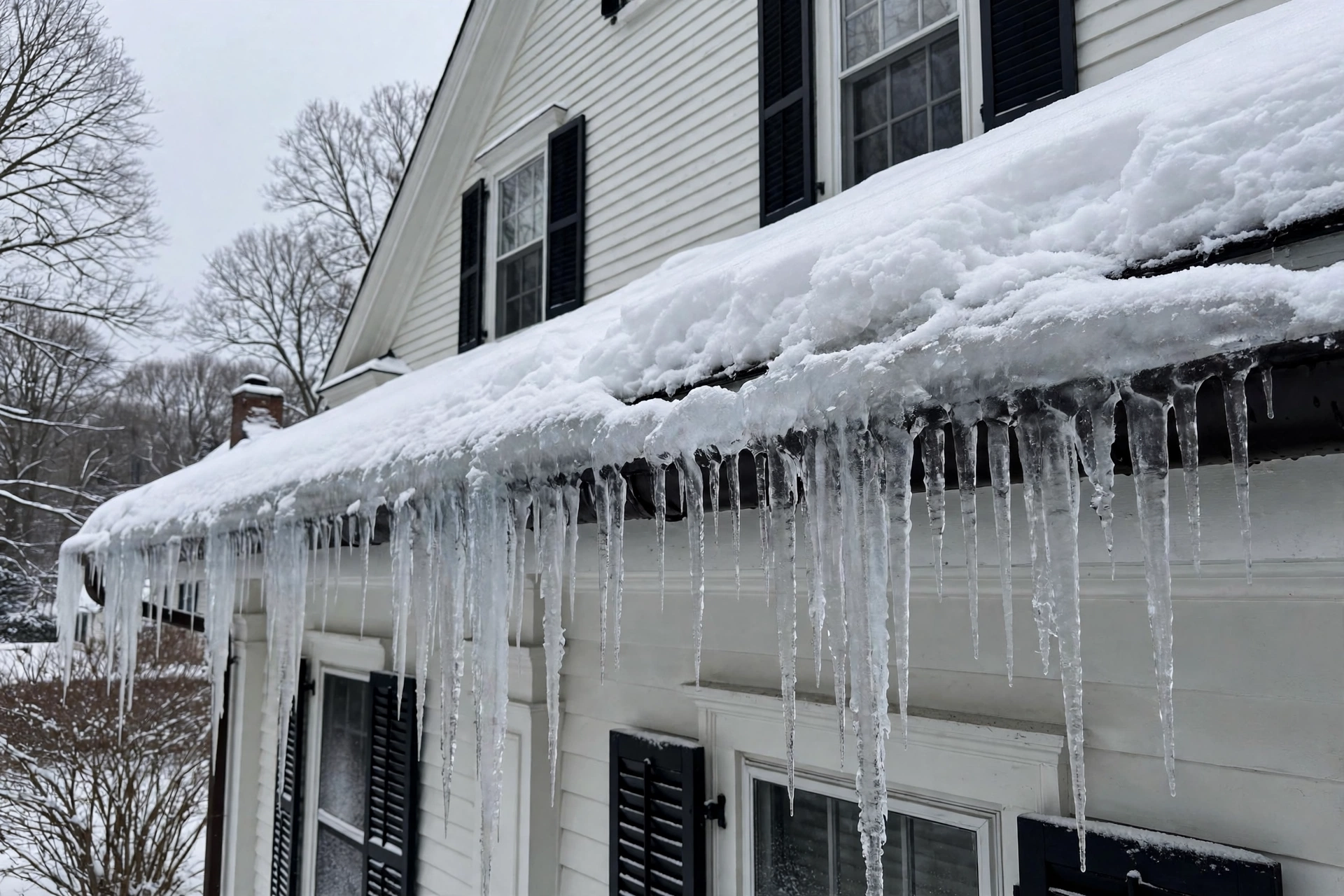
Freeze-Thaw Mechanics: How an Ice Dam Actually Forms
Westfield winters supply the two ingredients an ice dam needs: snow on the roof and air cold enough to keep the eaves below freezing. The third ingredient comes from inside the house. Warm air from living spaces leaks into the attic through gaps around light fixtures, attic hatches, plumbing and wiring penetrations, and chimney chases. That warmth heats the underside of the roof deck, so snow on the upper, warmer part of the roof melts even while the outside air stays cold.
Meltwater runs downhill under the snowpack until it reaches the eave, the part of the roof that extends past the heated wall of the house. With no warm air beneath it, the eave stays cold, and the water refreezes there. Night after night, the ridge grows, and later meltwater ponds behind it on shingles designed to shed water running downhill, not water standing still and creeping through seams.
This is why an ice dam is a heat-loss problem first and a snow problem second. A well-sealed, well-insulated attic with steady airflow keeps the roof deck closer to the outdoor temperature, while a house leaking warm air into the attic melts snow from underneath, day after day, and builds the ridge. Clearing snow helps, but if the heat leak remains, the cycle restarts with the next snowfall. For the wider winter picture, see our guide to winter roof inspection in Western MA.
Eave Rot: The Damage You Do Not See From the Ground
The most serious ice dam damage is rarely the icicles themselves. Pooled water behind a dam finds its way under shingles and into the roof assembly, where it soaks the decking, fascia boards, and soffits at the eave. Repeated cycles of wetting and freezing break down wood fibres, loosen fasteners, and open gaps that let in more water the next winter. Over several seasons, fascia and decking at the eave can soften and rot, gutters can pull away as ice weight and saturated wood combine, and flashing at the eave and in nearby valleys can distort.
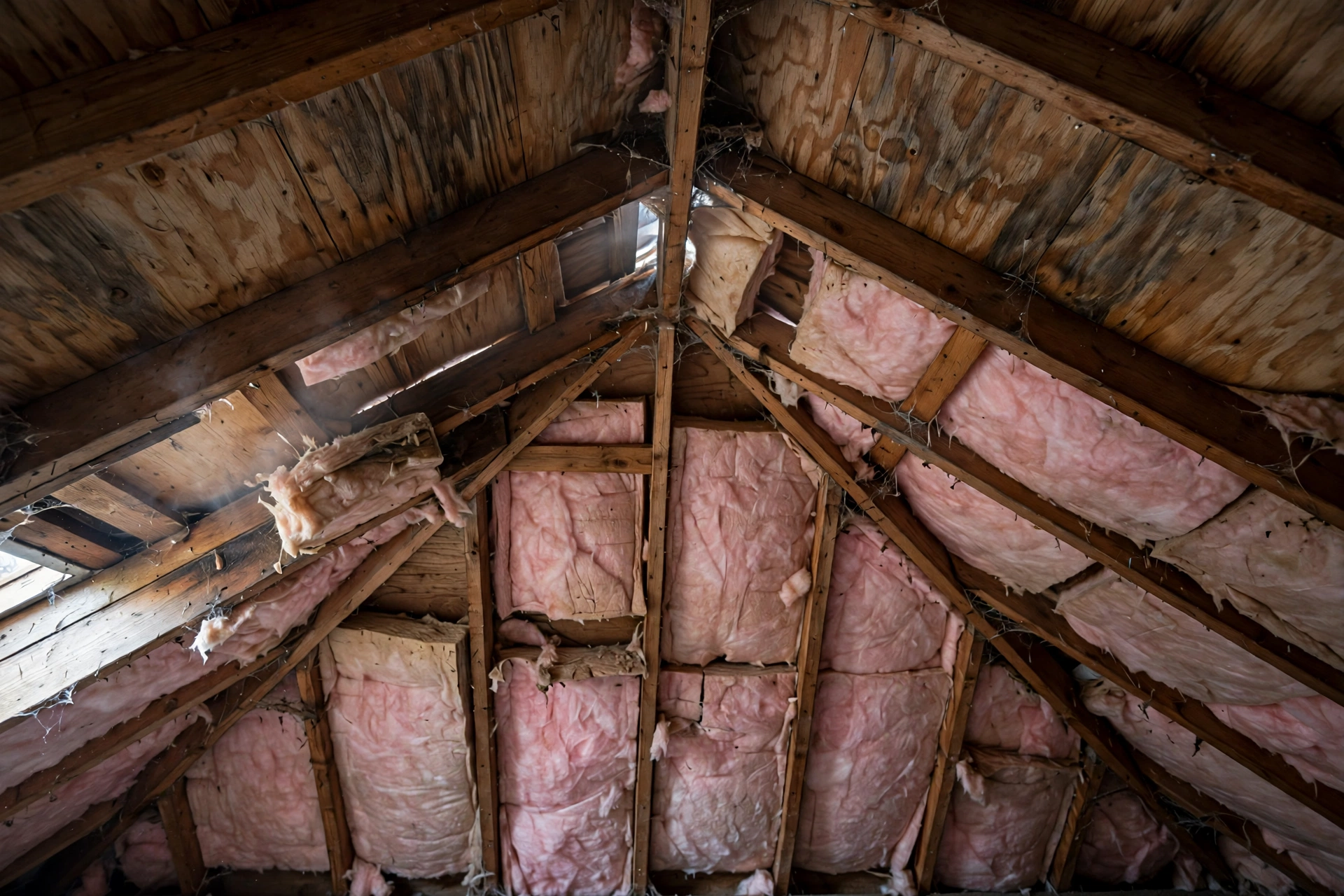
Inside the house, the first signs are often subtle: a damp patch or stain on a ceiling near an exterior wall, paint bubbling or peeling at the top of a wall, or insulation in the attic that is damp, compressed, or stained. Because water can travel along framing, the stain is not always directly below the entry point. That is why an inspection after a bad ice dam winter looks at the attic and the interior as well as the roof surface — staining on the underside of the decking, damp insulation, and rusted fasteners all tell a story the outside of the roof may hide. If a leak is already suspected, our roof leak detection service focuses on tracing that entry path rather than only noting the visible symptom.
Ventilation Fixes: Keeping the Roof Deck Cold and Even
The goal of attic ventilation in winter is to keep the attic close to the outdoor temperature. Balanced airflow — intake low at the soffits and exhaust high at the ridge — carries away the residual warmth that leaks in, so the roof deck stays evenly cold and snow does not melt from beneath. When intake vents are blocked by insulation or missing on one side, or exhaust is inadequate, warm pockets form and melting becomes uneven, building a ridge at the cold eave.
Ventilation alone is not a complete answer. It works together with air sealing, which stops warm air at its source, and with insulation, which slows heat transfer through the ceiling. Seal the leaks, insulate the ceiling plane evenly, and ventilate the space above it — in that sequence, since adding ventilation without sealing can draw more warm air upward. Our guide to roof ventilation problems in MA covers the common failure patterns. Any contractor proposing a fix should be able to explain which of the three legs — sealing, insulation, or ventilation — is weak on your roof and why.
What an Inspection Finds After an Ice Dam Winter
A post-winter inspection for ice dam effects is methodical rather than a quick look at the gutters. On the roof, the inspector documents the eaves slope by slope: shingle condition and lifting at the eave edge, ice-and-water shield coverage where it can be observed, flashing condition, gutter attachment, and any soft or discoloured decking. In the attic, the check covers decking staining and moisture, insulation condition and coverage, signs of blocked soffit vents, and daylight or water tracks around penetrations. Inside, ceiling and wall staining near exterior walls is photographed and mapped against the eave above it, so the report connects a symptom to a likely source rather than listing both separately.
The report should be practical: what was found, where it was found, what it means for the next winter, and what to discuss with a contractor before any repair. It will not fix the heat leak on its own, but it gives you a documented baseline showing whether a later problem is new, recurring in the same place, or spreading. Call to confirm what a visit covers for your roof type, and mention any interior staining when booking so the attic and interior checks are included.
Check Your Eaves Before the Next Winter
If last winter left icicles, stains, or damp insulation, get the eaves and attic documented now. Call (213) 646-7883.
Residential Roof InspectionsFrequently Asked Questions
No. Icicles are a visible sign that water is freezing at the eave, but a true ice dam is a ridge of ice that traps meltwater behind it. An inspector looks for the ridge, for water staining and rot at the eave, and for signs of water entry inside, rather than judging by icicles alone.
Chipping at ice with tools is risky for both the person and the roof, because it can damage shingles and flashing and can cause a fall from a ladder in winter conditions. Clearing snow carefully from the ground with a roof rake, and calling a professional for the ice itself, is the safer general approach.
Insulation helps by reducing heat loss into the attic, but it works best alongside air sealing and balanced ventilation. Insulation alone, with warm air still leaking through gaps and no airflow to carry residual heat away, may reduce ice dams without eliminating them.
Once the roof is clear and safe to walk, an inspection can document eave, flashing, and decking condition before the next winter. If you saw interior staining, peeling paint, or damp insulation, mention it when booking so the inspector checks the attic and interior as well as the roof surface.