
Attic Moisture, Mould, and Insulation: What Attic Findings Actually Mean
An attic finding is evidence, not a verdict. A stain shows moisture has been there; active dampness shows it still is; and damp, compressed, or stained insulation shows how that moisture has affected the attic's thermal layer. The useful question is always the same: where is the moisture coming from — a roof detail, condensation linked to ventilation, or a vent discharging into the attic — because the fix follows the source, not the stain.
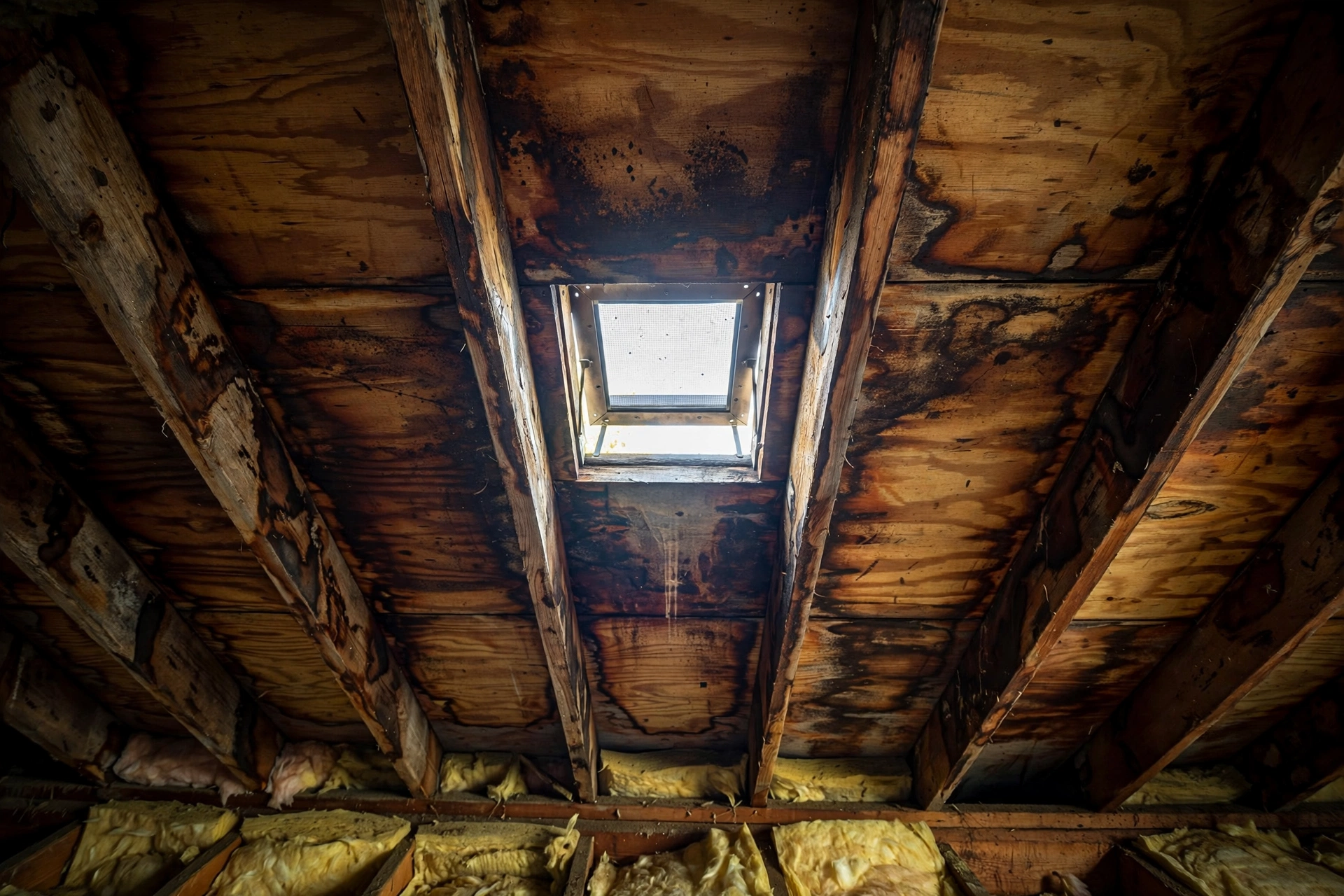
Stains vs Active Moisture
The first job of an attic check is to separate history from a live problem. A stain is a mark left behind: it may be dark, ring-shaped, or spread across several boards, and it may date from a leak that has since been repaired, a flashing failure that was corrected, or a season when condensation was heavier than usual. Active moisture is different. It is damp to the touch, it may show fresh dripping or wet insulation beneath it, and it is usually tied to a current entry point or a current condensation pattern. An inspector photographs both, notes whether the wood feels damp or dry, and traces the stain upward and outward to see whether it lines up with a valley, a flashing, a vent, or a chimney above.
That distinction matters because the response is different. An old, dry stain with a sound roof above it may mainly need watching, so a future inspector can tell whether it has grown. Active moisture needs its source found first: painting over it or replacing insulation over a still-wet deck only hides the evidence. Where the attic cannot be entered safely, the report should say so plainly rather than imply a full survey took place.
Season and weather also shape what can be concluded: a dry attic on a dry day does not rule out a leak that only shows in wind-driven rain or snowmelt. A careful report records conditions on the day and recommends the follow-up check that would settle the question.
Damp, Compressed, or Stained Insulation
Insulation tells its own story, and it is easy to misread. Damp insulation has lost much of its insulating value for as long as it stays wet, and it can hold moisture against framing and decking. Compressed insulation — flattened by storage, foot traffic, or items laid across it — insulates less well than the same material at its full depth, even when it is dry. Stained insulation may simply carry the mark of a past drip, or it may be wet underneath a dry-looking surface. An inspector checks depth and coverage as well as condition: thin patches, gaps around hatch openings, and batts pulled away from eaves all leave parts of the ceiling less protected, and those gaps often show up as uneven temperatures or ice-dam patterns on the roof above.
Damp insulation near a bathroom vent may point to a vent discharging into the attic rather than outside; damp insulation near an eave may point to wind-driven rain, ice-dam backup, or condensation; uniformly damp insulation more often points to a ventilation question than to a single roof leak. The report should describe where the affected insulation sits and what it sits beneath, so the next trade starts from evidence rather than a general instruction to replace everything.
The Ventilation Link
Many attic moisture findings are ventilation findings in disguise. An attic needs a path for air to enter low, usually at the eaves, and leave high, usually at the ridge or high vents, so moist indoor air does not linger and condense on cold decking. When intake vents are blocked by insulation, when exhaust vents are missing or undersized for the roof, or when bathroom and kitchen vents discharge into the attic instead of outside, warm moist air meets a cold roof deck and leaves condensation — sometimes enough to stain decking and dampen insulation without any roof leak at all. Our guide to roof ventilation problems walks through the common patterns and what to look for.
The reverse is also true: a genuine roof leak can look like a ventilation problem if it is judged from the attic alone, which is why the exterior check matters. Flashing, valleys, and penetrations above the stained area must be examined before the finding is attributed to condensation. In Westfield homes, ice dams add a further overlap: meltwater backing up under shingles can wet decking near the eaves in a pattern resembling condensation staining, so the eave detail and the ventilation picture need to be read together. See our ice dams guide for how that pattern forms.
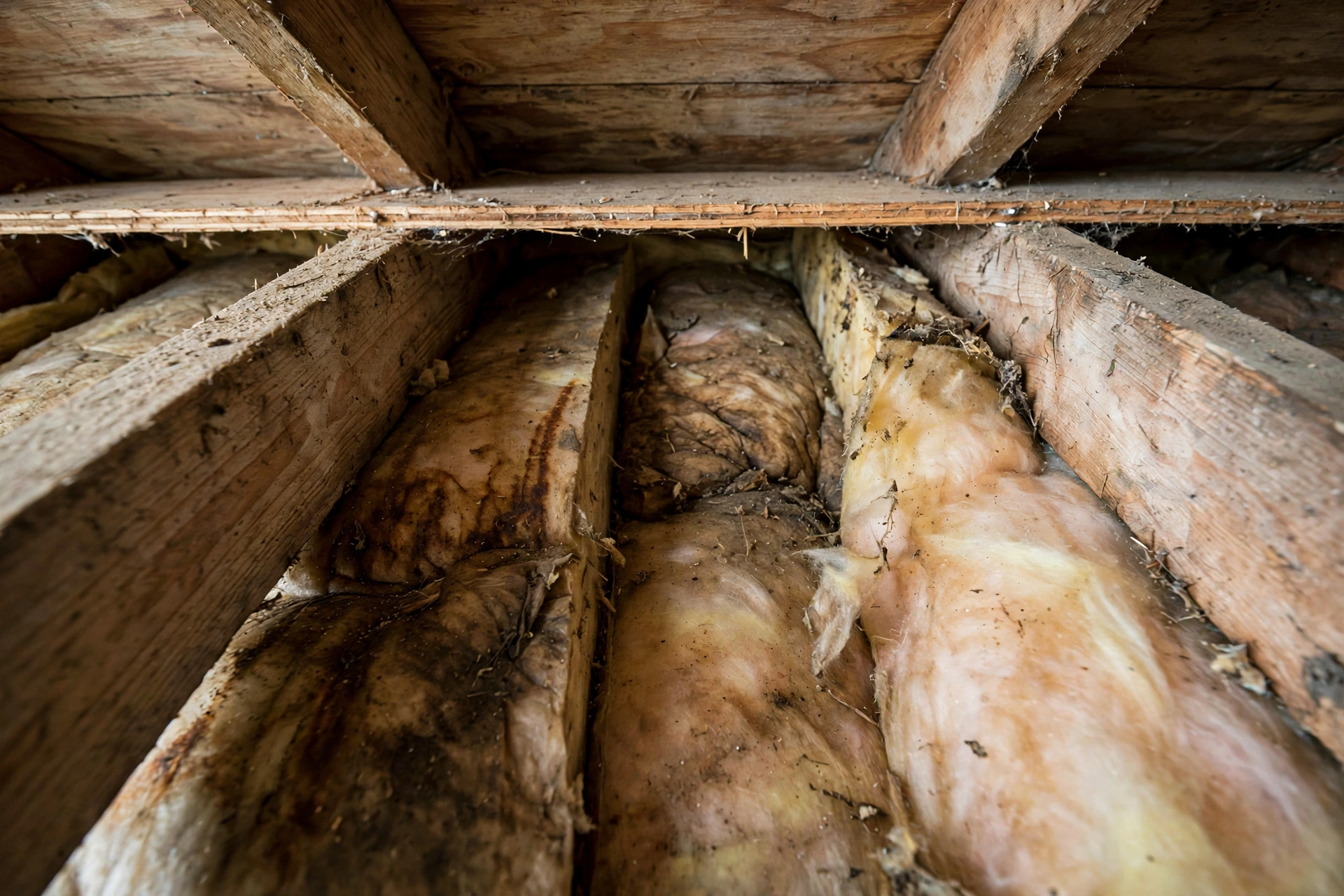
Mould-Risk Language: Findings Only
Attic reports need careful language where mould is concerned. An inspector can report what was observed — dark growth-like discoloration, a musty odour, or staining consistent with prolonged dampness — and can photograph it and note its extent and location. What an inspection report cannot do is identify a growth as a particular species, judge whether it is harmful, or advise anyone about health effects. Those questions belong to qualified professionals in the relevant fields, and any report that claims otherwise overstates what a visual roof inspection establishes.
For a homeowner, the practical reading is this: discoloration is a reason to find and fix the moisture source and to seek qualified advice about cleanup, not a reason to panic or to ignore it. Removing stained material without fixing the source usually means the staining returns. A good report keeps those two steps separate — source first, then remediation advice from the right professional — and avoids language that sounds like a health verdict.
Next Steps After an Attic Finding
Start with the source. If the finding points to a roof detail — flashing, a valley, a vent boot, an eave affected by ice dams — that detail should be examined from outside and repaired on its own merits. If it points to ventilation or to a vent discharging indoors, that pathway should be corrected so moist air leaves the building rather than collecting in the attic. If insulation is damp, compressed, or missing in patches, it should be assessed once the attic is dry, because replacing insulation over a wet deck repeats the original problem.
Then record and re-check. Keep the inspection photos and report, and plan a follow-up look after the next period of wet weather, so growth of a stain can be compared rather than guessed at. For a full picture of what an attic check sits within, see our guide to what a roof inspector looks for. If you are buying, selling, or insuring a home with an attic finding, bring the report to that conversation — an explained, photographed finding is far easier to plan around than an unexplained stain discovered late.
Related reading: roof ventilation problems, ice dams on Westfield roofs, and what a roof inspector looks for.
Get an Attic Finding Explained
If your report mentions staining, dampness, or insulation problems, bring it to the call and we will walk through what was found and what to check next. Call (213) 646-7883.
Residential Roof InspectionsFrequently Asked Questions
Not necessarily. A stain records where moisture has been, but it may be old and dry, from a leak that has since been repaired or from past condensation. Active moisture — damp wood or wet insulation — points to a current problem, while a dry stain mainly needs watching and a comparison at the next inspection.
Sometimes surface dampness dries once the source is fixed, but insulation that has stayed wet, or that is compressed or stained across a wide area, should be assessed once the attic is dry. Replacing insulation over a still-wet deck repeats the original problem, so the moisture source comes first.
A visual roof inspection can report discoloration, its extent, and its location, but it cannot identify a growth as a particular species or judge health effects. Those questions should go to qualified professionals in the relevant fields, and cleanup advice should come from them once the moisture source is fixed.
Find the source before replacing anything: check the roof detail above the finding from outside, check ventilation and whether vents discharge into the attic, and only then assess insulation once the attic is dry. Keep the inspection photos and report so a follow-up check can compare whether the finding has grown.