
Emergency Roof Inspection in Westfield, MA: 24/7 Rapid Response
When water is coming in, when a tree or branch has hit the roof, when shingles or flashing are missing over living space, or when a ceiling is sagging or bulging. In those cases, waiting for a routine appointment lets water damage decking, insulation, and interiors with every additional storm. Emergency roof inspection in Westfield, MA starts with 24/7 dispatch triage: the call is assessed, mitigation is arranged to stop the water first, and the full documented inspection follows — because stopping the leak matters more than photographing it.
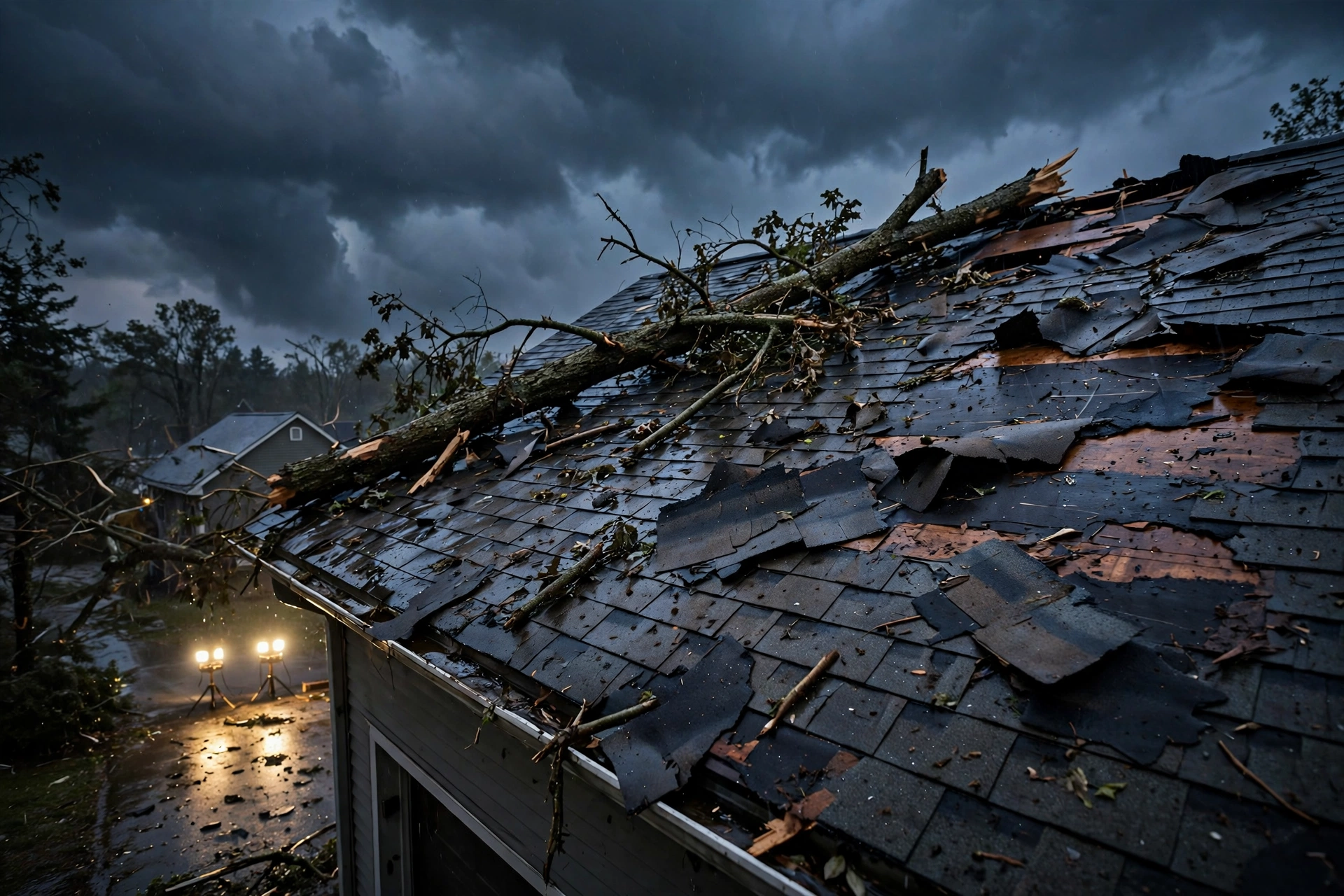
What Counts as a Roofing Emergency
Not every roof problem is an emergency, and knowing the difference saves everyone time. Emergencies are:
- Active water entry — dripping during rain, or a stain spreading visibly.
- Structural damage — a tree strike, a sagging section, or a hole in the covering.
- Missing covering over living space — shingles or flashing gone where the next rain will enter.
- Safety hazards — a ceiling bulging with trapped water, or damage near wiring or a chimney chase.
A slow stain that has been there for months, a few lifted tabs with no water entry, or general wear is urgent but not an emergency — it still deserves a prompt scheduled inspection, just not a midnight call.
Mitigation First: Stop the Water Before the Paperwork
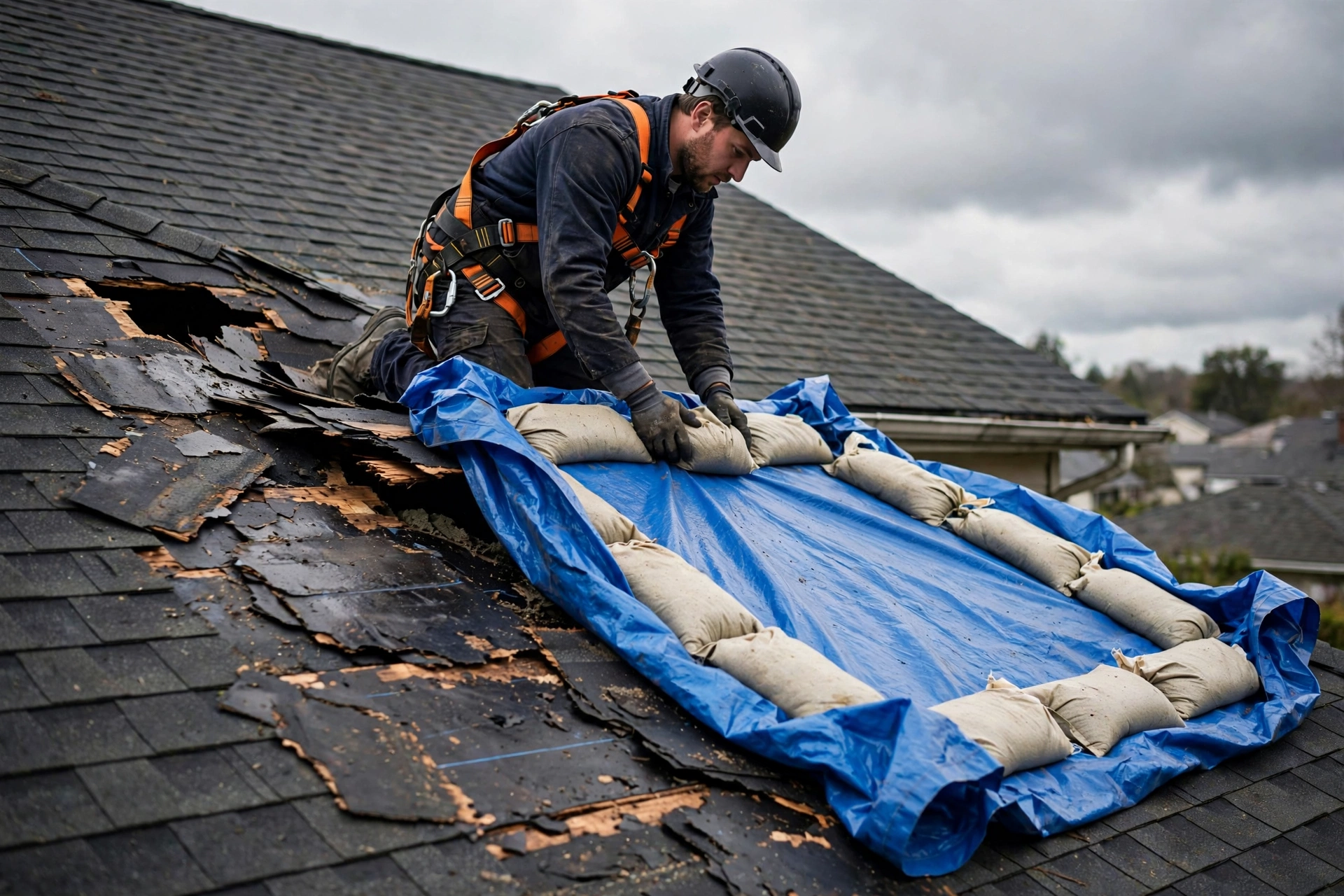
On an emergency visit, the first job is not the report — it is stopping the water. That usually means an emergency tarp secured over the damaged section, weighted or fastened so the next wind does not take it. Mitigation is also photographed before and after, because insurers want to see both the damage and the steps taken to limit it.
Do not wait for an adjuster before mitigating: policies generally expect the homeowner to limit further damage, and a tarp installed today prevents a decking replacement tomorrow. Keep receipts and photos of everything done.
What the Emergency Inspection Covers
Once the water is stopped, the emergency inspection documents the full picture: the damaged slopes, the entry points, the interior effects, and the condition of the surrounding roof. The initial visit produces a record of the emergency findings and the mitigation performed; the complete written report — with lifespan assessment and itemized repair scope — follows once the roof can be fully and safely evaluated in daylight.
That two-stage structure is deliberate: the emergency visit protects the house, and the full report supports the repair decision and any claim. One without the other is incomplete.
From Emergency Visit to Full Report
After mitigation, the path is straightforward. The full inspection documents every slope, separates storm damage from pre-existing wear, and itemizes repairs. If the damage came from a storm, that documentation feeds directly into the claim process our storm damage guide describes — dated photos, date-of-loss correlation, and adjuster-ready scope. If a hidden leak is suspected beyond the visible damage, the trace methods in our leak inspection guide apply.
Do not authorize a full replacement from the emergency visit alone. Mitigation first, full documentation second, repair decision third — in that order.
Safety: What Not to Do Yourself
Stay off the roof. Wet, steep, storm-damaged, or tree-struck roofs are the most dangerous surfaces a homeowner can climb, and emergency rooms see the results every storm season. Inside, move valuables, place buckets under active drips, and photograph damage from the ground and from inside — do not poke or drain a bulging ceiling yourself, since trapped water can come down suddenly.
If you smell gas, see sparking or downed lines, or suspect structural collapse, leave the house and call emergency services first, then the roof dispatcher.
Related reading: storm damage roof inspection and how hidden leaks get traced.
Water Coming In? Call Dispatch Now
Emergency dispatch runs 24/7. Call (213) 646-7883, describe the damage, and mitigation will be arranged before the next rain makes it worse.
Emergency Roof InspectionFrequently Asked Questions
Active water entry during rain, a tree or branch strike, missing covering over living space, a sagging or bulging ceiling, or damage near wiring or a chimney chase. A slow old stain or general wear is urgent but not an emergency and fits a prompt scheduled visit.
Emergency dispatch runs 24/7 — call (213) 646-7883 any time and the call is triaged for mitigation and inspection. Routine inspections are scheduled during normal hours.
Yes, when tarping is the right mitigation. The tarp is secured over the damaged section and photographed before and after, so both the damage and the mitigation are documented for any claim.
Stay off the roof, move valuables away from drips, place buckets under active leaks, and photograph damage from the ground and inside. If you smell gas, see downed lines, or suspect structural collapse, leave the house and call emergency services first.