
Fall Pre-Winter Roof Check in Westfield: Before the First Freeze
A fall roof check in Westfield should cover eaves and gutters before snow, flashing and valleys where water concentrates, and the attic before heating season begins. Clear drainage lets meltwater leave, sound flashing keeps it out of joints, and a ventilated attic keeps the roof deck cold and even so snow melts uniformly rather than refreezing at the eaves. Anything that lets water in or traps it comes first; cosmetic wear that is not admitting water can usually wait until spring.
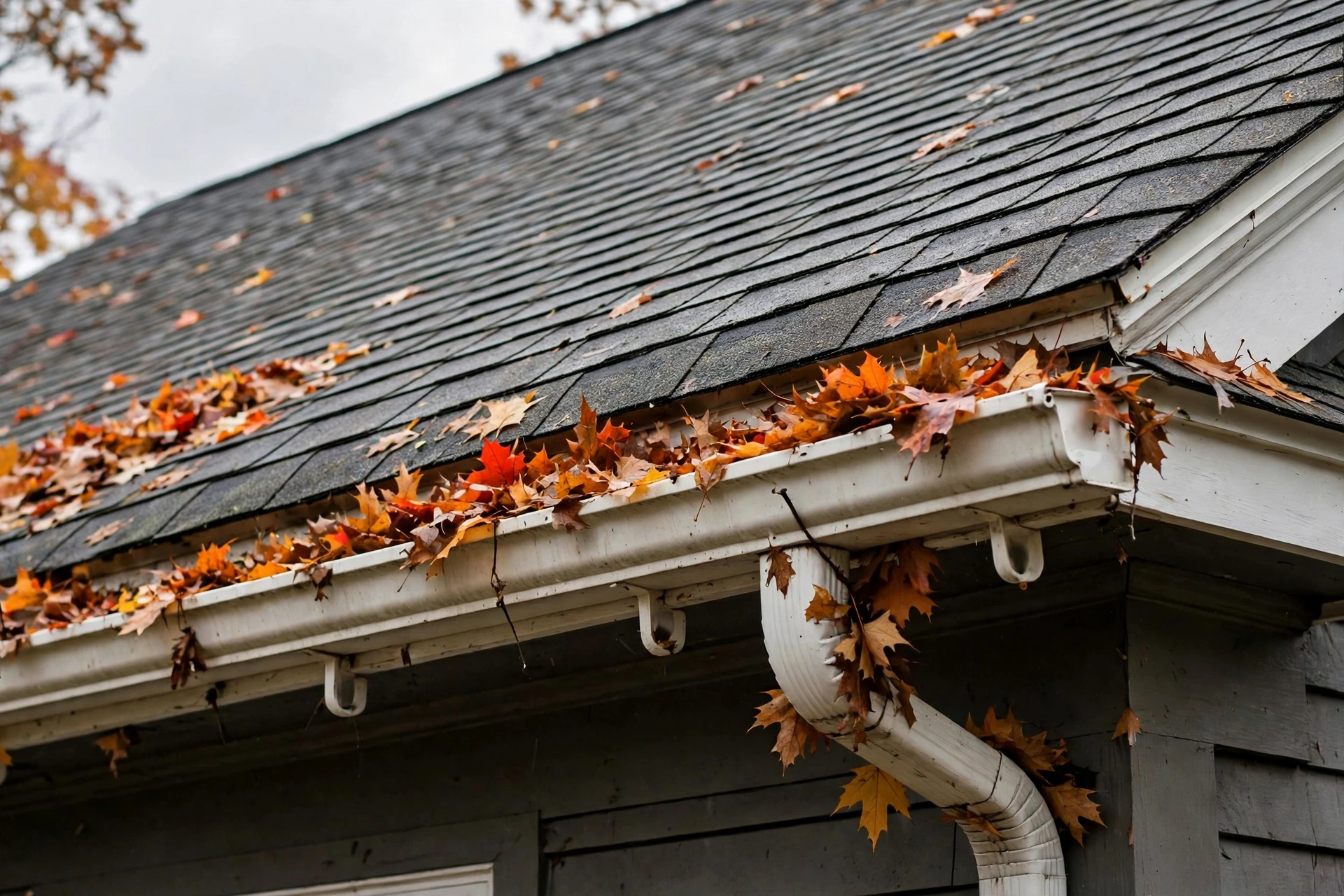
Eaves and Gutters Before Snow
In Westfield, fall leaf drop and winter snow arrive in the same season, and the gutter is where the two meet. A gutter packed with leaves cannot carry meltwater away from the roof edge, so water backs up under the first courses of shingles and sits at the eaves where overnight cold turns it to ice. Clearing gutters is therefore not cosmetic tidying; it is the single most consequential fall task.
A thorough eaves check looks beyond the gutter trough itself. Downspouts should run clear from top to bottom, because a clear gutter feeding a blocked downspout simply moves the backup elsewhere. Gutter hangers and joints deserve attention too: a sagging run or a leaking seam will only get worse under snow and ice, and fall is the practical time to find it.
The roof edge itself tells a story in fall. Shingles at the eaves that are curled, cracked, or lifting invite wind-driven rain and meltwater underneath, and drip-edge flashing that is bent or missing leaves the decking edge exposed. Overhanging limbs are worth noting too: they keep refilling a cleaned gutter and can scrape shingles in winter wind.
Flashing and Valleys
If gutters are the roof's drainage, flashing and valleys are its joints, and joints are where most leaks begin. Flashing seals the places where the roof meets something else: chimneys, skylights, vent pipes, dormer walls, and sidewalls. Valleys are the channels where two slopes meet and water from both concentrates into a single flow. Both face their hardest test in winter, when water lingers, freezes, expands, and works into any small gap.
What an inspector looks for is straightforward: flashing that has lifted, rusted, cracked at a bend, or pulled away from the surface it seals; sealant that has shrunk or split; valley shingles that are worn or lifted where water runs hardest. Debris in a valley has the same effect as a blocked gutter: leaves dam the channel, water ponds behind the dam, and a freeze can lift the surrounding shingles.
Chimney flashing deserves a special mention because it is a two-part system — step flashing woven into the shingles and counter-flashing set into the masonry — and a failure in either part can show up as a ceiling stain well away from the chimney itself. Fall is a good time to catch it, because the repair is a dry-weather job and a winter leak from this source is a preventable frustration.
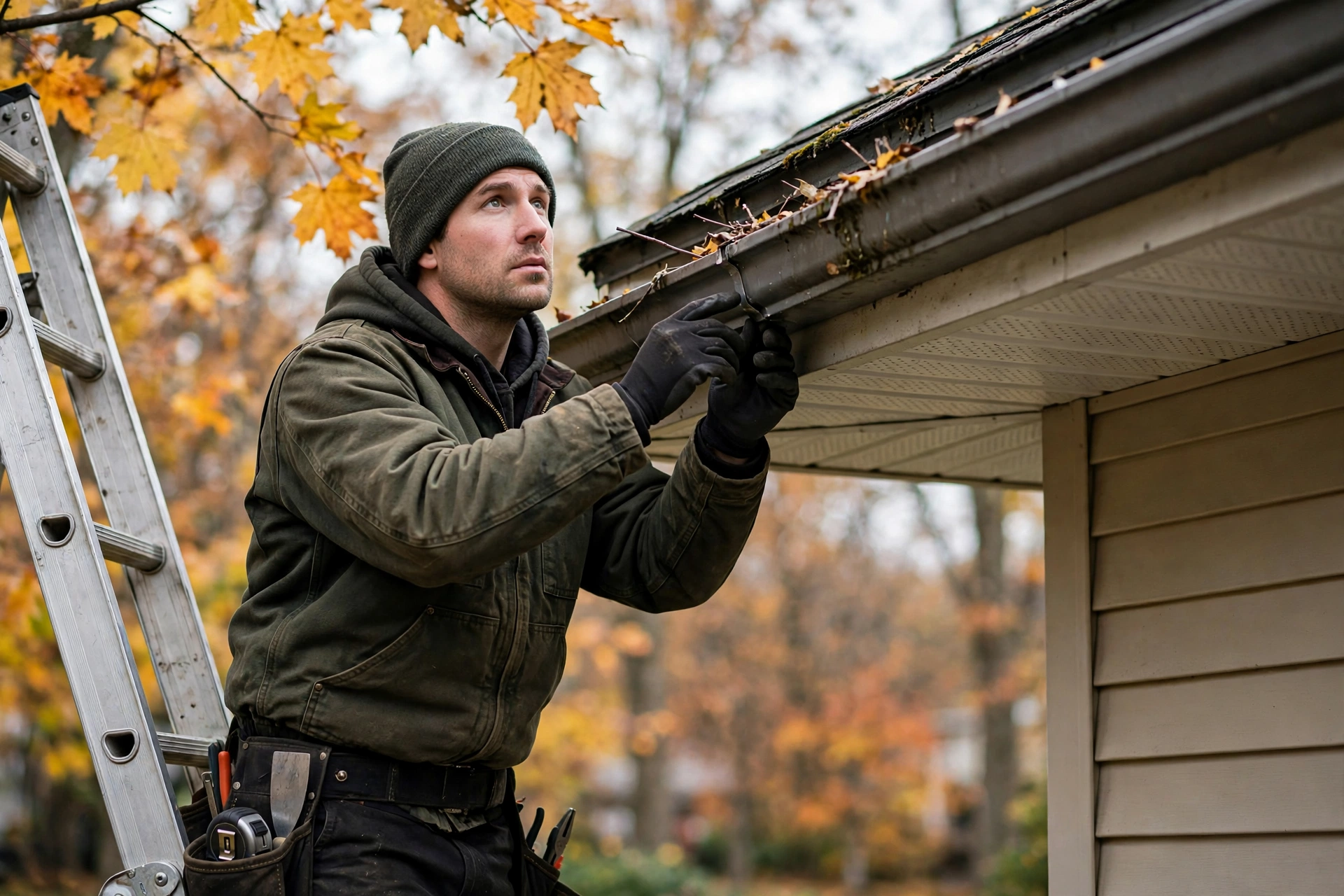
Attic Check Before Heating Season
The attic is the part of a pre-winter check that homeowners most often skip, and it is the part that most directly controls ice dams. Heat escaping from the living space warms the roof deck from below, snow on the warmed deck melts, and the meltwater runs down to the colder eaves, where it refreezes into a dam. Later meltwater then pools behind that dam and can work its way under shingles. The remedy is a roof deck that stays close to outdoor temperature, which comes from insulation, air sealing, and ventilation working together.
An attic check before heating season looks at all three. Insulation should cover the attic floor evenly, without gaps or thin patches around hatches and fixtures. Air leaks around light fixtures, plumbing, and the attic hatch let warm, moist air rise directly into the attic. Ventilation — intake at the soffits and exhaust at the ridge or roof vents — should be unobstructed, so heat and moisture are carried away before condensing on cold decking.
Moisture signs in the attic are worth taking seriously in fall. Stains on decking, damp insulation, or a musty smell can indicate a small leak that has not yet reached a ceiling, or condensation from warm air meeting cold surfaces. Finding it before heating season means the cause can be addressed while the attic is accessible. Our guide to ice dams on Westfield roofs explains the full cycle in more detail.
What to Fix First
A fall inspection often returns a list, and the natural question is what matters most. The general priority is simple: anything that lets water in or traps it comes first — active leaks, damaged or missing flashing, blocked gutters and downspouts, and missing or lifted shingles in exposed areas such as eaves, valleys, and ridges. These are the findings hardest to address once snow is on the roof.
Next in priority are conditions that will worsen over winter even if they are not leaking yet: a valley full of debris, a sagging gutter run, a vent boot whose sealant is splitting, or attic ventilation blocked by insulation. These are not emergencies, but winter weather accelerates them, and fall is the practical window to deal with them.
This is general priority guidance, not a deadline or a promise about any particular roof. Every roof is different, and the right order for one property may differ from another depending on material, age, and condition. What matters is that the order is based on water: stop water getting in, then stop water getting trapped, then deal with everything else.
What Can Wait Until Spring
Not everything found in fall needs winter action. Cosmetic wear is the clearest case: minor granule loss, slight color variation, or shingles that look aged but are still sealed and lying flat are generally monitoring items, not repair items. The inspection report should note them with photos, so spring brings a baseline to compare against.
Other spring candidates include non-urgent aesthetic work, such as moss or algae treatment on a slope that is not trapping moisture, and planned upgrades — for example, adding gutter guards or improving attic insulation as a project rather than a fix. Even some minor repairs can wait if the inspector judges the area is not admitting water, though that judgement should be recorded in writing, with the condition to watch over winter.
The line between "fix now" and "watch until spring" is the line between water and appearance. If a finding involves water getting in, water sitting where it should drain, or a component that protects a joint, it belongs in the first group. If it involves how the roof looks, or wear that is even and not yet affecting performance, spring is a reasonable time to revisit it — with the inspection report as the record. For a full walkthrough of what an inspector documents, see our roof inspection checklist for Westfield, and for winter-specific concerns, see our winter roof inspection guide for Western Massachusetts.
Book a Pre-Winter Roof Check
Get a written, photo-documented report ranking findings by priority. Call (213) 646-7883.
Residential Roof InspectionsFrequently Asked Questions
Fall is the last practical window before snow and ice make roof work slower and harder to schedule. Checking in fall means gutters, flashing, and attic ventilation can be assessed while the roof is still accessible, and problems found then can be planned before winter weather covers them.
Leaves and debris can block drainage, so meltwater has nowhere to go and can back up under shingles or sit at the eaves. That standing water is a common contributor to ice dams and to damp fascia and soffits, which is why gutter clearing is one of the first items on a pre-winter check.
Yes. Warm air leaking into a poorly ventilated attic can warm the roof deck unevenly, melting snow in patches that then refreezes at the colder eaves. Checking insulation, air sealing, and ventilation before heating season helps keep the roof surface cold and even, which reduces ice-dam risk.
Start with anything that lets water in or traps it: active leaks, damaged flashing, blocked drainage, and missing or lifted shingles in exposed areas. Cosmetic wear and minor granule loss that are not admitting water can usually be monitored and revisited in spring, with the inspection report noting exactly what to watch.