
Gutters, Downspouts, and Drainage: The Roof Inspection Nobody Asks About
Because a roof is a water-management system, not just a covering, and gutters and downspouts are the half of that system that carries water away from the house. A roof can shed rain perfectly and still cause damage if the gutters overflow, sag, leak at the joints, or discharge a whole slope of water against the foundation. When an inspector checks drainage, they are checking where the water actually ends up, which is the question the shingles alone cannot answer.
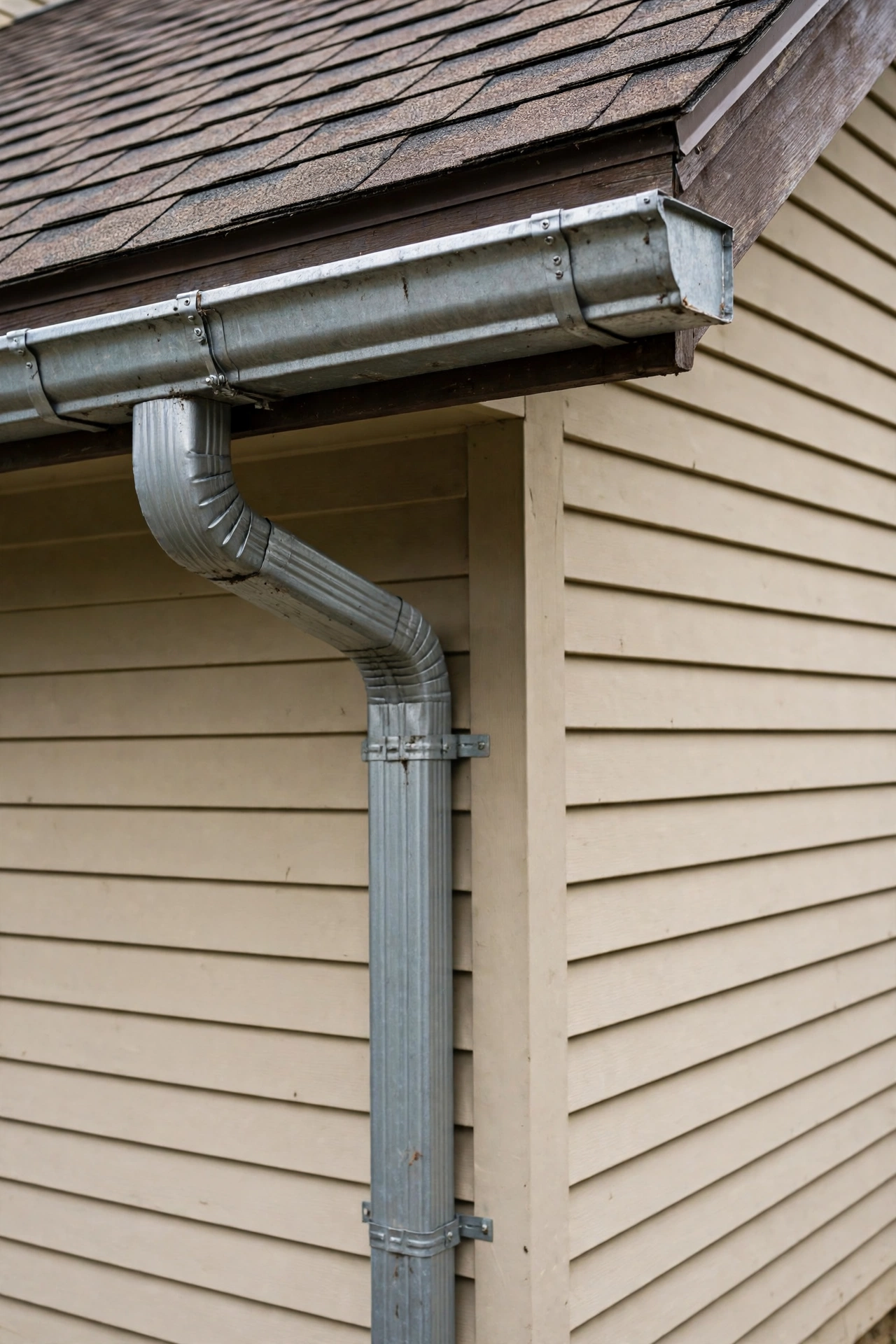
Nobody books a roof inspection because of the gutters. People book because of a stain, a storm, a sale, or an aging roof, and gutters get mentioned, if at all, as an afterthought. Yet drainage problems are among the most common findings on an otherwise sound roof. A gutter that overflows in heavy rain is not cosmetic: it is water running down siding, into fascia boards, and onto the ground beside the foundation, season after season.
This guide walks through what a drainage inspection actually looks at, from the trough to the discharge point, so you can read a report with confidence and know which findings matter and which are routine maintenance. For the full inspection picture, see our roof inspection checklist for Westfield.
Sagging, Separation, and Joint Leaks
A gutter works by holding a gentle, continuous fall toward the downspout, so water flows rather than sits, and sagging breaks that fall. It usually starts with weight: leaves, needles, and granules collect in the trough, hold water, and pull the gutter down between fasteners, and once a low spot forms it collects more debris and deepens. The inspector checks for dips, sections pulled away from the fascia, and fasteners loose, missing, or pulling out of softened wood.
Joints are the other weak point. Every corner, end cap, and join between lengths is a seam, and seams are sealed rather than welded on most residential gutters, so the sealant ages and the joint eventually weeps. A joint leak often announces itself with a streak on the fascia below or a drip line on the ground, but a slow weep can go unnoticed while it quietly rots the board behind it. The inspection question is not whether a joint has ever leaked, but whether it still holds water under flow and whether the surrounding wood is sound.
Overflow ties these together: when a gutter is blocked, undersized for the roof area feeding it, or sagging away from its fall, heavy rain overtops it in a sheet where the gutter was supposed to catch it. An inspector notes where overflow happens and why, because the fix for a blocked trough, a sagging run, and an undersized gutter are three different jobs.
Downspout Discharge and Foundations
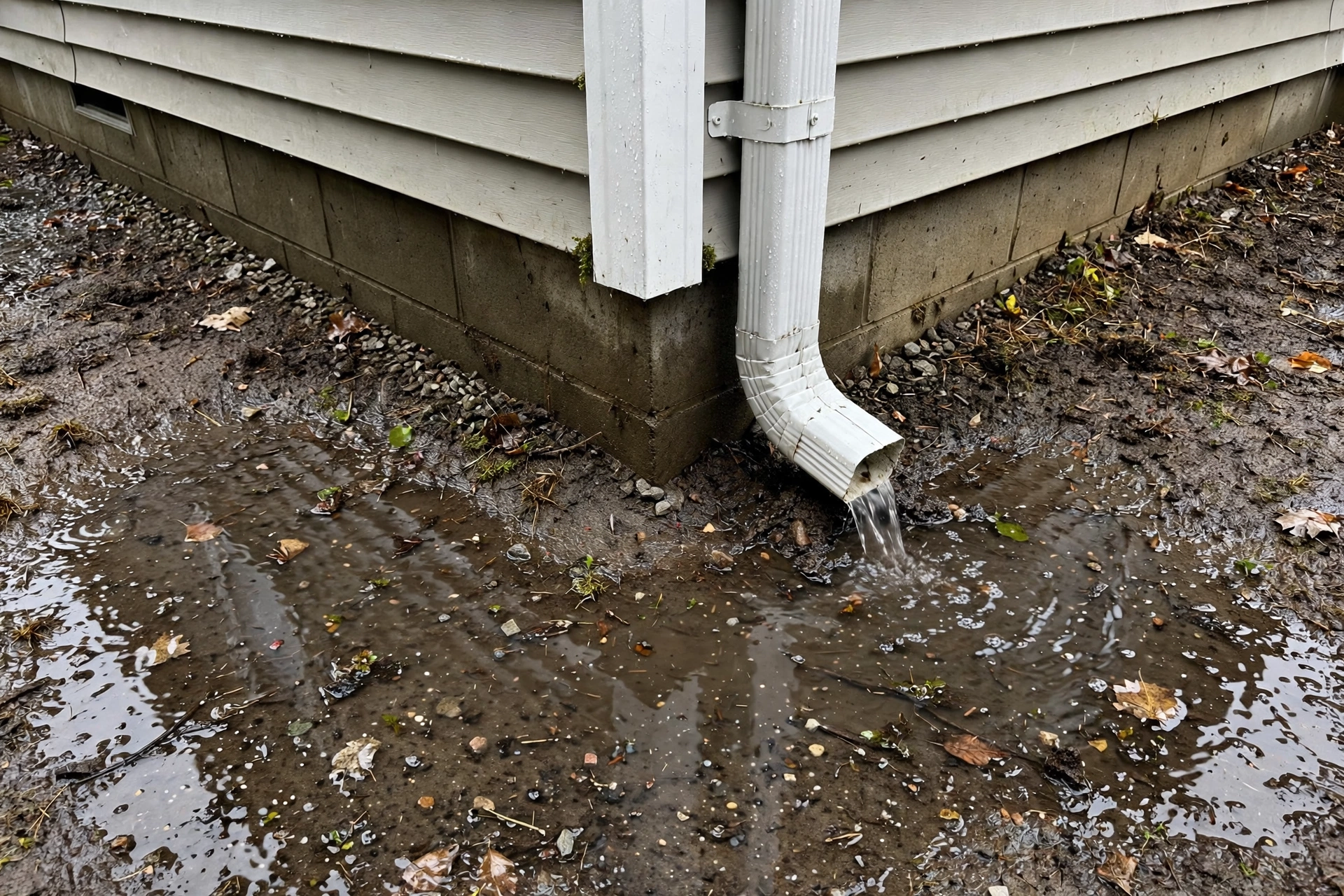
Downspouts concentrate water. A single downspout can carry the runoff of a whole roof slope, and where that water lands matters as much as how much of it there is. Discharge that drops straight beside the foundation, onto flat or inward-sloping ground, keeps the same patch of soil wet through every storm. Over time that repeated wetting erodes soil, keeps the foundation wall damp, and contributes to basement moisture and to the damp, musty conditions that follow it.
The inspector therefore follows each downspout to its end: is it connected and intact, and does it discharge onto ground sloping away from the house, via a splash block, extension, or buried drain? Disconnected downspouts are a frequent finding, often after landscaping or exterior work. Soil settled against the foundation, mulch piled against siding, or a grade directing water back toward the house can likewise undermine a sound downspout.
Fascia and Soffits
Fascia is the board the gutter hangs from; soffit is the underside of the eave behind it. They are what drainage failures damage first, sitting directly in the path of any overflow or joint leak. An inspector checks fascia for softness, paint failure, staining, and rot, and soffits for staining, sagging, and blocked or missing vents. Soft fascia is a double problem: damaged wood, and the anchor the gutter depends on.
Soffit vents deserve attention for a different reason: they are part of attic ventilation, and when painted over, blocked by insulation, or damaged, attic airflow drops and moisture and heat build up above the ceiling. A soffit problem found during a gutter check can be the first sign of a ventilation problem affecting shingle life and winter ice buildup.
Ponding and Runoff Paths
Ponding is standing water remaining after rain has stopped, marking where the drainage path has broken down: a shallow pool on a low-slope roof, or puddles lingering beside the foundation, in a walkway, or at the base of a slope. Standing water is a finding, because water that sits finds seams, softens materials, and invites growth in ways water in motion does not.
The inspector maps runoff paths rather than treating each puddle in isolation: where does water from each slope go, which downspout carries it, and where does it end up? A puddle beside the foundation may trace back to a blocked gutter, a disconnected downspout, or a grade problem, and the repair depends on which link failed.
Winter and Ice-Dam Link
Winter brings drainage and roofing together in the form of ice dams. An ice dam forms when heat escaping into the attic melts snow on the upper roof, and that meltwater runs down and refreezes at the colder eaves, building a ridge of ice that traps further meltwater behind it. Gutters are part of that chain, not the whole cause: a gutter full of debris or standing water gives ice something to grip and build on, and an ice-filled gutter can back water up under the shingles at the eave.
Clearing gutters before winter helps, but it does not by itself prevent ice dams, because the driving force is heat loss and uneven roof temperature. Lasting relief means looking at attic insulation, ventilation, and air sealing alongside the gutters. Our guide to ice dams on Westfield roofs covers that wider picture, and our roof leak inspection explains how winter water entry is traced.
The practical takeaway is simple: gutters are not a separate trade from roofing, and a roof inspection that skips them is incomplete. Check the line, check the joints, follow every downspout to where its water ends up, and look at the fascia and soffits behind the trough. Most drainage findings are straightforward, and catching them early is what keeps a small maintenance job from becoming a foundation or fascia repair.
Related reading: roof inspection checklist for Westfield, ice dams on Westfield roofs, and roof leak inspection in Westfield.
Worried About Overflowing Gutters or Pooling Water?
A photo-documented inspection follows the water from roof to discharge point. Call (213) 646-7883.
Residential Roof InspectionsFrequently Asked Questions
Because the roof does not end at the edge of the shingles. Gutters and downspouts are the system that carries water away from the roof, the walls, and the foundation, so a roof that sheds water perfectly still fails if that water is dumped beside the house. An inspection that stops at the eaves misses half the water story.
Blockage and the sagging it causes. Leaves, needles, and granules collect in the trough, water sits instead of flowing, and the added weight pulls the gutter out of alignment and opens the joints. Cleaning matters, but the inspection question is whether the gutter still holds its line and drains freely once it is clear.
Yes, over time, by concentrating a whole roof slope of water at one spot beside the foundation. Repeated wetting and drying at the same point can erode soil, keep the foundation wall damp, and contribute to basement moisture. Discharge that carries water away from the house, onto ground that slopes away, avoids that concentrated loading.
They are part of the chain, not the whole cause. Ice dams form when heat loss melts snow that refreezes at the colder eaves, and a gutter full of debris or standing water gives that ice something to grip and build on. Clearing gutters helps, but lasting ice-dam relief also means looking at attic insulation, ventilation, and heat loss.