
Hampden County Roof Inspection Guide: Towns, Weather, and What to Expect
Expect the same thorough method everywhere in Hampden County — covering, flashing, valleys, gutters, and attic decking, in a written photo report — with priorities that shift by town: tree canopy and wind in the rural west, older multi-family and commercial stock in the river-valley cities, and flat membranes and drainage along commercial corridors. The county's four seasons — winter ice dams, spring freeze-thaw, summer storms, autumn debris — each leave their own signature on a roof, and a good inspection reads all four. Call (213) 646-7883 with your town and property details and the scope will be confirmed before booking.
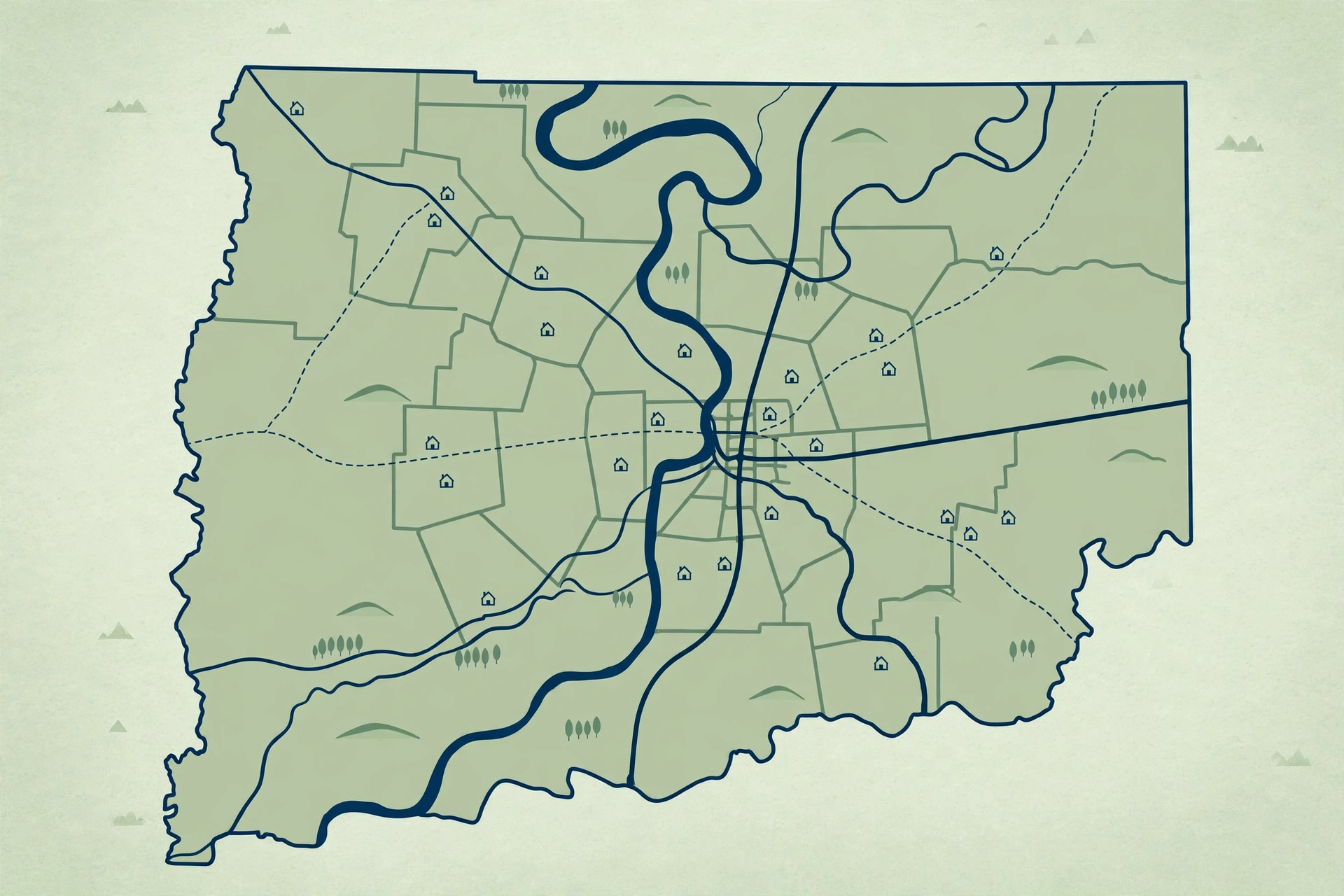
Hampden County Weather Patterns and What They Do to Roofs
Hampden County's roofs live through a full four-season cycle, and each season stresses a different part of the roof system. Winter brings snow load and ice dams: snow that melts and refreezes at the eaves can back water under shingles. An inspection after winter should look for eave and valley staining, lifted shingles at the roof edge, and attic signs of meltwater entry. Spring adds freeze-thaw movement, as temperature swings work flashing and sealants loose at chimneys, vents, and valleys — the junctions that already carry the most risk.
Summer brings storms with wind and hail. Wind lifts tabs and ridge caps, especially on open or elevated ground, while hail bruises shingles, shortening their life even when damage is hard to see from the ground. Autumn brings the quieter problem: heavy leaf fall that fills gutters and valleys, traps moisture against flashing, and hides developing failures until they become leaks. A roof that survives summer storms can still fail in autumn if its drainage is blocked — which is why gutter and valley condition belong in every report.
The practical point is timing. An inspection is most useful when read against the season: what winter left behind, what spring loosened, what summer struck, and what autumn is burying. When you book, mention any recent weather you are concerned about — a heavy snow season, a strong wind event, a hailstorm — so the inspector knows which signatures to look for. If unsure whether a weather event affected your roof, call to confirm what an inspection would check.
Town Index: Roof Inspection Guides Across Hampden County
Roof character varies town by town across the county, and each town guide below covers the local building stock and the inspection priorities it creates. Start with the town nearest your property, then use the county patterns above to fill in the rest of the picture.
- West Springfield: river-valley homes and commercial buildings side by side — read the roof inspection guide for West Springfield, MA.
- Agawam: suburban homes with a mix of older and newer stock — read the roof inspection guide for Agawam, MA.
- Holyoke: older multi-family and mill-era buildings where age and layered repairs matter — read the roof inspection guide for Holyoke, MA.
- Chicopee: dense residential neighborhoods and commercial corridors — read the roof inspection guide for Chicopee, MA.
- Springfield: the county's largest city, with the widest mix of residential and commercial roofs — read the roof inspection guide for Springfield, MA.
- Southwick: suburban and lakeside homes where drainage and tree cover both matter — read the roof inspection guide for Southwick, MA.
- Granville: rural western lots, heavy tree canopy, and wind exposure — read the roof inspection guide for Granville, MA.
For the full list of areas served, including Westfield neighborhoods, see our service areas page. If your town is not listed above, call to confirm coverage — a town without its own guide can still be booked under the same inspection method.
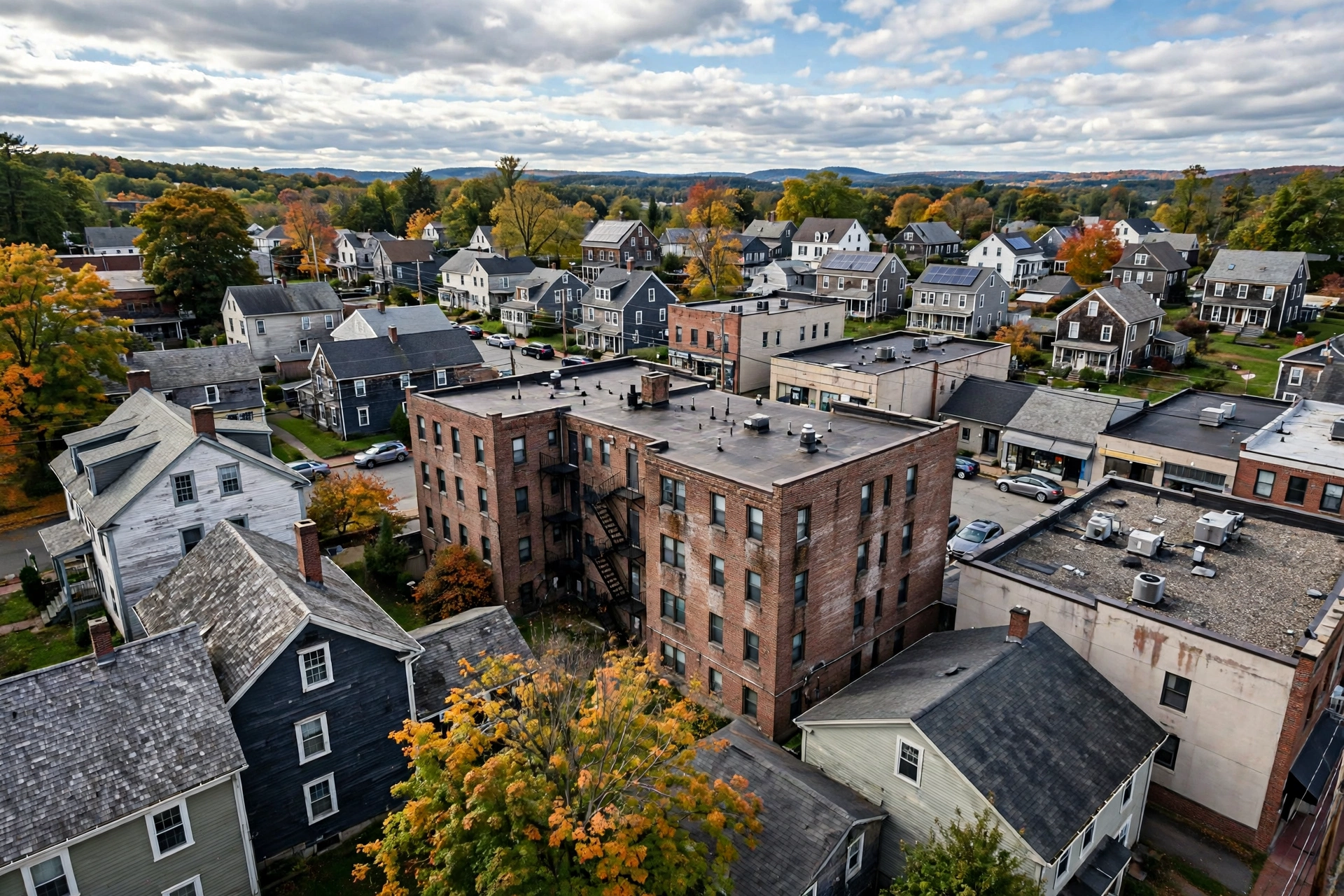
Commercial Corridors: Flat Roofs, Warehouses, and Storefronts
Along Hampden County's commercial corridors, the inspection question changes completely. Flat and low-slope roofs are judged not by shingle condition but by membrane seams, ponding, drainage, and penetrations for HVAC units, vents, and skylights. Ponding — water standing on a flat roof after rain — accelerates membrane wear and points to drainage or slope problems a residential check would never catch. A commercial inspection surveys the membrane on foot, documents seams and penetrations, and notes ponding patterns with photos.
Warehouses add scale to the same questions: more penetrations, more seams, and rooftop equipment that creates its own flashing details at every curb. Storefronts often combine a flat main roof with pitched sections or additions, and each section gets its own method in the report rather than a single blanket verdict. Thermal scanning is a useful follow-up where ponding suggests trapped moisture under the membrane, which a visual survey alone can miss.
If you own or manage a commercial property, book it as commercial from the start. Tell the dispatcher the building type, approximate footprint, membrane type if known, and whether rooftop equipment or past ponding is a concern. A commercial inspection is priced and scoped on area and complexity, and naming it correctly at booking means the inspector arrives with the right method — and the report answers the questions a buyer, insurer, or facilities manager will ask. See our commercial roof inspection service page.
How Dispatch Works (and What to Have Ready When You Call)
Booking starts with a short scoping call, not a calendar slot. When you call (213) 646-7883, the dispatcher asks for five facts: your town, the property type (residential or commercial), the roof material if known, the number of stories, and whether you need a standard or insurance-grade report. Insurance-grade reports add dated, captioned photos slope by slope and an itemized repair scope — the version to order when a claim, a dispute, or a sale is involved. Naming it at booking avoids a second visit later.
Access details help too, especially outside the cities: a long driveway, a wooded lot, a locked gate, or a flat roof reached only through the building are all worth mentioning, since they affect how the inspector plans the visit. So does any known concern — a ceiling stain, a past leak, a recent storm, or an upcoming sale or claim. The more specific the concern, the more focused the inspection, and the more useful the report to whoever reads it next, whether a buyer, an insurer, or a contractor pricing repairs.
After the visit, you receive a written photo-documented report rather than a verbal opinion, and the inspector remains reachable for questions about the findings. If the report recommends repairs, note that the inspection itself is independent: the inspector documents condition and scope, and you choose who performs any work. That independence is the point of the service, in Granville, in Springfield, and everywhere in between — one county, one method, one report you can hand to anyone.
Related reading: start with your town guide in the index above, or see our Granville roof inspection guide for the county's rural western end. For services generally, see residential roof inspection and roof damage inspection.
Book a Hampden County Roof Inspection
Tell us your town, property type, and roof details, and we will confirm the scope before you book. Call (213) 646-7883.
Residential Roof InspectionsFrequently Asked Questions
The inspection method is the same everywhere, but the priorities shift. Rural western towns bring tree canopy and wind exposure, river-valley cities bring older multi-family and commercial stock, and flat-roofed corridors bring membrane and drainage questions. A good report reflects the town's building stock, not just the roof in front of the inspector.
The county's four-season cycle: snow load and ice dams in winter, freeze-thaw movement in spring, summer storms with wind and hail, and heavy leaf fall in autumn that clogs gutters and valleys. Each season stresses a different part of the roof system, which is why an inspection should note the season's likely effects, not just current visible damage.
Yes, if the booking says so. Residential and commercial roofs are different methods — slopes and attic decking versus membranes, seams, ponding, and penetrations — so tell the dispatcher about every structure up front. The inspector will scope each one and the report will cover them separately.
Call (213) 646-7883 with the town, property type, roof material if known, number of stories, and whether you need a standard report or an insurance-grade report. The dispatcher confirms the scope and access details before booking, and you will know what the visit covers before the inspector arrives.