
Roof Ventilation Problems in MA Homes: Soffit, Ridge & Attic Balance
Most roof ventilation problems are balance problems, not missing vents. Air should enter low through the soffits and exit high through the ridge, carrying heat and moisture out of the attic; when intake is blocked, exhaust is missing, or the two are badly mismatched, the attic stays hot in summer, damp in winter, and warm enough in a snow season to feed ice dams. The fix is restoring that low-to-high path, not simply cutting more holes in the roof.
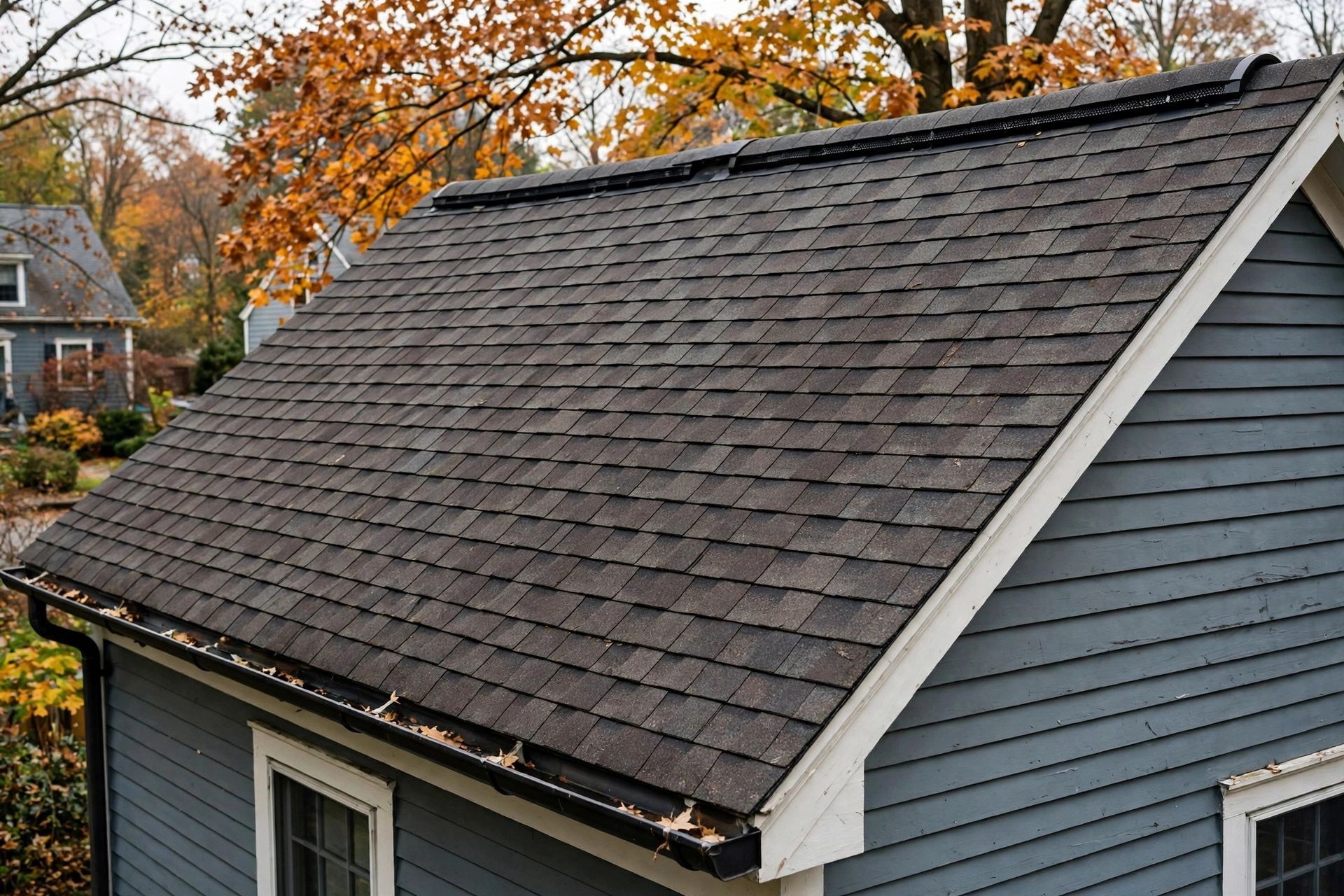
Intake vs Exhaust Ratios: Why Balance Matters More Than Vent Count
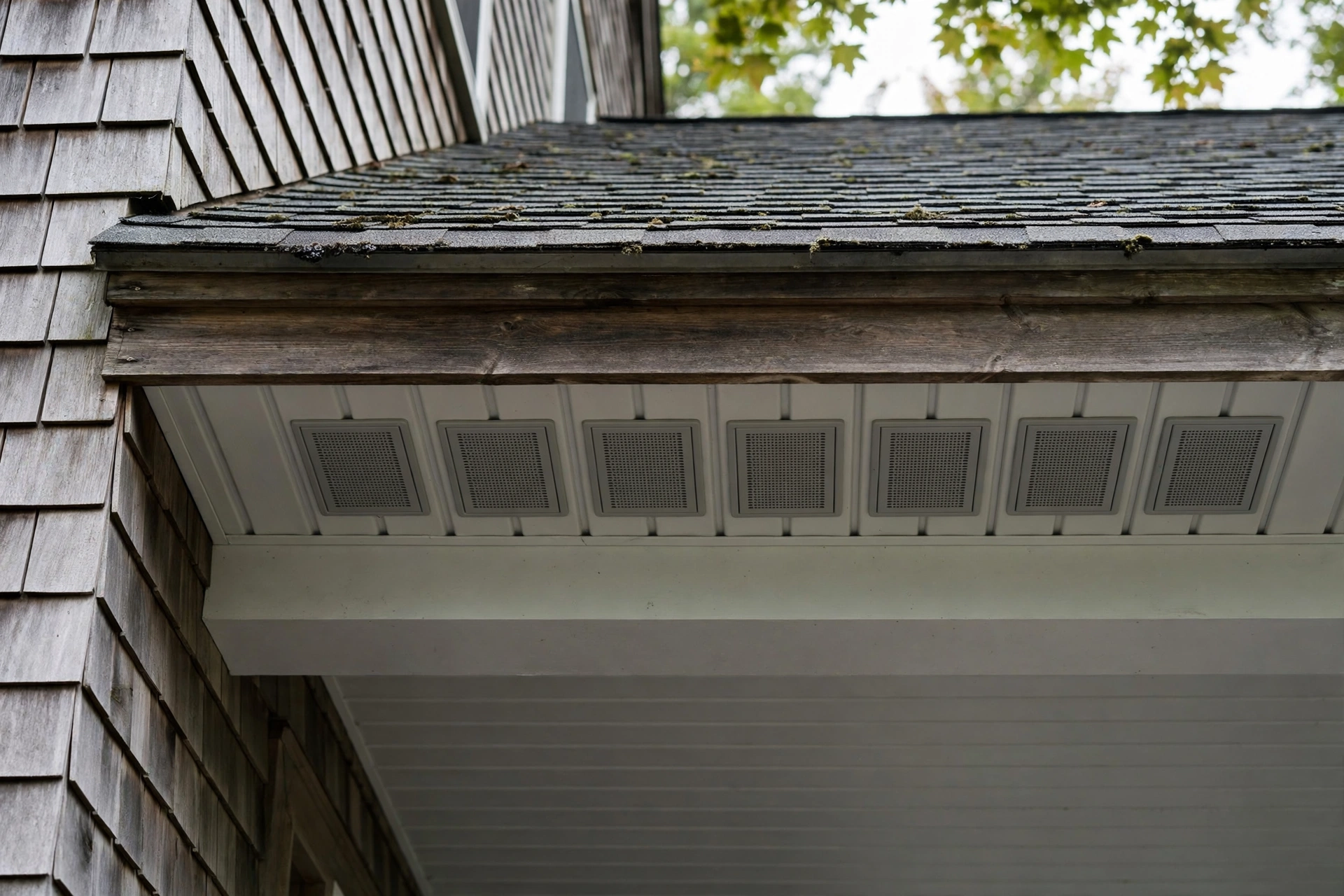
A ventilated attic works on a simple path: cool air enters at the eaves through soffit vents, warms as it travels along the underside of the roof deck, and exits near the peak through a ridge vent or other high exhaust. The system depends on both halves. Intake and exhaust should be roughly balanced, with intake at least keeping pace with exhaust, so air actually travels the full path instead of stalling or reversing.
The most common imbalance in Massachusetts homes is exhaust without intake. A ridge vent gets added during a re-roof, but the soffits stay painted shut, covered by new siding, or buried under insulation that has drifted into the eaves. With no low intake to feed it, the ridge vent pulls replacement air from wherever it can find it: gaps around light fixtures and attic hatches, plumbing and wiring penetrations, and sometimes other roof vents. That air comes from the living space, carrying household moisture with it — the opposite of what ventilation is supposed to do.
The reverse problem also shows up: generous soffit venting with no high exhaust at all, common on older homes that never had a ridge vent. Air enters at the eaves and has nowhere useful to go, so the attic still overheats in summer. Mixed exhaust types cause a third failure mode: when a ridge vent, box vents, and a powered fan share one attic, the strongest exhaust can short-circuit the others, pulling air in through a nearby vent instead of from the soffits and leaving whole sections unventilated. One consistent exhaust type, fed by open soffit intake, usually ventilates more evenly than a collection of different vents.
An inspection checks the system, not just the vent count: whether soffit vents are open and unblocked, whether insulation baffles keep an air channel from the eaves to the ridge, whether exhaust openings are clear of debris and snow, and whether the intake and exhaust sides are proportioned to each other. Blocked soffits are the most frequent finding, and the cheapest to fix — clearing insulation, opening painted vents, or adding baffles often restores airflow that a new vent never would.
The Ice-Dam Link: How a Warm Attic Builds Dams at the Eaves
Ice dams are often a ventilation symptom as much as a roofing failure. When heat escapes from the living space into the attic — through thin insulation, gaps around hatches and penetrations, or warm air drawn upward by an unbalanced ridge vent — the roof deck over the heated attic warms above freezing while the eaves, which extend past the warm wall, stay cold. Snow on the warm section melts, runs down to the cold eaves, and refreezes into a dam. Meltwater then pools behind the dam and can back up under the shingles.
Ventilation helps by keeping the deck closer to the outdoor temperature: steady airflow from soffit to ridge carries escaped heat out before it warms the deck unevenly. But airflow alone cannot compensate for a badly under-insulated or unsealed attic. If large amounts of heat pour through gaps around a pull-down stair or recessed lights, even a well-ventilated attic will run warm. That is why ice-dam investigations look at ventilation, insulation depth and coverage, and air sealing together — and why fixing only one of the three often leaves the dams in place.
For the full picture on how dams form and what an inspection looks for, see our guide to ice dams on Westfield roofs. If water has already found its way in, our roof leak inspection guide explains how the entry point gets traced back to its source.
Mould Risk in a Poorly Ventilated Attic
Mould needs three things: moisture, a food source, and time. A poorly ventilated attic supplies all three. Household moisture rises into the attic every day from cooking, showers, and breathing; in winter, warm moist air that reaches a cold roof deck condenses on the sheathing, rafters, and nails. Wood sheathing is the food source. And because attics are rarely visited, the damp conditions persist undisturbed for months or years.
The early signs are easy to miss from outside the attic: dark staining on the underside of the sheathing, frost on nails and sheathing in cold weather, a musty smell near the attic hatch, or insulation that looks compressed and discoloured. Ventilation reduces the risk by moving moist air out before it condenses, but it is not a mould treatment on its own — once growth is present, the moisture source has to be found and the affected materials assessed, and ventilation is restored as part of preventing a repeat.
Two details deserve attention during an inspection. First, bathroom and kitchen exhaust fans that vent into the attic rather than outdoors dump large amounts of moisture directly into the space ventilation is supposed to keep dry. Second, an unbalanced system that pulls conditioned air upward through ceiling gaps actively feeds attic moisture in winter, which is why the intake-exhaust balance above matters for mould risk as much as it does for ice dams.
Warranty Effects: What Poor Ventilation Can Mean for Coverage
Warranty terms depend on the manufacturer and the installer — there is no universal rule that applies to every roof, and any guide that states one should be treated with scepticism. That said, ventilation is a common condition in warranty documents on both sides. Some shingle manufacturers set ventilation conditions in their material warranties, and some installers include ventilation in their own workmanship terms. Where those conditions exist, a documented ventilation problem can become part of a coverage discussion if a claim is made.
The practical advice is straightforward. Before a re-roof, ask the installer what ventilation the manufacturer and the installer each require, and get the answer in writing as part of the job scope. After the job, keep the ventilation details with your roof records: what intake and exhaust were installed, whether baffles were fitted at the eaves, and any photos of the finished system. If a problem appears later, that record turns a vague discussion about ventilation into a specific one. And if an inspection finds blocked soffits or missing exhaust on an existing roof, correcting it protects the roof itself regardless of warranty questions.
Suspect a Ventilation Problem?
An inspection checks soffit intake, ridge exhaust, baffles, and attic moisture in one visit. Call (213) 646-7883.
Residential Roof InspectionsFrequently Asked Questions
Not necessarily. Ventilation works as a balanced system: air enters low through the soffits and exits high through the ridge or other exhaust vents. Adding exhaust vents without matching intake, or adding vents in the wrong places, can short-circuit airflow or pull conditioned air from the living space below. The fix starts with checking what is blocked or missing, not with adding vents at random.
Poorly, in most cases. A ridge vent is an exhaust opening: it needs a low intake source to draw air through the attic. Without working soffit intake, a ridge vent may draw air from gaps into the living space or from other roof openings instead, which weakens airflow and can carry moisture with it.
It lowers the risk, but it is not a guarantee on its own. Ice dams form when heat escaping into the attic warms the roof deck unevenly, so insulation levels and air sealing matter just as much as airflow. Ventilation, insulation, and air sealing work together; fixing only one of the three often leaves the problem in place.
It can, but the terms depend on the manufacturer and the installer, and there is no single universal rule. Some warranties set ventilation conditions, and some installers document ventilation as part of their own workmanship terms. If warranty coverage matters to you, ask the manufacturer and the installer what their own terms require and keep the written answers with your roof records.