
Roofer vs Roof Inspector in Westfield: Who Does What, and When You Need Both
A roofer sells and carries out repairs, while a roof inspector documents condition in a written, photo-supported report without selling the work. You need a roofer when work is already decided, an inspector when the facts themselves are in question, and both, inspection first, when more than one party will rely on the answer.
Who Sells Repairs vs Who Documents Condition
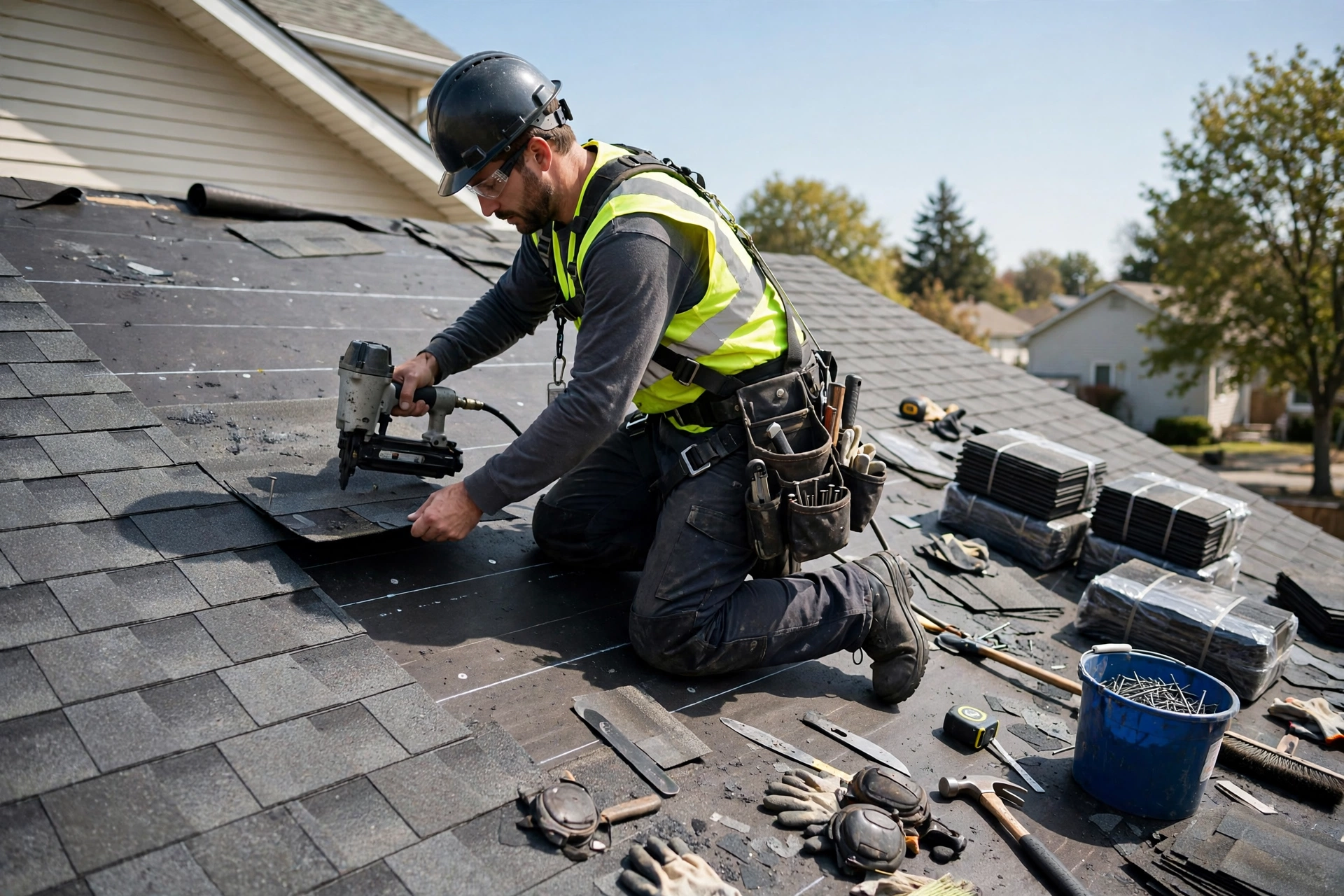
Roofers and roof inspectors both spend their working lives on roofs, but they are hired to do different jobs, and confusing the two is how homeowners end up with the wrong document for their problem. A roofer sells and carries out repair and replacement work. When a roofer visits, the natural outcome is a scope of work and a quote: what needs doing, what materials are involved, and what it will cost to put right. That is exactly what you want when you already know work is needed.
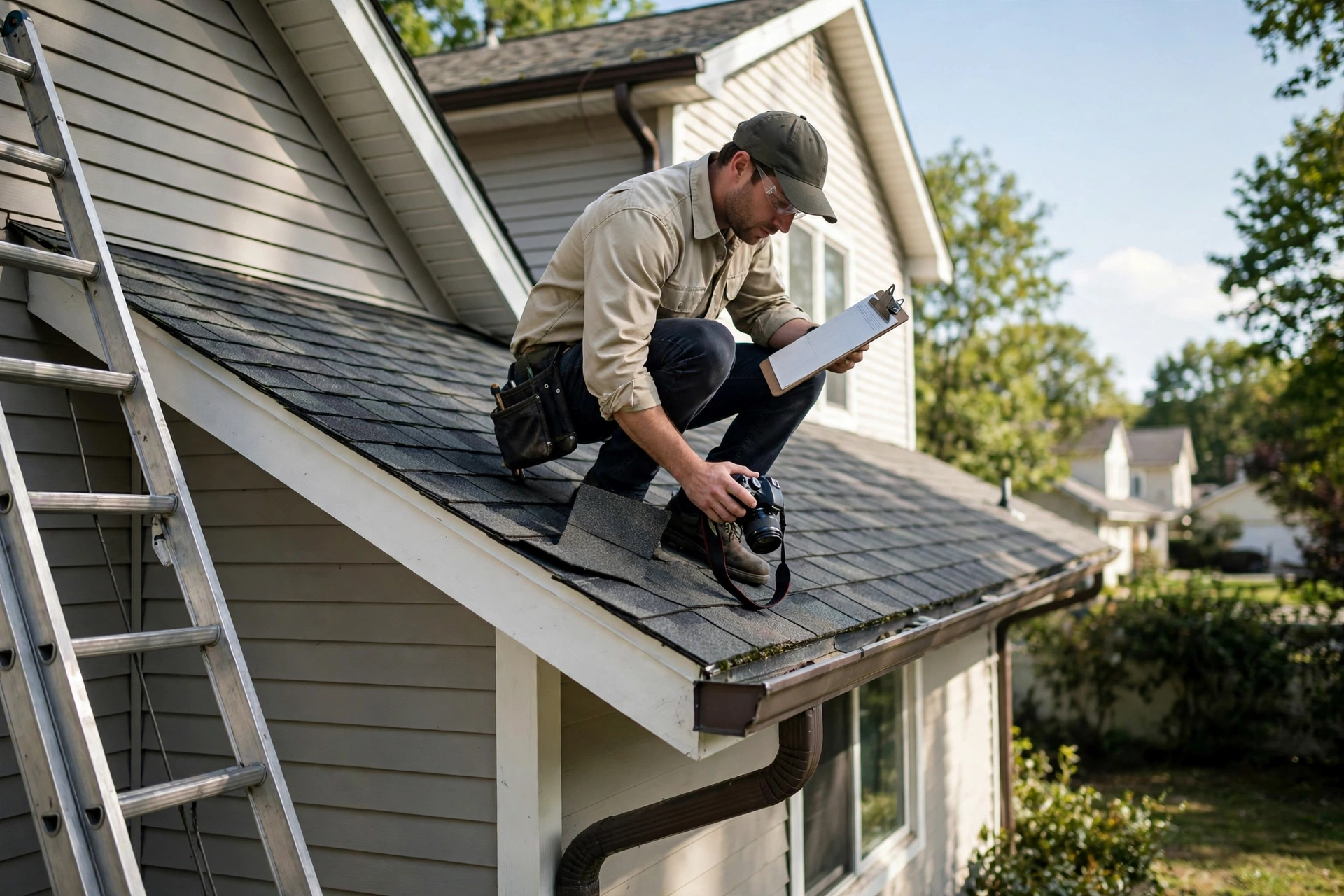
A roof inspector, by contrast, documents condition. The outcome of an inspection visit is a written, photo-supported report describing what was found, slope by slope, including the covering, flashing, valleys, gutters, and, where accessible, the attic side of the decking. The inspector does not carry out the repairs they recommend, and the report is written to be read by someone who was not on the roof: a buyer, a seller, an agent, or an adviser weighing a decision.
Neither role is a substitute for the other, and neither is inherently more trustworthy. A good roofer gives an honest quote for work that is genuinely needed, and a good inspector gives an honest account of condition, including when no work is needed at all. The question to ask before booking is not which professional is better, but which outcome you need: a price for work, or an independent record of condition. If you need both, you will usually need both visits, in that order.
Independence and Why It Matters
Independence is the inspector's main selling point, and it is worth understanding precisely, because it is often oversold as a certainty rather than what it really is: the removal of one specific conflict of interest. An inspector who does not sell repairs has no financial interest in finding a bigger problem, and no interest in minimising one either, since there is no repair job to protect. Their only product is the report, so their reputation rests on its accuracy.
That does not make an inspector infallible, and it does not make every roofer's assessment self-serving. Many roofers diagnose problems accurately and quote fairly, and their practical experience of how roofs fail is real expertise. But when the person diagnosing the problem is also the person who will be paid to fix it, a reasonable reader is entitled to ask whether the scope is the smallest honest scope, or the largest plausible one. An independent report answers that question by giving a second, disinterested view of the same roof.
Independence matters most when the stakes are shared between parties who do not trust each other yet. A buyer does not yet trust a seller's roofer, a seller does not yet trust a buyer's roofer, and an adviser needs a document that does not belong to either side. In those situations, an independent inspection is not a luxury; it is the document that lets negotiations proceed on agreed facts rather than competing quotes. For what an inspector actually examines, see our guide to what a roof inspector looks for.
What Each Report Is Used For
A roofer's quote is a working document: it scopes a job, prices it, and, once accepted, becomes the basis for the work itself. It is the right document when you are ready to commission repairs, when you want to compare approaches between roofing firms, or when you need to understand what a particular fix involves. It is less useful as neutral evidence, precisely because it is written by a party with an interest in the work going ahead.
An inspector's report is an evidence document. Buyers use it to understand what they are purchasing and to frame questions or requests during a sale. Sellers use it to disclose condition transparently and to support pricing. Homeowners use it to plan maintenance, to prioritise repairs over time, and to hold a dated record of condition that can be compared with a later inspection. It is written to be shared, quoted, and relied on by people who were not present at the visit, which is why photo documentation and clear, plain-language findings matter so much in it.
Keeping the two documents distinct also keeps expectations clear. A roofer who is asked to inspect may give a verbal opinion rather than a written report, and a verbal opinion is hard to share, hard to compare, and easy to dispute later. An inspector who is asked to quote a repair is being asked to step outside their role. Ask each professional for the document their role produces, and you will get better value from both visits.
When One Visit Is Not Enough
There are situations where a single visit genuinely covers it. A plainly visible problem, such as a section of missing covering after a storm, or a gutter that has come away from the fascia, can reasonably go straight to a roofer for a quote and a fix, with no inspection report needed. Similarly, a homeowner who simply wants a roof's general condition recorded, with no repair in mind, needs only an inspector.
But several common situations call for both. A leak that keeps returning after repair suggests the source has not been correctly identified, and an independent inspection before further work can prevent paying twice for the wrong fix. A sale or purchase almost always benefits from both, since the buyer needs an independent record and the seller needs a priced scope for anything agreed. A dispute about whether damage is recent or long-standing, or about the extent of a problem, is best settled with a documented inspection first and quotes second.
The order matters too. Inspect first, then quote, and the roofer's scope can be checked against the inspector's findings; quote first, then inspect, and you have a second opinion on work already scoped, which is still useful but less clean. As a rule of thumb, if more than one party will rely on the answer, or if money changes hands on the strength of it, get the independent record before the priced scope. If you are choosing a local professional in the first place, see our guide to what near me should actually mean in Westfield.
Related reading: roof inspection near me in Westfield, what a roof inspector looks for, and our residential roof inspection service
Need an Independent Roof Report?
Book an independent inspection and get a written record of your roof's condition before you commission work. Call (213) 646-7883.
Residential Roof InspectionsFrequently Asked Questions
A roofer can certainly look at your roof and quote repairs, but that visit answers a different question. An inspector documents condition in a written, photo-supported report without selling the repair, which is what you need when the purpose is evidence rather than a quote.
An independent inspector documents and reports, and does not carry out the repairs they recommend. That separation is the point: it keeps the findings free from any interest in the size of the repair job.
An independent inspection report is the natural document to share, because it records condition, photos, and recommendations without a sales interest. A roofer quote is still useful alongside it, as the priced scope for the work recommended.
Sometimes one visit is enough, and sometimes it is not. A straightforward, visible problem can often go straight to a roofer, while a disputed, hidden, or recurring problem benefits from an independent documented inspection before repair work begins.