
Hail Damage on Your Roof: Signs Westfield Homeowners Miss
Look for three things together, not one alone: soft bruises in the shingle mat where hailstones struck, granule loss that shows up as bare asphalt and as grit piling in the gutters, and dents in the soft metals — flashing, vents, and gutters. One of these can have other causes; all three together after a hailstorm is a strong pattern. The catch is that most hail damage is invisible from the ground, which is why hail damage on Westfield roofs so often goes unclaimed until the bruised shingles start leaking a year or two later.
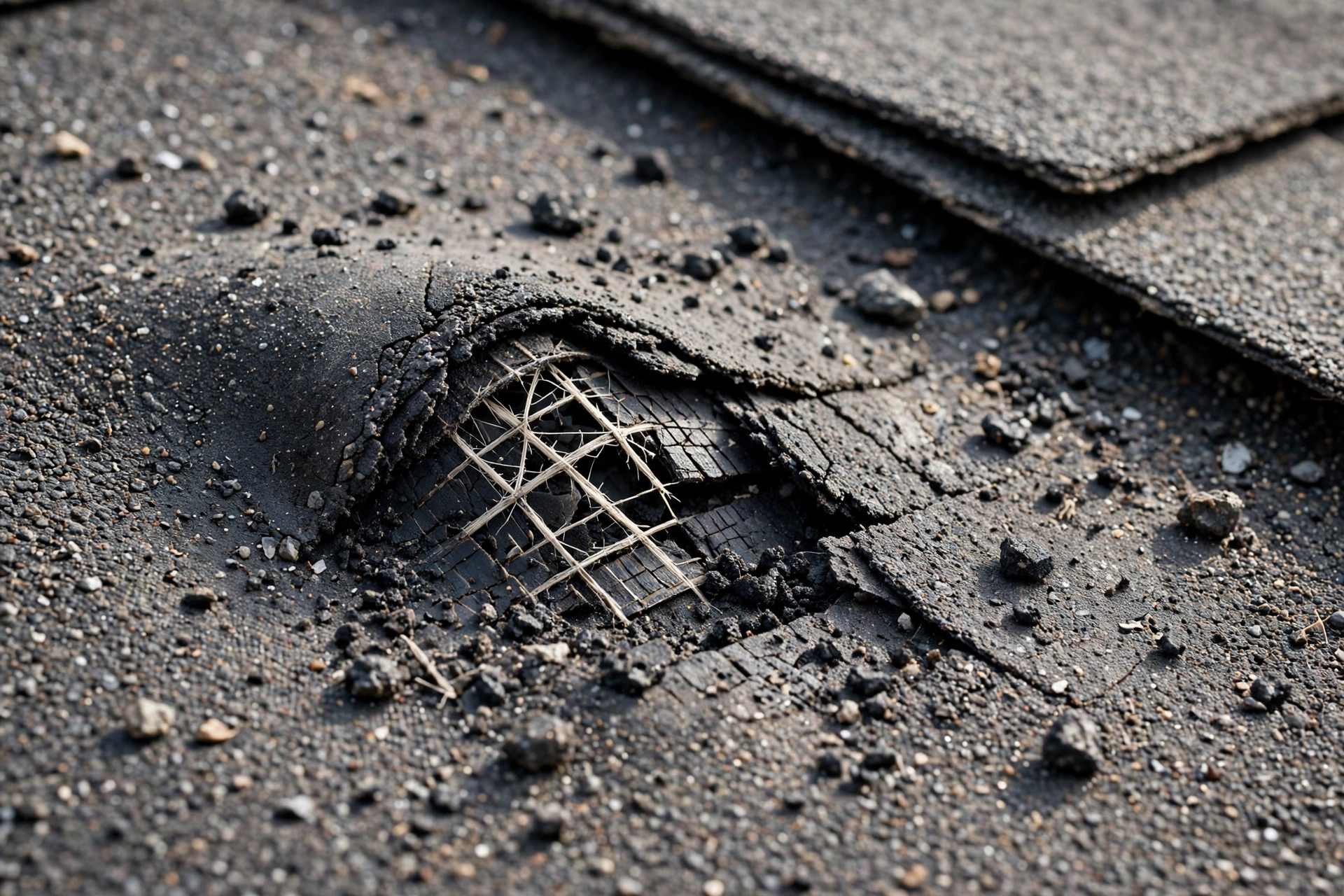
Bruised Mats: The Damage You Cannot See From the Ground
A hailstone does not need to punch through a shingle to ruin it. When a stone strikes, it compresses the asphalt and cracks the fiberglass mat underneath, leaving a soft, spongy spot — a bruise. From the driveway the shingle looks fine. Press the bruise and it gives; over months of sun and freeze-thaw, the cracked mat opens, granules shed, and water finds its way in.
That delayed failure is what makes hail claims tricky: the roof can look acceptable the week after the storm and leak the following spring. An inspector finds bruises by hand, slope by slope, marking each one — which is also why a ground-level look, or a drone photo alone, is not a hail inspection.
Granule Loss and What Your Gutters Tell You
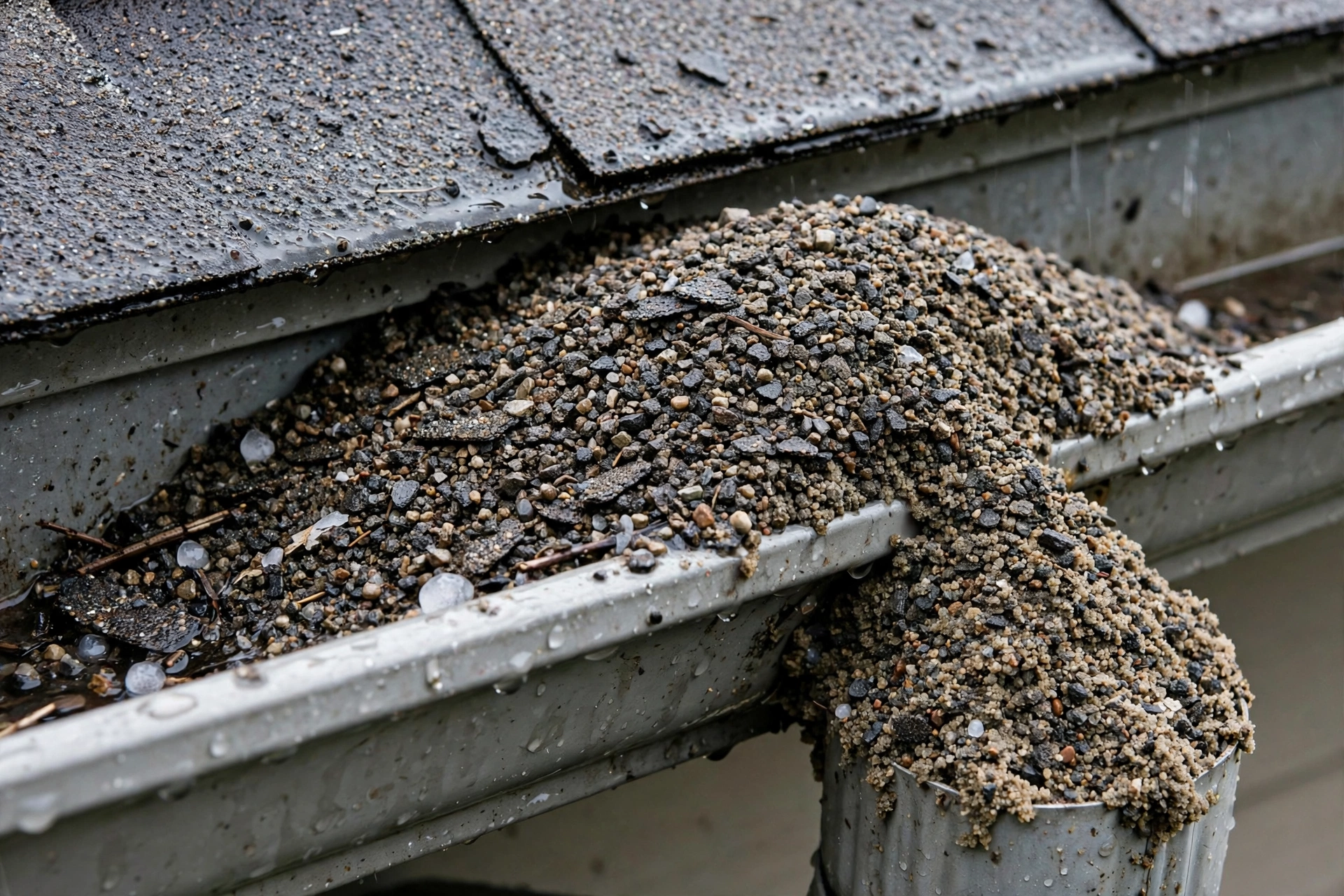
Shingle granules are the roof's sunscreen and armor. Hail knocks them off in concentrated spots, and the loosened grit washes downhill into gutters, downspouts, and splash blocks. After a hailstorm, check those three places: a sudden pile of coarse, sand-like granules is one of the strongest homeowner-visible clues, and it is worth photographing with a date before you clean it out.
Some granule loss is normal aging, which is why inspectors distinguish scattered, uniform loss (age) from clustered loss at strike points with bruising beneath (hail). The pattern, not just the presence, is the evidence.
Dented Flashing, Vents, and Soft Metals
Soft metals dent where shingles only bruise, so they are the corroborating witness. Check roof vents, chimney flashing, valley metal, gutters, and downspouts for fresh dents and dings after a storm. Dents in these metals, combined with bruised shingles and gutter granules, form the three-part pattern adjusters recognize.
Also check things at ground level that hail hits first: dented mailbox covers, pocked deck furniture, and dimpled car hoods. They do not prove roof damage, but they confirm hail size and intensity at your address on that date.
Why Hail Hides Until It Leaks
Three things hide hail damage. First, it is mostly tactile, not visual — bruises are felt, not seen. Second, it is often confined to one or two slopes (the windward side), so a quick look at the front of the house misses it. Third, the failure is slow: the cracked mat takes seasons to open. Homeowners who skip an inspection after a storm often discover the damage only when a ceiling stains — at which point the claim is older, the evidence is weathered, and the insurer has more room to argue wear.
Our storm damage inspection guide explains how test squares turn these signs into counted, photographed evidence for a claim.
Test Squares and Claim Timing
The inspection method is the test square: a measured square marked in chalk on each affected slope, with every strike counted and photographed. That count is what separates a real hail event from normal aging in an adjuster's eyes.
On timing, do not wait for a leak to act. Claim windows are set by your individual policy, not by any universal deadline, so check your policy terms and document promptly after the storm — dated photos of granules, dents, and hailstones, plus an inspection report, protect you regardless of how the claim proceeds. If you are unsure whether a past storm damaged your roof, an inspection can still separate old hail bruising from age, though the evidence is always clearest soon after the event.
If the inspection finds storm damage, the next step is the documentation our storm damage guide describes: dated photos, a date-of-loss correlation, and an itemized repair scope.
Related reading: storm damage roof inspection in Westfield, how hidden leaks get traced, and roof inspection for insurance claims in MA.
Check for Hail Before It Becomes a Leak
If a recent storm dropped hail on your neighborhood, get a hands-on hail inspection with test square counts — before bruised shingles start leaking. Call (213) 646-7883.
Hail Damage InspectionFrequently Asked Questions
Look for the three-part pattern together: soft bruises in the shingle mat, clustered granule loss (and grit piled in gutters), and dents in soft metals like flashing, vents, and gutters. A hands-on inspection confirms it slope by slope, since most bruising is felt rather than seen.
On its own, no — some granule loss is normal aging. What points to hail is a sudden pile after a storm, clustered loss at strike points, and bruising beneath the bare spots, combined with dents in soft metals. The pattern, not just the presence, is the evidence.
Claim windows are set by your individual insurance policy, not by a universal deadline, so check your policy terms. Document promptly after the storm with dated photos and an inspection report — evidence is always clearest soon after the event, and waiting for a leak only weakens the claim.
Sometimes. Isolated bruising on a few slopes can often be repaired slope by slope, while widespread bruising across the roof may mean replacement is the honest answer. The inspection report should separate repairable damage from systemic damage rather than pushing one outcome.