
Storm Damage Roof Inspection in Westfield, MA (Nor'easters, Wind & Hail)
That the damage happened in a specific storm, on a specific date, to specific parts of the roof — with photos and measurements an adjuster can verify. After a storm damage roof inspection in Westfield, MA, you should hold a report that ties wind uplift, creased tabs, or hail strikes to a date of loss, separates storm damage from age and wear, and itemizes what needs repair. Without that documentation, a claim is your word against the insurer's, and storm damage is exactly the kind of claim insurers scrutinize hardest.
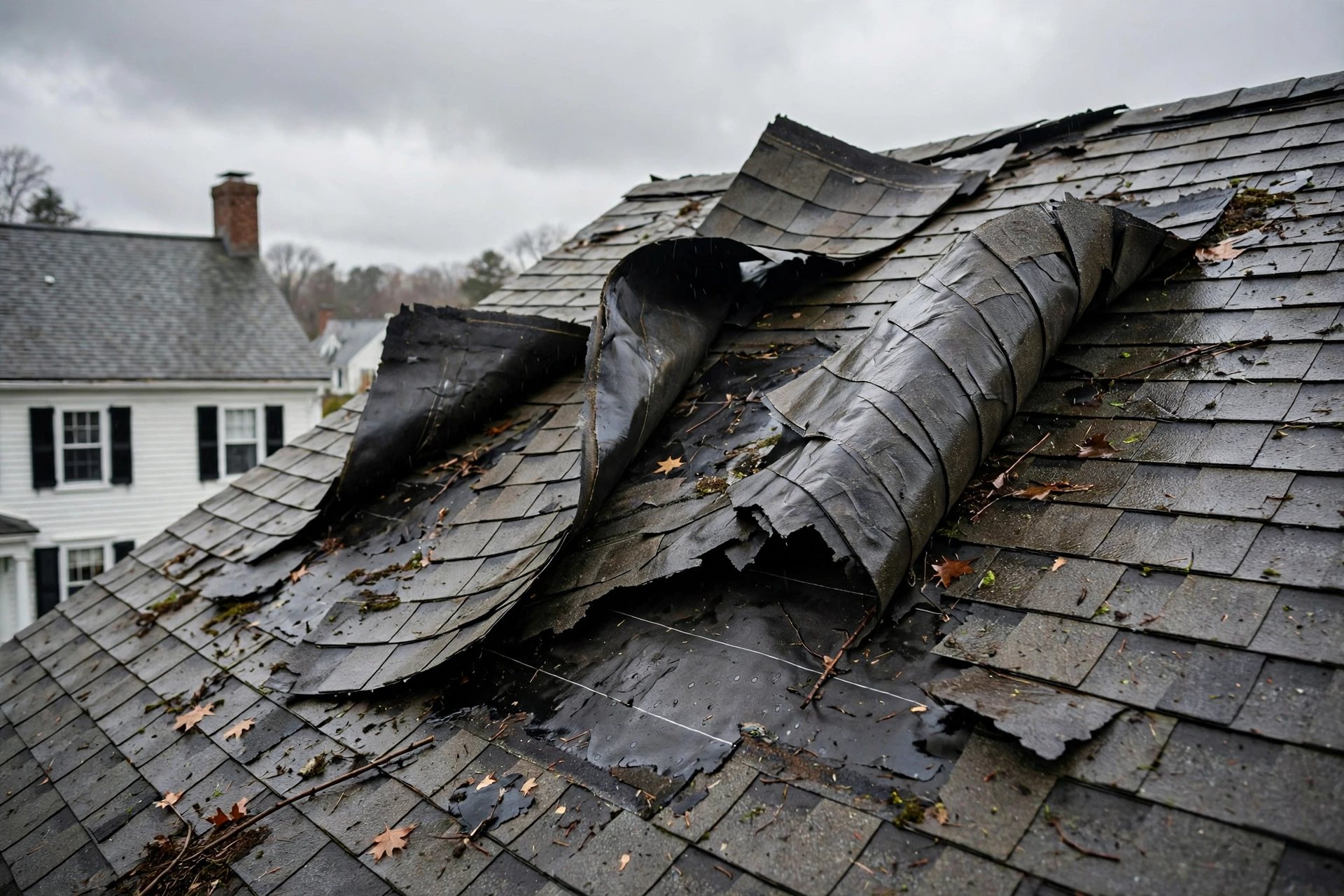
Nor'easter Wind Uplift: What It Does to a Roof
Westfield sits in the path of nor'easters that drive sustained wind and gusts across the Pioneer Valley, and wind damages roofs in ways that are easy to miss from the ground. The classic pattern is uplift: wind gets under a shingle tab, lifts it, and creases the mat at the seal line. The tab may settle back down and look fine from the driveway — but the crease is a permanent break, and the seal is gone. The next storm lifts it further, and eventually the tab tears off.
An inspector walks the slopes (where safe) feeling for unsealed tabs, checking ridge caps, and looking for the tell-tale horizontal crease lines that mark uplift. Missing shingles are the obvious damage; creased tabs are the expensive damage, because there are usually many more of them.
Hail Test Squares and Documented Evidence
Hail evidence has to be counted, not asserted. The standard method is the test square: a measured square (commonly 10 by 10 feet) marked in chalk on each affected slope, inside which every hail strike is counted, circled, and photographed. The count per square, the size of the strikes, and the condition of the mat at each strike — bruised, cracked, or just scuffed — become the record.
That record matters because hail damage is routinely disputed: insurers want to know whether the marks are hail, age, or installation scuffs. A test square with dated photos answers that question in a way a verbal opinion cannot. Our hail signs guide explains the specific marks — bruised mats, granule loss, dented flashing — that inspectors look for inside the square.
Date-of-Loss Documentation
Every storm claim turns on one question: which storm caused this? The inspection report ties the damage to a date of loss by correlating the damage pattern with the storm record — wind direction and speed, hail reports for the area, and the condition of the roof before the storm where prior records exist. Fresh breaks, unweathered mat at creases, and granule displacement patterns all help separate a recent event from years of wear.
Photograph everything yourself as well, before any cleanup: missing shingles in the yard, hailstones next to a ruler, interior drips. Your photos and the inspector's report together are much harder to dismiss than either alone.
What an Adjuster-Ready Report Contains
An adjuster-ready report is not a one-page letter. It should contain dated, captioned photos of every damaged slope, test square counts where hail is claimed, a slope-by-slope damage summary, the date-of-loss correlation, and an itemized repair scope. It should also state plainly what is storm damage and what is pre-existing wear — a report that blames everything on the storm loses credibility fast.
If your claim was already denied or underpaid, a second inspection with this level of documentation is often what changes the outcome, because it gives the insurer something specific to answer.
After the Storm: What to Do First
Safety first: stay off the roof, especially if it is wet, steep, or has downed lines nearby. Inside, contain active drips with buckets and move valuables. Photograph damage from the ground. Then call for an inspection before repairs begin — once a roof is repaired, the evidence of what the storm did is gone, and so is much of the claim.
If water is coming in, mitigation comes before documentation: emergency tarping stops the damage from growing while the inspection and claim proceed. See our emergency inspection guide for what counts as an emergency and what happens on the first visit, and our leak tracing guide for how hidden storm leaks get found.

Related reading: hail damage signs Westfield homeowners miss and emergency roof inspection.
Document the Storm Before You Repair It
Book a storm damage inspection and get a dated, photo-documented report tied to the storm — before repairs erase the evidence. Call (213) 646-7883.
Storm Damage InspectionFrequently Asked Questions
As soon as it is safe to do so, and before any repairs begin. Repairs erase the evidence an adjuster needs to see, so the inspection should come first — mitigation tarping to stop active water is the exception, and it should be photographed before and after.
A measured square marked in chalk on a roof slope, inside which every hail strike is counted, circled, and photographed. The count per square turns a general claim of hail damage into verifiable evidence an adjuster can check.
That is its purpose. A report with dated photos, test square counts, a date-of-loss correlation, and an itemized repair scope gives the insurer specific findings to answer, which is far stronger than a verbal claim that the storm damaged the roof.
No. The most common wind damage is creased tabs — shingles lifted and folded at the seal line that settle back down and look intact from the ground. The crease breaks the mat and the seal, so the tab is damaged even though it is still on the roof.